By Reuben Nathan Ibrahim
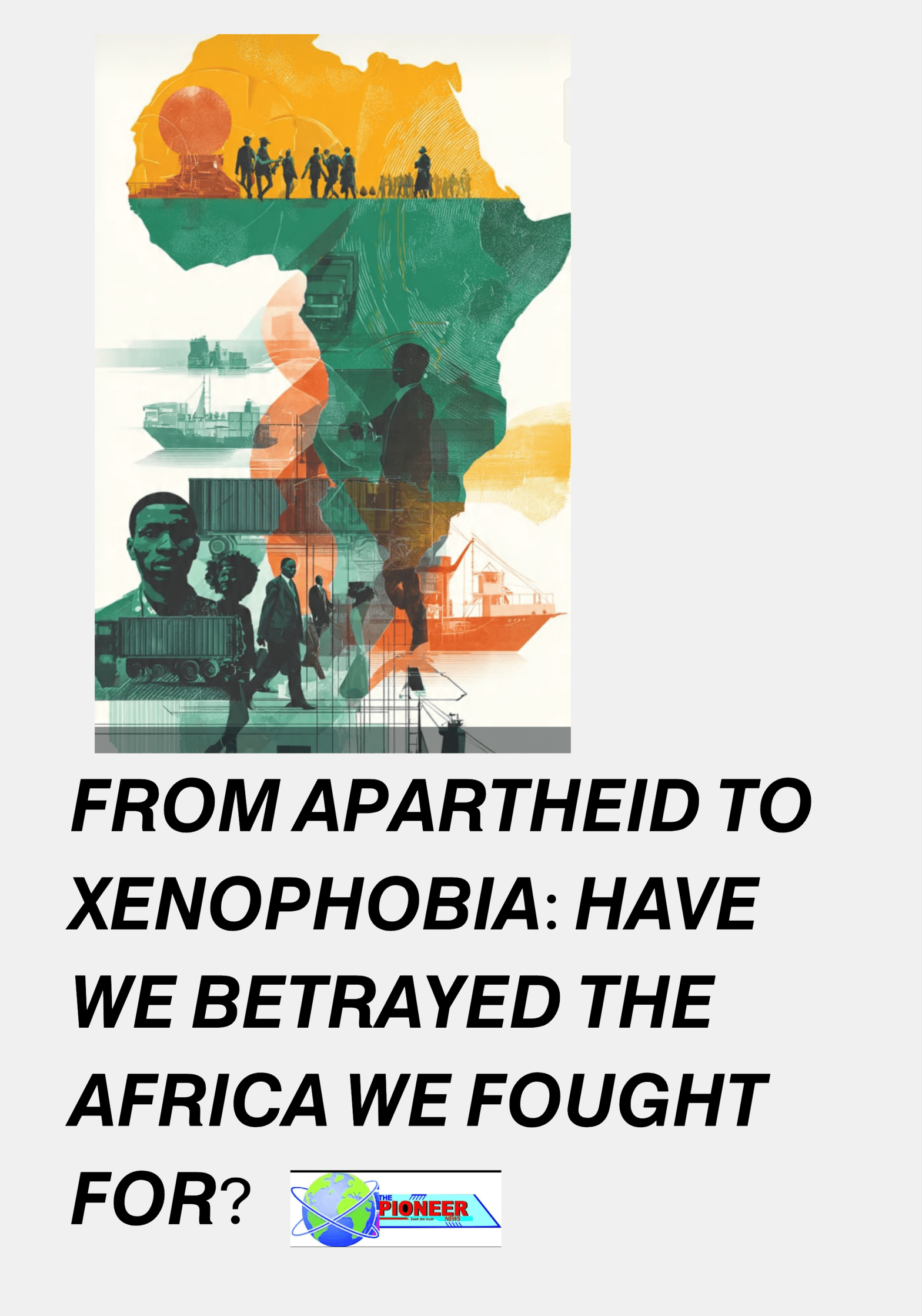
South Africa’s struggle against apartheid was never South Africa’s fight alone—it was Africa’s fight. Across the continent, governments, civil society groups, and ordinary citizens rallied behind the liberation movement. Nigeria stood prominently at the forefront, contributing financial support, diplomatic pressure, scholarships, and humanitarian assistance while consistently championing the anti-apartheid cause at international forums such as the United Nations and the Organization of African Unity (OAU). Exiled activists found refuge, the African National Congress (ANC) received vital support, and apartheid was increasingly isolated from the global community. Even Nelson Mandela acknowledged Nigeria’s leading role in the struggle.
That shared history created more than political goodwill; it forged a lasting bond of solidarity. For decades, Nigerians, Ghanaians, Zimbabweans, Mozambicans, and millions of other Africans believed that a democratic South Africa would become a welcoming home for all Africans. The guiding principle was clear: an injury to one African is an injury to all.
Today, however, that ideal faces one of its greatest tests.
Recurring reports of xenophobic violence, attacks on foreign-owned businesses, forced evictions, and anti-immigrant rhetoric have cast a shadow over South Africa’s democratic achievements. Nigerians, alongside other African nationals, have been among those affected—small business owners, artisans, students, and professionals whose aspirations have been interrupted by fear and hostility.
The suffering is real on both sides. Many South Africans are grappling with high unemployment, rising living costs, inadequate public services, and widening inequality. At the same time, fellow Africans who once viewed South Africa as a symbol of continental hope increasingly feel excluded from a nation whose liberation their own countries helped secure.
This raises a difficult but necessary question: Have we betrayed the Africa we fought for?
Part of the answer lies in economics. As Africa’s most industrialised economy, South Africa naturally attracts migrants seeking employment, education, and business opportunities, particularly as the African Continental Free Trade Area (AfCFTA) promotes greater regional integration. Yet when economic opportunities become scarce, frustration often seeks an easy target. Migrants are frequently blamed for challenges rooted in structural economic problems. Political actors sometimes exploit these frustrations for electoral advantage, while misinformation circulating on social media deepens suspicion and fuels division.
But economic hardship should never become an excuse for violence or discrimination.
The vision behind the African Union’s Agenda 2063 and the AfCFTA is founded on the belief that the free movement of people, skills, investment, and trade will strengthen every African economy. Prosperity on the continent cannot be built behind closed borders. If South Africa turns inward, it risks weakening not only regional solidarity but also valuable markets for its own businesses across Africa. Likewise, if countries such as Nigeria respond solely with retaliation rather than constructive diplomacy, the entire continent stands to lose.
The deeper betrayal, if one exists, is not the failure of ordinary citizens alone. It is a failure of leadership, governance, education, and justice.
Governments have an unwavering duty to protect every person living within their borders, regardless of nationality. Law enforcement agencies must pursue criminals based on their actions—not on their accents, passports, or ethnic backgrounds. Educational institutions and the media must preserve and teach the shared history of Africa’s liberation so that younger generations understand the sacrifices that united the continent. At the same time, governments should establish legal migration pathways that protect foreign workers while implementing policies that expand opportunities for local citizens.
Nigeria, too, has important responsibilities.
Our long-term solution is not simply to protest xenophobia abroad but to build an economy at home that offers meaningful opportunities, making migration a matter of choice rather than necessity. Nigerian diplomatic missions must continue to defend citizens overseas firmly and professionally while ensuring that anyone who violates the laws of a host country is held accountable. Pan-Africanism must never be mistaken for impunity; it must be grounded in mutual respect, responsibility, and the rule of law.
Despite present challenges, there remains every reason for hope.
South Africa and Nigeria are two of Africa’s most influential nations. Their economies are deeply connected. Their artists shape global culture together. Their universities educate future African leaders. Their businesses, innovators, and entrepreneurs increasingly collaborate across borders. The foundation laid by Nelson Mandela and the many African leaders who stood against apartheid was never intended merely to create independent states; it was meant to build a continent where Africans could learn, trade, innovate, and prosper together.
The Africa our forebears fought for was never promised to be perfect. It was a vision built on unity, dignity, justice, and shared progress—a commitment that the artificial divisions imposed by colonialism would never again define African relations.
If xenophobia becomes the defining feature of our generation, then we will indeed have betrayed that vision.
But if we choose justice over prejudice, dialogue over division, cooperation over isolation, and truth over political convenience, then we honour both the sacrifices of the liberation generation and the promise of a united Africa.
The choice, as always, remains ours.
Reuben Nathan Ibrahim
Nigerian writer and Pan-African commentator based in Yola, Adamawa State. He writes on governance, youth development, regional integration, and Africa’s shared future.

