Nwaeze’s “Keke Riders Earn More Than Professors” Remark Sparks Fresh Debate on Academic Welfare
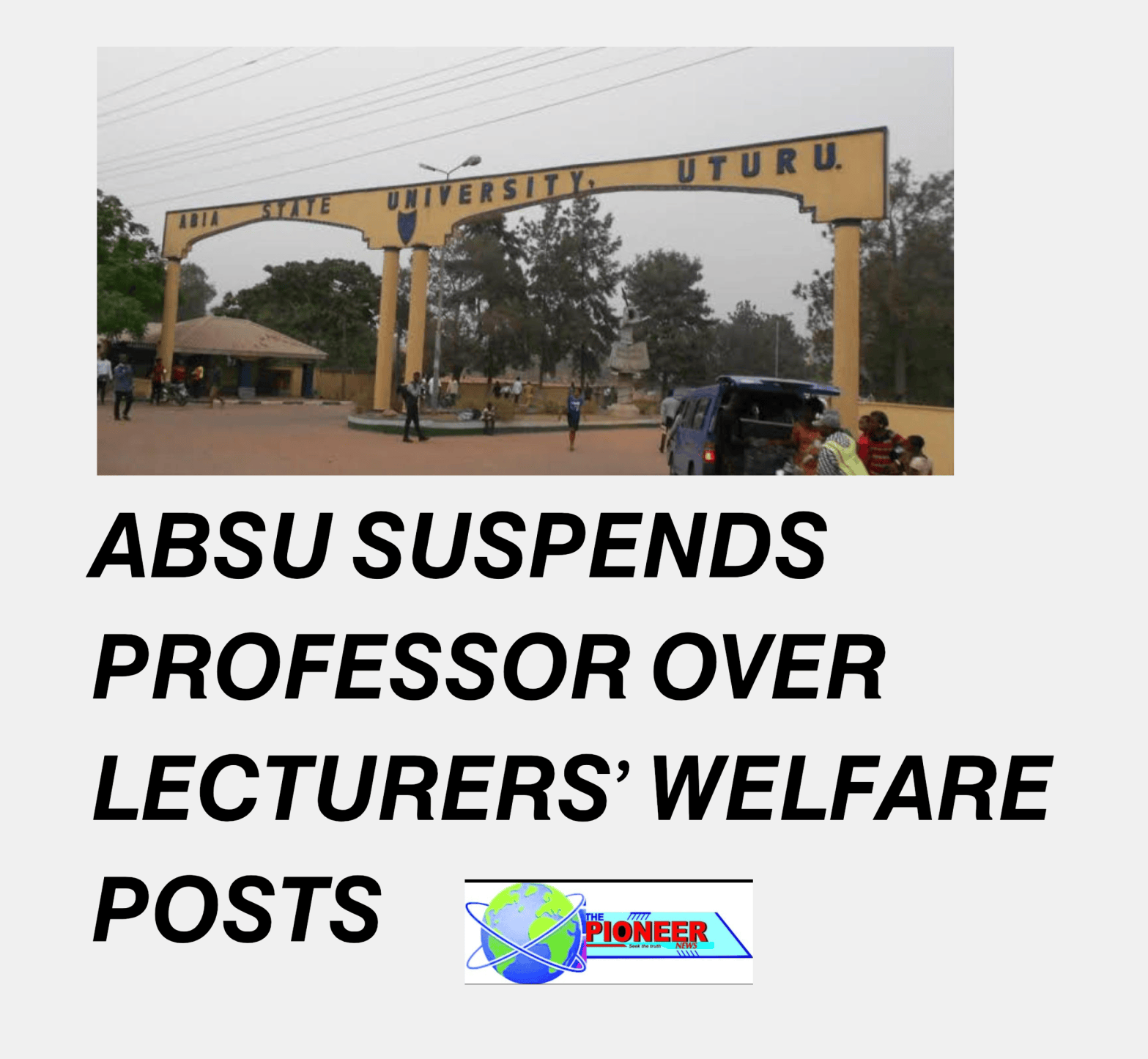
ABIA STATE UNIVERSITY, UTURU — A fresh controversy has erupted at Abia State University (ABSU), Uturu, following the reported suspension of Professor Nnamdi Chinwendu Nwaeze over social media posts in which he criticised the welfare and remuneration of university lecturers.
The development has stirred a wider conversation about the condition of academics in Nigeria, coming at a time when questions over salaries, allowances, working conditions and the dignity of university teaching continue to dominate the national education discourse.
Reports indicate that the university management suspended Nwaeze following comments attributed to him concerning the financial circumstances of lecturers, including a comparison suggesting that some commercial tricycle operators, popularly known as keke riders, could earn more than university professors.
The professor, who is associated with the Department of Economics at ABSU, had reportedly used his social media platforms to draw attention to what he described as the increasingly difficult economic realities confronting academics.
The controversy has therefore moved beyond the professor’s personal predicament to a much larger question: how sustainable is Nigeria’s university system when those entrusted with educating the nation’s future leaders struggle to meet basic economic needs?
Nwaeze is not an unknown figure within the university community. He previously served as Director of Information and Communication Services at ABSU for five years, a position from which he stepped down earlier in 2026 after overseeing several digital reforms at the institution.
His reported suspension has consequently generated considerable public interest, particularly among academics, students and observers of Nigeria’s higher-education sector.
The development comes against the backdrop of persistent concerns over the welfare of lecturers in Nigerian universities.
Across the country, academic unions have repeatedly raised issues involving unpaid salaries, allowances, promotion arrears, inadequate funding and the implementation of agreements reached with government.
The situation has been particularly challenging in some state-owned universities, where funding and institutional autonomy remain recurring points of contention.
Recent industrial actions by university lecturers elsewhere in the country have similarly highlighted the depth of the welfare crisis. For instance, lecturers at Adekunle Ajasin University recently embarked on an indefinite strike over unpaid salaries, with the union blaming inadequate government funding.
These developments have intensified calls for governments at both federal and state levels to treat university funding and academic welfare as investments in national development rather than recurrent political disputes.
At the centre of the ABSU controversy is also a fundamental question about the limits of free expression within public institutions.
While universities have established rules governing the conduct of their employees, critics of disciplinary measures against academics argue that lecturers should be able to raise legitimate concerns about institutional welfare without fear of retaliation.
On the other hand, university authorities are entitled to enforce their regulations where they believe an employee’s conduct violates established rules or brings the institution into disrepute.
The challenge, therefore, lies in striking a delicate balance between institutional discipline and the freedom of academics to speak about issues affecting their profession.
Beyond Professor Nwaeze’s suspension, the controversy has once again placed the spotlight on the Nigerian professoriate and the value society attaches to intellectual labour.
For many observers, the issue is not whether a professor should be allowed to criticise poor welfare, but whether the circumstances that make such criticism necessary should exist in the first place.
Universities remain the laboratories where doctors, engineers, lawyers, economists, teachers, scientists and other professionals are produced. Yet the men and women responsible for moulding these professionals continue to complain about conditions that they say undermine their dignity and effectiveness.
The ABSU controversy may therefore fade from the headlines, but the question it has raised is unlikely to disappear:
If those teaching Nigeria’s brightest young minds cannot live with dignity from their profession, what does that say about the nation’s commitment to higher education?
The reported suspension of Professor Nwaeze has thus become more than an institutional disciplinary matter. It has opened another chapter in Nigeria’s long-running debate over academic freedom, lecturers’ welfare, university funding and the future of higher education.

