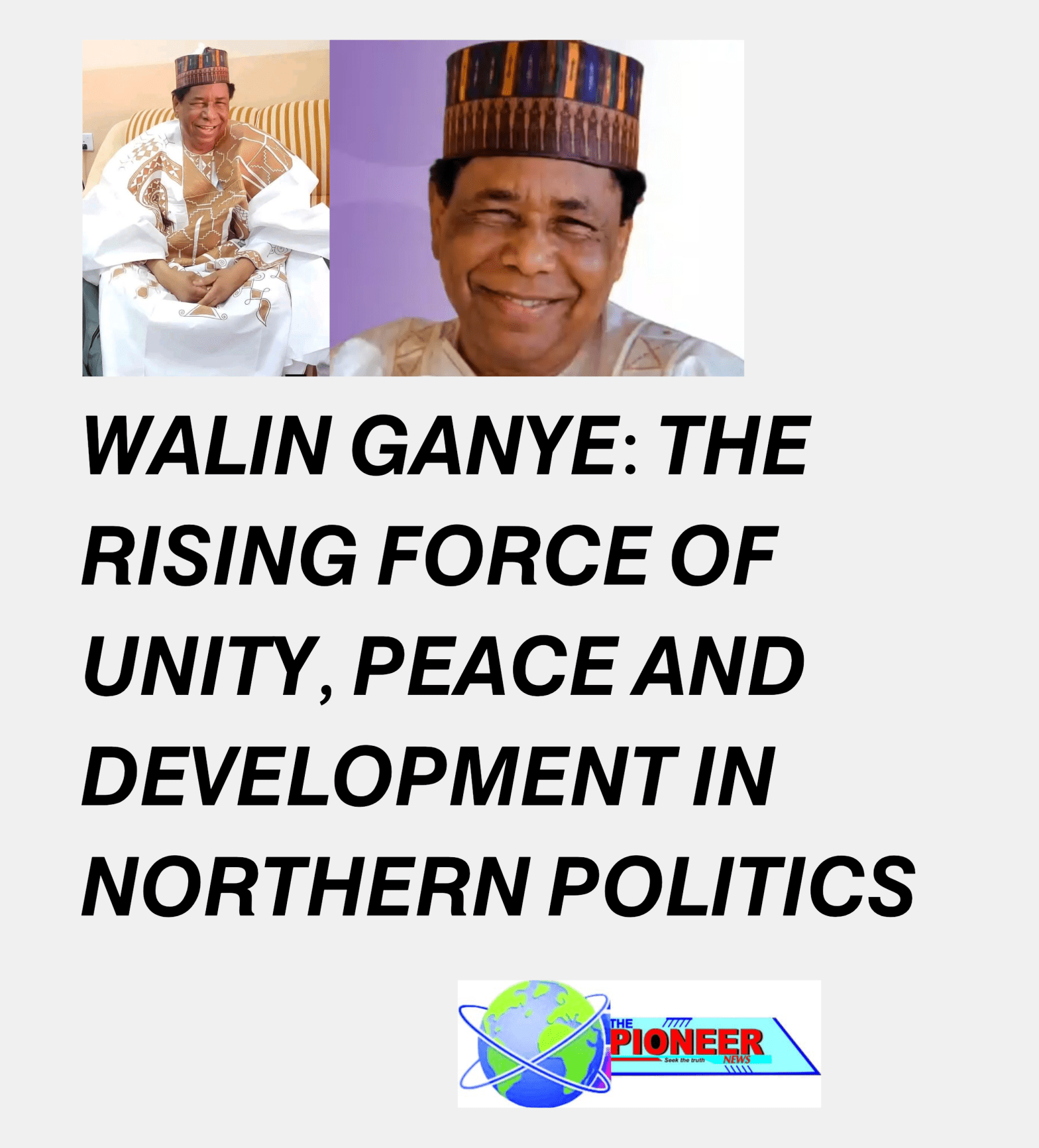
In an era where politics is often defined by division, bitterness and self-interest, one name continues to resonate across communities in Adamawa State and beyond with uncommon reverence, influence and admiration — Alhaji Sadiq Mohammed Walin Ganye.
From the corridors of traditional leadership to the arena of modern politics and humanitarian service, Walin Ganye has steadily carved a reputation as a bridge-builder, peace advocate and philanthropist whose influence cuts across religious, ethnic and political boundaries.
Today, many political observers describe him not merely as a politician, but as a symbol of unity, tolerance and grassroots empowerment.
His recent emergence as the Chairman, Board of Trustees of the International Peace Commission has further strengthened public confidence in his capacity to champion peace, dialogue and human development at a time the nation yearns for healing and stability.
Across Adamawa communities, his name evokes respect among Muslims and Christians alike — a rare political phenomenon in contemporary times.
One of the strongest pillars behind Walin Ganye’s growing popularity is his longstanding culture of inclusiveness and fairness.
Unlike many public figures accused of favoritism and sectional politics, Alhaji Sadiq Mohammed Walin Ganye has consistently maintained an open-door relationship with people of all faiths and backgrounds.
Community leaders, youth groups, clerics and political stakeholders often commend his ability to unite people irrespective of tribe, denomination or social status.
To many residents, he represents a brand of leadership that places humanity above religious sentiments.
Political analysts in Adamawa believe this rare attribute has elevated his stature beyond partisan politics, making him a rallying point for peace, coexistence and mutual respect.
Beyond politics, Walin Ganye is widely celebrated for his generosity and humanitarian interventions.
Over the years, he has reportedly supported vulnerable families, students, widows, youth groups and community initiatives through financial assistance, mentorship and social interventions.
In many communities, stories abound of quiet acts of kindness carried out without publicity or political conditions.
Those close to him describe him as a man who believes leadership is meaningless without compassion for the less privileged.
His supporters insist that his philanthropic gestures are not seasonal political strategies, but a reflection of a deeply rooted philosophy centered on service to humanity.
At a time when citizens increasingly demand practical governance over empty rhetoric, Walin Ganye has remained vocal about the need for “politics of development.”
Associates say he consistently advocates for policies and leadership approaches capable of improving education, infrastructure, economic opportunities and peaceful coexistence.
Rather than promoting politics of bitterness and division, he is known for encouraging dialogue, reconciliation and collective progress.
This development-driven posture has earned him admiration among youth and professionals who see him as part of a new generation of influential northern leaders committed to nation-building.
His appointment as Chairman of the Board of Trustees of the International Peace Commission is viewed by many as a fitting recognition of his years of commitment to peace advocacy and community harmony.
Observers say the appointment reflects growing national acknowledgment of his role in promoting stability, tolerance and understanding among diverse groups.
In a period marked by insecurity and political tension in parts of the country, many believe personalities like Walin Ganye represent the kind of moral and strategic leadership Nigeria urgently needs.
Though deeply rooted in Adamawa State politics, Walin Ganye’s influence is increasingly extending beyond the state’s borders.
His name now features prominently in conversations surrounding peacebuilding, grassroots mobilization and responsible leadership across Northern Nigeria.
Many political watchers believe his rising profile is tied not only to political connections, but also to his ability to maintain goodwill among ordinary citizens.
As supporters continue to celebrate his leadership style, many describe him as a man whose strength lies not in noise or political theatrics, but in humility, generosity, diplomacy and service.
For many across Adamawa and beyond, Alhaji Sadiq Mohammed Walin Ganye is gradually emerging as more than a political figure — but a movement for peace, development and national unity.

