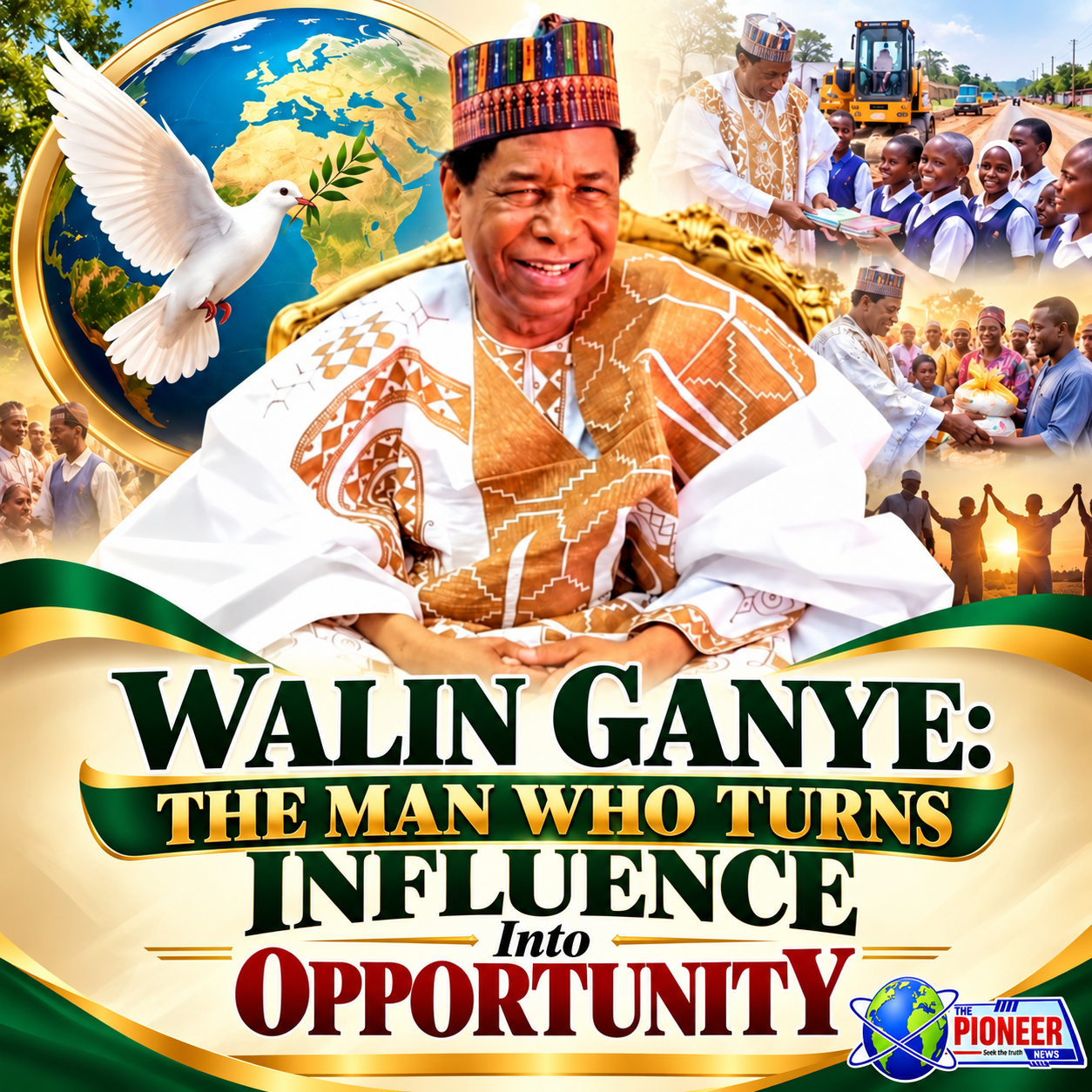
From empowerment and jobs to scholarships, clean water, peace and political strategy, Alhaji Sadiq Mohammed Walin Ganye is writing one of Adamawa’s most talked-about public stories
In Adamawa, titles are plentiful and political access is cheap talk. What is rare is a public figure whose name surfaces at the hospital bedside, in the school compound, at the peace table and in the political strategy room.
Alhaji Sadiq Mohammed Walin Ganye is that figure.
To his admirers and beneficiaries, Walin Ganye’s story is not about the weight of a title or the reach of political connections. It is about what he does with them. His supporters describe a man who places himself on the front line of human need, across social divides, convinced that poverty should never be a barrier to dignity and hope.
For a household in hardship, modest help can be a lifeline. For a family struggling to keep a child in school, a scholarship can save an ambition from being abandoned.
Beyond handouts, Walin Ganye is credited with empowerment programmes and job creation aimed at helping people stand on their own feet. For supporters, this is where his philanthropy matures: from relief into livelihood.
A young person given a skill, a start-up support or a job is no longer a beneficiary of charity but a contributor to the household and the local economy. Such opportunities ease unemployment, restore confidence and keep families moving forward long after the first gesture.
Much of Walin Ganye’s reputation, say those close to him, is built on one-on-one assistance. Individuals and families describe support that is social, economic, political and financial: help with medical and household needs, a boost for a struggling business, assistance in moments of financial pressure, and a helping hand to those seeking a voice or a platform in politics.
These quiet interventions seldom make headlines, but for those they reach, they often matter most.
Through his foundation, he is also associated with scholarship awards, classroom construction and access to safe drinking water, interventions aimed squarely at the daily problems of rural communities.
A classroom block gives children a better place to learn. A borehole spares women and children the burden of fetching water and protects public health in the bargain. Done well and maintained, such projects outlive the moment of the donation.
As Chairman of the Board of Trustees of the International Peace Commission, Walin Ganye holds a role that puts peace, unity and human development at the centre of his public identity. In a society where political rivalry, ethnic diversity and economic inequality can strain the bonds between communities, that responsibility is no small one.
His supporters credit him with bringing people together and building relationships across social and political lines. The real measure, as with all peace work, is concrete: stronger dialogue, eased tensions and partnerships that last.
Then there is the political side. Admirers call him a formidable strategist and seasoned operator. Labels such as “political oracle” and “political octopus” reflect the reach his supporters attribute to him across networks of political relationships. These are perceptions of stature, not official rankings.
In a season of realignment, when loyalties are tested and politicians recalculate, the ability to convene stakeholders, build alliances and mobilise supporters matters. Walin Ganye has become part of the wider conversation about Adamawa’s changing party politics.
Prominence invites scrutiny, and the standard is demanding. Empowerment and philanthropy earn lasting credibility when documented: beneficiaries recorded, jobs and projects tracked, outcomes published, maintenance arrangements in place, schools and public institutions brought in as partners. In an age of rising demands for accountability, evidence of impact is the strongest foundation of any legacy.
Political seasons come and go. Alliances shift and parties rise and fall. What endures is found elsewhere: in the student who finished school because help arrived at the right moment, in the young person with a job and a future, in the community with water close at hand, and in disputes settled without bitterness.
For Walin Ganye, the defining question is not how far his influence reaches, but how deeply it touches the lives of the people it was meant to serve.

