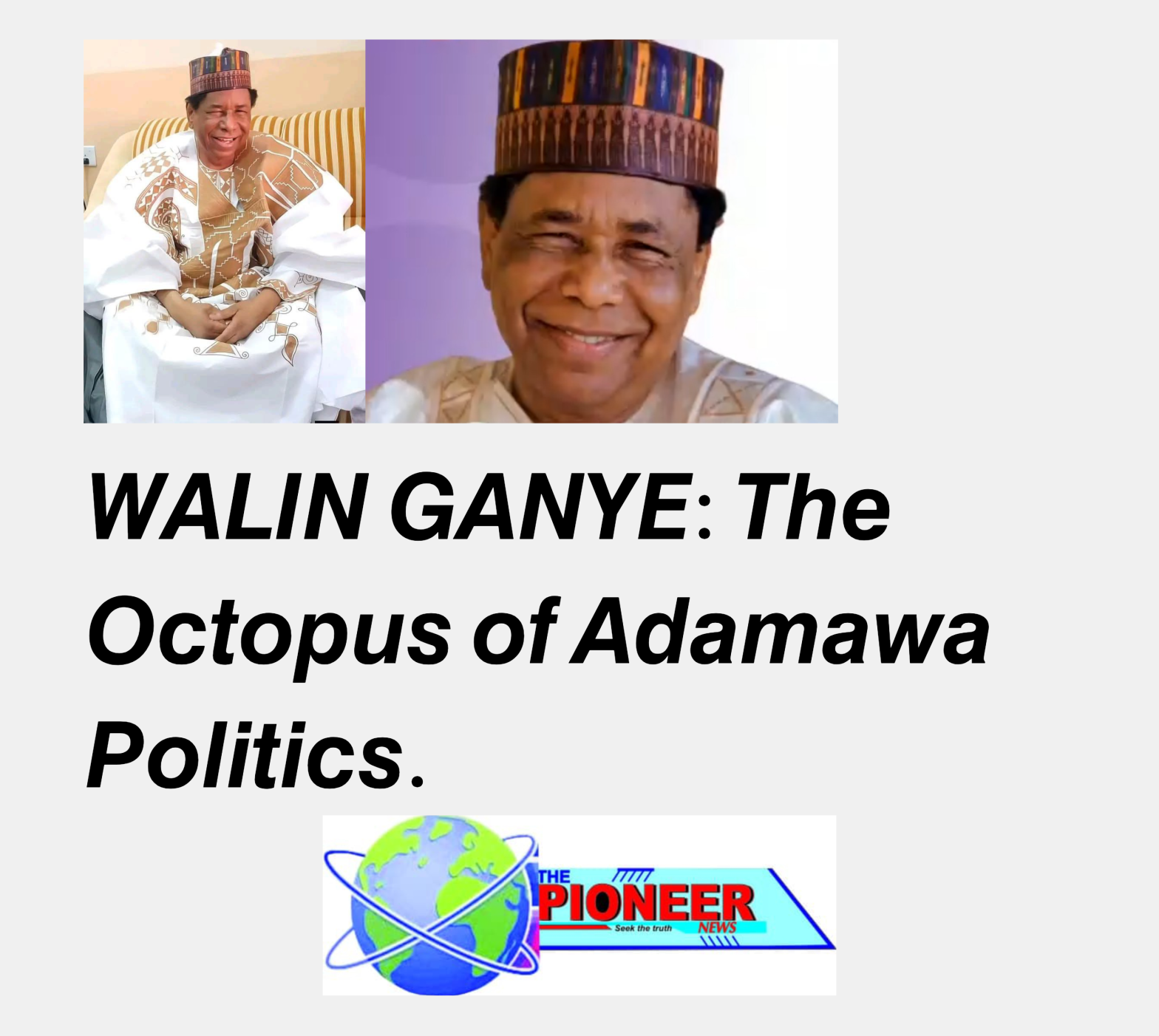
In the ever-shifting landscape of Nigerian politics, few figures command the kind of enduring respect, influence and admiration that surround Alhaji Sadiq Mohammed, the Walin Ganye — a revered elder statesman, political strategist and national stakeholder of the All Progressives Congress (APC).
Across Adamawa State, particularly within the historic Ganye Chiefdom, the name Walin Ganye resonates with a blend of political wisdom, generosity and unifying leadership that has made him one of the most respected political figures in the region.
Observers and political analysts often describe Alhaji Sadiq Mohammed as a “political octopus,” a metaphor capturing the far-reaching network he has quietly but steadily built over the years. Much like the many arms of an octopus stretching in different directions, his political influence spreads across party lines, institutions and communities.
While he remains a prominent pillar of the APC, his reach goes far beyond partisan boundaries. Loyal allies, protégés and associates linked to the Walin Ganye can be found across multiple political parties, a testament to the bridges he has built through mentorship, trust and political diplomacy.
Within the APC structure, particularly in Adamawa State, Alhaji Sadiq Mohammed is widely acknowledged as one of the party’s most committed stakeholders.
From the early days of party consolidation to electioneering seasons, insiders say he invested enormous personal resources, political capital and strategic support in strengthening the party’s foundation.
In Ganye Chiefdom, his political footprint is even more profound. Local party leaders frequently credit him with mobilizing grassroots support, nurturing emerging leaders and stabilizing the party during turbulent political periods.
Political observers say many of the prominent political actors in the region today owe their rise, guidance or political exposure to the mentorship of the Walin Ganye.
Beyond elections and party structures, Alhaji Sadiq Mohammed has carved a reputation as a mentor and political father to many rising politicians.
Young leaders across Adamawa often recount stories of how the elder statesman opened doors for them, offered strategic counsel and guided them through the complexities of political life.
To many of them, Walin Ganye is not merely a political leader but a school of leadership — a man whose experience and wisdom continue to shape the next generation of public servants.
Perhaps the most defining feature of the Walin Ganye’s legacy is his reputation as a detribalized and inclusive leader.
In a country where politics often follows ethnic and religious lines, Alhaji Sadiq Mohammed stands out as a figure whose generosity and goodwill cut across tribe, religion and political affiliation.
Friends and critics alike acknowledge that his doors have always remained open to all — Christians and Muslims, APC members and opposition figures alike.
Even in his absence, the spirit of the Walin Ganye continues to echo loudly within his residence in Ganye.
During the ongoing holy month of Ramadan, hundreds of people troop daily to his residence where generous provisions for iftar (breaking of the fast) are made available to fasting Muslims.
Community members describe the atmosphere as one of unity and compassion, where people from different walks of life gather to share meals, prayers and fellowship.
For many residents, the gesture reflects the enduring character of the elder statesman — a man whose generosity has become an institution in itself.
As Adamawa’s political terrain continues to evolve, many believe the Walin Ganye remains one of the quiet but powerful architects behind many political alignments in the state.
Whether through mentorship, philanthropy, political strategy or community leadership, Alhaji Sadiq Mohammed’s imprint on Adamawa politics is unmistakable.
To supporters, he is a bridge builder, a political compass and a pillar of stability.
And in the words of many observers across the state:
“Walin Ganye is not just a political leader — he is an institution.”
 PIONEER NEWS