By Our Correspondent
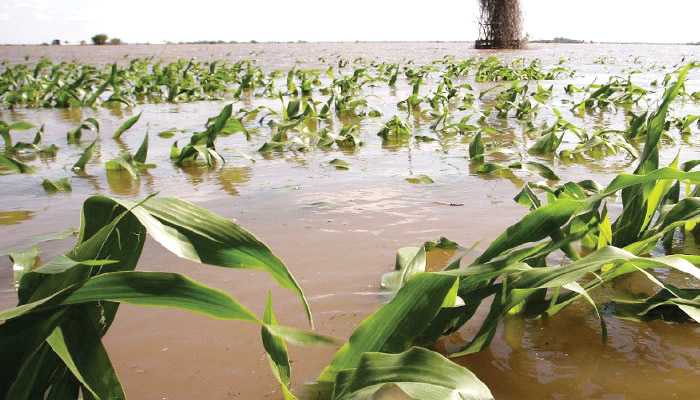
Tragedy has struck farming communities in Taraba State as devastating floods from River Benue have submerged vast hectares of rice and maize farmlands, wiping out crops worth millions of naira and plunging thousands of households into despair.
The flooding, which swept through five local government areas, has left a trail of destruction in Kunini (Lau LGA), Mayoreniyo (Ardo-Kola LGA), Mutum Biyu (Gassol LGA), and several communities in Karim-Lamido and Jalingo LGAs, crippling the livelihood of smallholder farmers who rely on seasonal harvests for survival.
Speaking with Daily Trust, Umar Muhammad Lawal Mayoreniyo, a farmer in Ardo-Kola, lamented that more than 800 rice and maize farms were destroyed in Jiro Kufayi, Jiro Kiriga, Jiro Sabongari, Jiro Dauda, Jiro Nabari, Kiriga Boya, Bendo Tugge, Fataki, Gurbi Zangai, Salo Bani, and Mayoreniyo.
> “I personally lost four farms to this disaster. The most painful part is that the flood came too early this year. Normally, we experience flooding towards the end of September, after most of us have harvested. But this time, it struck in early September when our crops were still in the fields,” Muhammad said with grief.
In Karim-Lamido, the devastation was equally severe. Sale Binnari, a resident, recounted that farmlands in Binnari, Gorowa, Didango, Shimiyel, Nahuta, Belengo, and Mariyo were swallowed by the raging waters.
In Gassol LGA, the flood submerged farms in Baranda, Maigoro Kwatan Nanido, Mutum Biyu, Sheka, Hassan Kwatan Ibrahim Kiriga Jen, Zip, Kambari, Amar, and Sansani. Farmers there described the incident as the “worst in years,” noting that food insecurity looms if urgent intervention is not provided.
Agricultural experts warn that the destruction of thousands of hectares of farmland will not only impoverish farming families but could also worsen food shortages and drive up the prices of rice and maize across the state and beyond.
As affected families begin to count their losses, calls are mounting on the Taraba State Government, the Federal Government, and emergency agencies to provide swift relief and long-term solutions, including flood-control infrastructure, to prevent future devastation.

