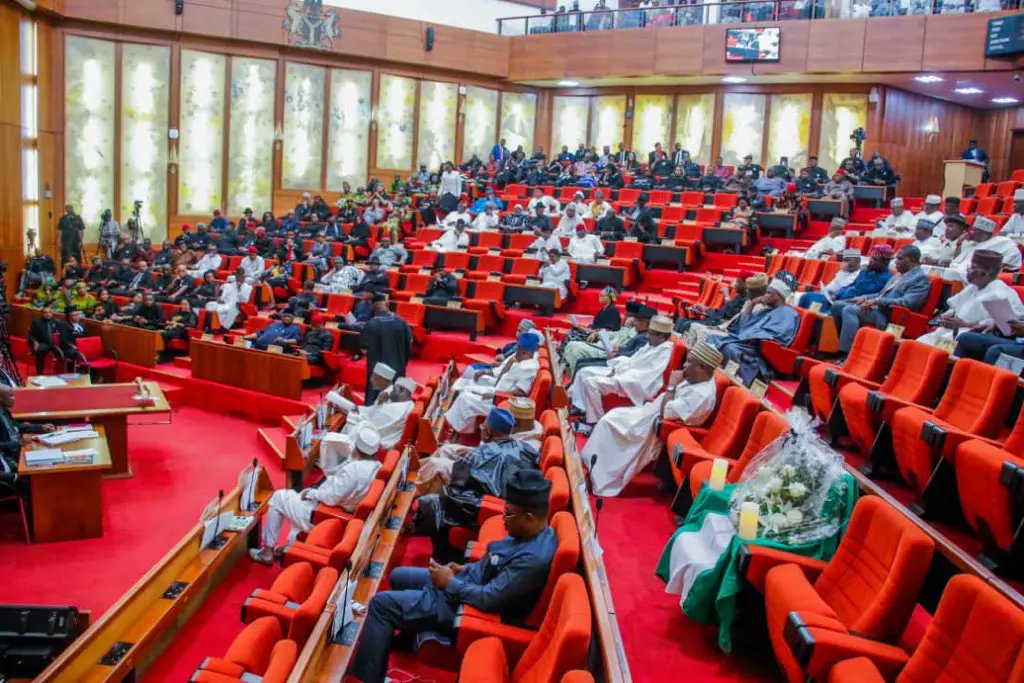
What began as a seemingly noble legislative proposal to recognize and formalize the roles of traditional rulers in Nigeria has now erupted into a national controversy, threatening to stoke ethnic tensions and reopen historical wounds.
The Senate’s bill to establish the National Council of Traditional Rulers of Nigeria—aimed at constitutionally acknowledging the influence of monarchs in fostering peace and development—has run into fierce resistance. At the heart of the storm lies a contentious clause: the permanent elevation of the Ooni of Ife and the Sultan of Sokoto as co-chairmen, placing them above all other traditional rulers in the land.
Far from uniting the country under a revered cultural structure, the provision has instead provoked heated condemnation from prominent socio-cultural organizations, regional groups, historians, and concerned citizens. Critics argue the move reeks of ethnic bias, historical distortion, religious favoritism, and constitutional breach.
Sponsored by Senator Simon Bako Lalong (Plateau South), the bill passed its second reading in March and is before the Senate Committee on Establishment and Public Service. While the proposal promises a structured and formal role for monarchs in governance, the decision to crown the Ooni and the Sultan as unchallenged leaders has been branded “divisive, unjust, and undemocratic.”
Ohanaeze Ndigbo, the apex Igbo socio-cultural group, denounced the bill as “ethnocentric and a direct affront to equity, fairness, and federal character.”
> “This asymmetric legislation disregards inclusivity and marginalises other historic royal thrones across the South-East, South-South, and Middle Belt,”
declared Dr. Ezechi Chukwu, its National Publicity Secretary.
Middle Belt’s Historical Pushback
The Middle Belt Forum (MBF) was equally unsparing, rejecting the Sultan’s elevation on “strong historical, cultural, constitutional, and moral grounds.”
According to MBF spokesman Luka Binniyat:
The Sokoto Caliphate is “historically junior” to ancient Middle Belt monarchies such as the Kwararafa Confederacy and the Attah of Igala, which thrived centuries before the caliphate’s birth.
Kingdoms like the Tiv and Nupe have never bowed to Sokoto authority, and their royal dignity must not be undermined.
The Sultan’s primary role as the spiritual leader of Muslims makes him a religious, not secular, authority—ill-suited to preside over a national, multi-faith council.
The MBF warned that enshrining the Sultan’s supremacy would alienate millions of non-Muslims and enshrine religious hierarchy in a secular state.
Colonial Wounds Reopened
The Forum recalled that much of the Middle Belt resisted the Usman Dan Fodio jihad of the 1800s, retaining independence until colonial rule imposed indirect governance under Fulani emirates.
> “More than 60 years after independence, it is unacceptable to resurrect a colonial hierarchy that placed our people under a Fulani-dominated structure,”
the MBF insisted, threatening to boycott the council if the bill passes unchanged
In an unexpected twist, Concerned Hausa Stakeholders also rejected the clause, stressing that the Sultan of Sokoto is not a traditional ruler of the Hausa people but a Fulani religious leader.
> “If religion is the basis for elevation, then Christian leaders such as the President of CAN must also be given equal standing,”
the group argued, adding that Hausa kingdoms like Daura, Kano, Zaria, and Katsina predate the Caliphate by centuries.
Yoruba Voices Push Back Against Ooni’s Supremacy
Even within the South-West, dissent is brewing. University lecturer Femi Adebowale declared:
> “Historically, the Alaafin of Oyo is superior to the Ooni of Ife. The Ooni cannot speak for the Yoruba nation, let alone Southern Nigeria.”
From the South-South, Edo lawyer Caleb Osazuwa dismissed the clause as “the greatest joke of the century,” saying the Oba of Benin could never be placed under the Ooni’s authority.
Igbo Development Foundation’s Stinging Rebuke
The Alaigbo Development Foundation (ADF) labelled the proposal “provocative and subjugative,” warning President Bola Tinubu that “a million Tinubu cannot subjugate Ndigbo.” It called on Igbo lawmakers to oppose the bill decisively.
Across the opposition spectrum, one consistent demand stands out: rotational or elective leadership for the council, ensuring representation from all geo-political zones and ethnic groups.
Some suggest monarchs themselves should elect their leaders in a transparent and inclusive process, preventing any single throne from holding permanent authority.
The Bigger Question
While proponents argue the bill would strengthen traditional authority and enhance cultural unity, critics warn it risks codifying ethnic hierarchy, religious dominance, and historical erasure.
What was meant to be a unifying step could now deepen Nigeria’s divisions if the Senate presses ahead without broad-based consensus.
For many Nigerians, the issue is not about the Ooni or the Sultan individually—it’s about whether any monarch should be placed above others in a nation defined by pluralism, history, and equality.

