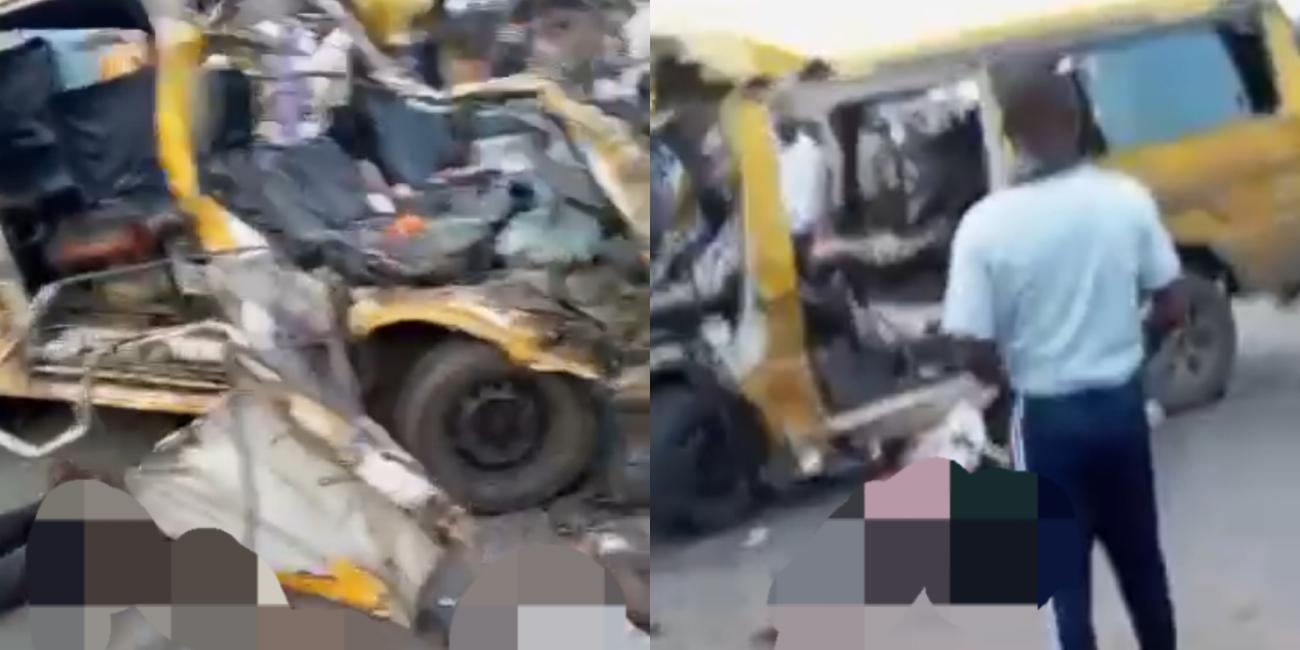
A routine Sunday morning turned into a nightmare on the Lagos-Badagry Expressway as a horrific crash claimed the lives of at least eight passengers in a commercial bus that collided with a stationary trailer at the MTN Bus Stop, near the Elijah axis.
The 18-seater bus, traveling from Lagos to Badagry, reportedly rammed into the parked trailer—allegedly halted at a military checkpoint—sparking outrage among eyewitnesses who accused security operatives of engineering death traps in their quest for bribes.
In a harrowing video obtained by SaharaReporters, an eyewitness, speaking in Yoruba, lashed out at the soldiers:
“See what soldiers caused because of N1,000. Look at dead bodies early in the morning. Is this fair? The Nigerian Army caused this accident. We don’t want officers on this road anymore.”
The disturbing footage showed no fewer than seven lifeless bodies sprawled across the scene as bystanders wailed in anguish. Among the dead were the bus driver and conductor, as confirmed by the General Manager of the Lagos State Traffic Management Authority (LASTMA), Mr. Olalekan Bakare-Oki.
“It’s heartbreaking,” Bakare-Oki said. “The accident was fatal. Eight lives were lost on the spot.”
Locals and frequent road users are laying the blame squarely on the shoulders of the country’s security agencies, accusing them of turning the highway into a killing field under the guise of checkpoints.
“From Mile 2 to Owode Apa border, this road has become a cash cow for corrupt officers,” a frequent commuter told SaharaReporters. “There are more checkpoints here than anywhere else in West Africa. It doesn’t stop smuggling or crime. It only enriches greedy men in uniform while costing innocent lives.”
The resident further lamented that the area has suffered a total blackout since the COVID-19 lockdown, with no electricity for five years—a metaphor, he said, for the darkness that now envelops the region’s governance.
This is not the first time checkpoints manned by soldiers, police officers, V.I.O. officials, or motor park touts have been accused of causing fatal traffic accidents in Nigeria. However, the scale and raw emotion surrounding this latest tragedy have reignited calls for an urgent overhaul of security protocols on major highways.
Efforts to reach the spokesperson for the Nigerian Army, Lt. Col. Onyinyechi Anele, were unsuccessful as calls to her mobile phone went unanswered.
As outrage mounts, Nigerians are demanding answers and justice—not just for the lives lost on Sunday morning, but for the countless others endangered daily by what many now describe as a “bribe-for-blood” road culture.

