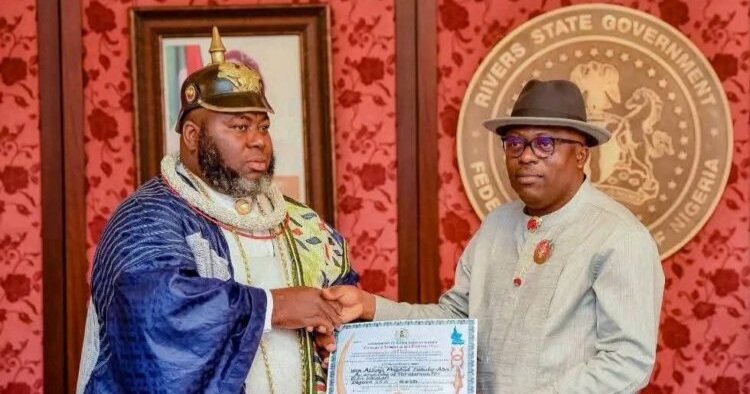
In a move stirring reactions across Nigeria, Rivers State Governor, Siminalayi Fubara, has officially conferred staff of office on former militant leader Alhaji Mujahid Asari Dokubo and three others, elevating them as recognized traditional monarchs in the state. The announcement was made through Sahara Reporters’ official X (formerly Twitter) handle, accompanied by a detailed report on the symbolic ceremony.
The recognition of Asari Dokubo, a polarizing figure with a complex history of militancy and activism in the Niger Delta, has drawn both praise and criticism. As a former leader of the Niger Delta People’s Volunteer Force, Dokubo has long been a vocal advocate for resource control and equity in the oil-rich region. His new status as a monarch marks a significant shift, underscoring his integration into the traditional and political fabric of Rivers State.
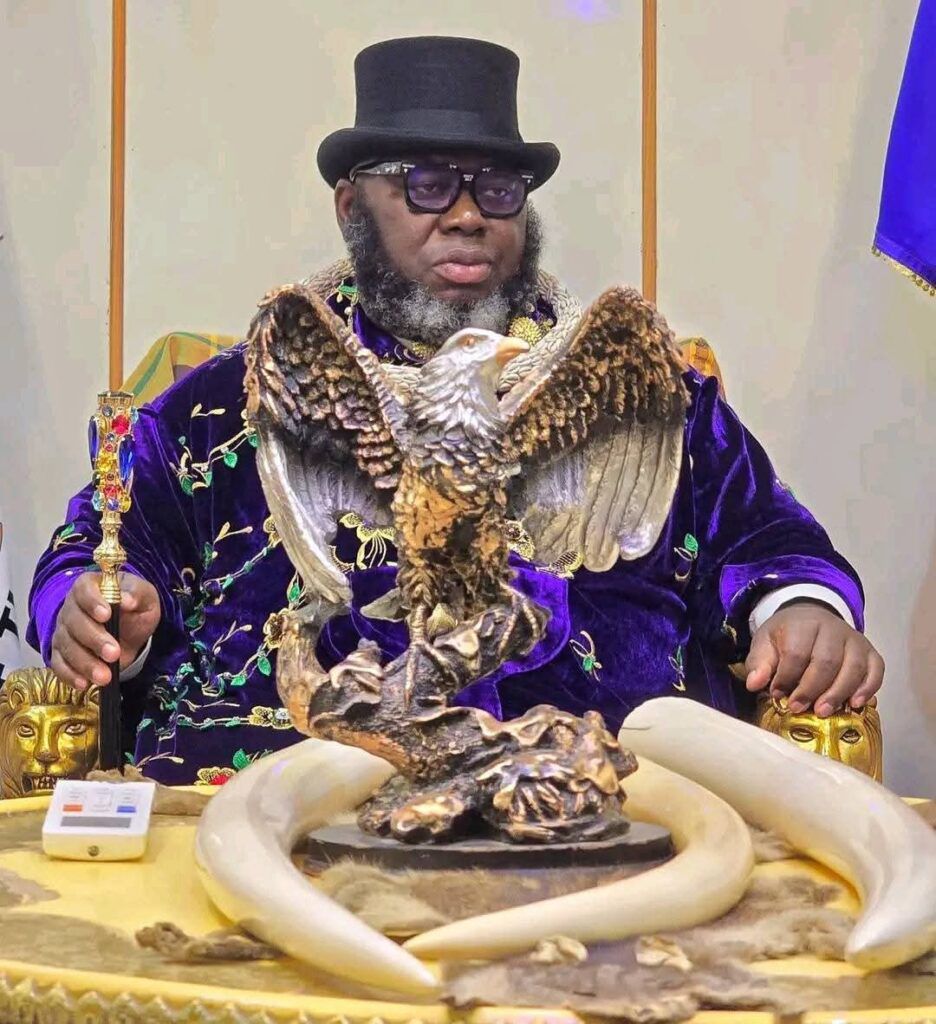
The other three monarchs, whose names and contributions to their communities were also highlighted, received similar honors during a formal event held in Port Harcourt, the state capital. The ceremony symbolized the state government’s commitment to fostering peace and stability by recognizing influential leaders within the region.
Governor Fubara, while presenting the staff of office, emphasized the importance of traditional rulers in promoting unity and development at the grassroots level. He expressed confidence that the newly recognized monarchs, including Dokubo, would leverage their positions to champion the welfare of their communities.
However, the decision has not been without controversy. Critics argue that bestowing such honors on a figure with a militant past sends mixed signals about the state’s stance on law and order. Supporters, on the other hand, view the move as a pragmatic step towards reconciliation and the empowerment of grassroots leaders to drive development.
Asari Dokubo, in his acceptance speech, pledged to use his position to advocate for peace and community development, reaffirming his loyalty to the state government and the people of his domain. “This recognition is not just an honor to me but to the entire Niger Delta. I will work tirelessly to uphold the dignity of this office and contribute to the progress of our great state,” he stated.
The inclusion of prominent and sometimes controversial figures into traditional leadership structures highlights a broader trend of integrating influential personalities into governance frameworks. While the long-term implications of such decisions remain to be seen, they undoubtedly reshape the narrative of leadership in the region.
Governor Fubara’s gesture reflects his administration’s strategy of fostering inclusivity and dialogue among diverse stakeholders in Rivers State. Whether this approach will yield the desired harmony and progress remains a question that time will answer.
The news has ignited spirited debates on social media, with Nigerians expressing a wide range of opinions. Some applaud the governor for his bold decision, while others remain skeptical about the impact on Rivers State’s political and traditional systems.
As the dust settles on this historic event, all eyes will be on the newly crowned monarchs to see how they navigate their roles in this dynamic chapter of Rivers State’s history.

