By Usman Umar Girei
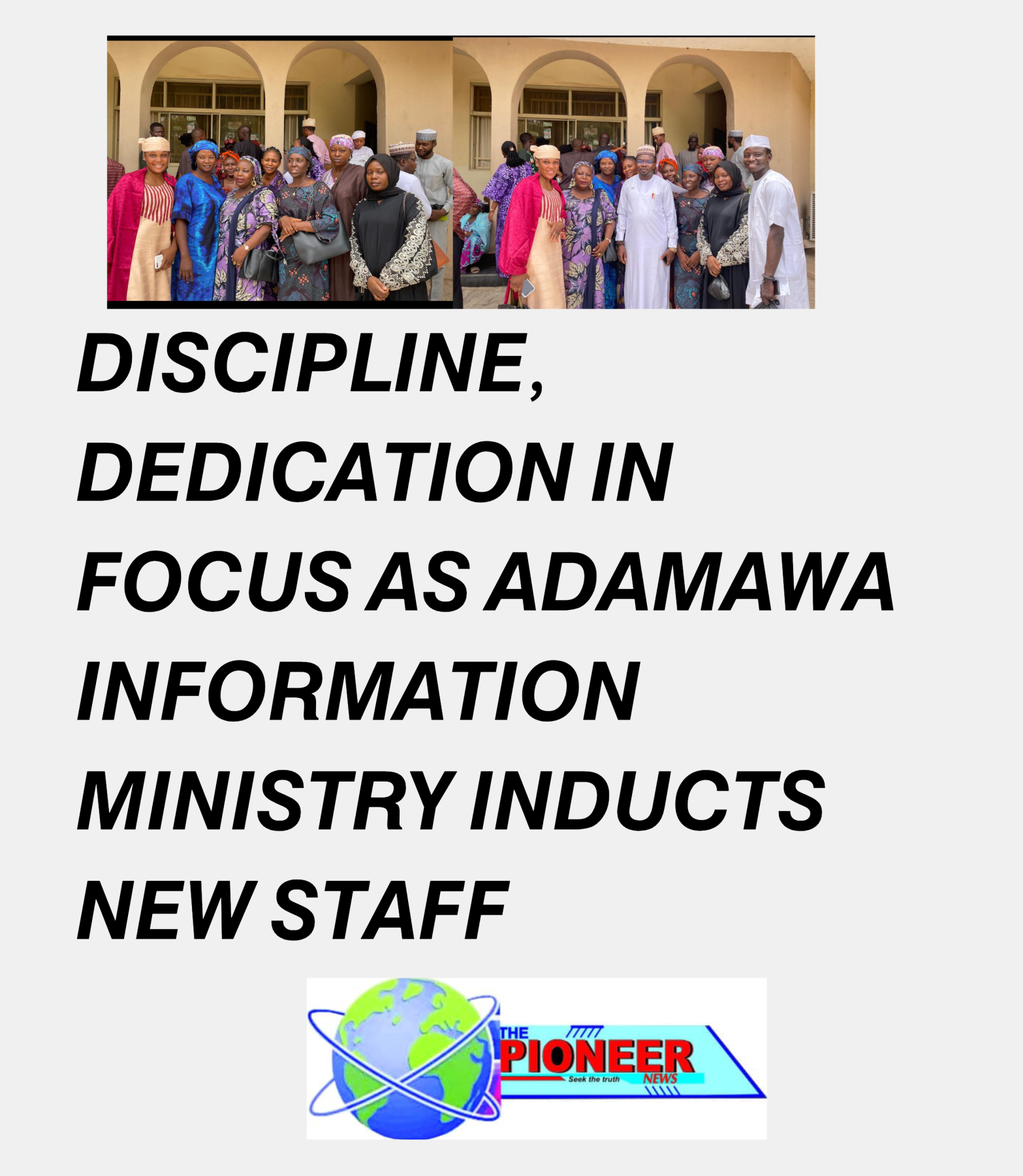
YOLA, ADAMAWA STATE — In a decisive stride toward strengthening public service delivery, the Adamawa State Ministry of Information and Strategy has launched a comprehensive two-day induction and training programme for its newly recruited staff, setting a firm tone of discipline, professionalism, and unwavering dedication.
The high-impact exercise, which commenced earlier this week at the Nyako Centre, State Secretariat, Yola, is tailored to groom fresh employees into competent civil servants equipped with sound knowledge of public service rules, administrative procedures, and effective communication strategies.
Declaring the programme open, the Permanent Secretary of the Ministry, Hajiya Hauwa Ali Banu, delivered a firm and inspiring charge, urging participants to embrace the training with utmost seriousness and commitment. She emphasized that excellence in service begins with a deep understanding of responsibility, discipline, and ethical conduct.

“The Ministry of Information and Strategy remains the voice and image of government. As such, every staff must embody professionalism, loyalty, and integrity in the discharge of their duties,” she asserted.
Hajiya Banu further underscored that the induction programme forms a critical part of government’s broader agenda to build a capable, efficient, and responsive workforce that can effectively drive the state’s information management and public enlightenment initiatives.
In a thought-provoking session, the first resource person, Mr. Felix Tiyambo, delivered a detailed lecture on “Discipline and Office Procedure,” where he laid bare the foundational principles guiding civil service operations. He stressed the importance of punctuality, diligence, proper record keeping, and strict adherence to official secrecy.
Tiyambo issued a stern warning against acts of indiscipline—including absenteeism, lateness, and mishandling of official documents—highlighting that such misconduct attracts sanctions under the Public Service Rules. He further equipped participants with practical knowledge on drafting official memos, recording minutes, and writing formal correspondence, noting that strict compliance with laid-down procedures ensures efficiency and safeguards officers from costly administrative errors.
Adding depth to the training, the second resource person, Mr. Moses Bakari, Head of Administration at the Ministry of Transport Development, delivered an incisive lecture on “Administrative Communication and Hierarchy.” His session illuminated the structure of communication within the civil service, emphasizing the sanctity of the chain of command.

Bakari stressed that effective administrative communication must be clear, concise, and properly channeled to prevent breaches, confusion, and acts of insubordination. He urged the new staff to master both vertical and horizontal communication dynamics while ensuring all official engagements are well documented and appropriately routed.
Participants at the induction expressed profound appreciation to the ministry, describing the programme as timely, enlightening, and transformative. Many noted that the sessions have provided them with a clearer understanding of their roles and the expectations placed upon them as public servants.
As the programme progresses, more expert-led sessions are expected, focusing on media relations, information management, and the strategic role of the ministry in shaping public perception and promoting government policies.
The Ministry reaffirmed its commitment to institutionalizing regular induction programmes for all new entrants, a move aimed at entrenching standardization, boosting efficiency, and sustaining excellence across the civil service.

 PIONEER NEWS