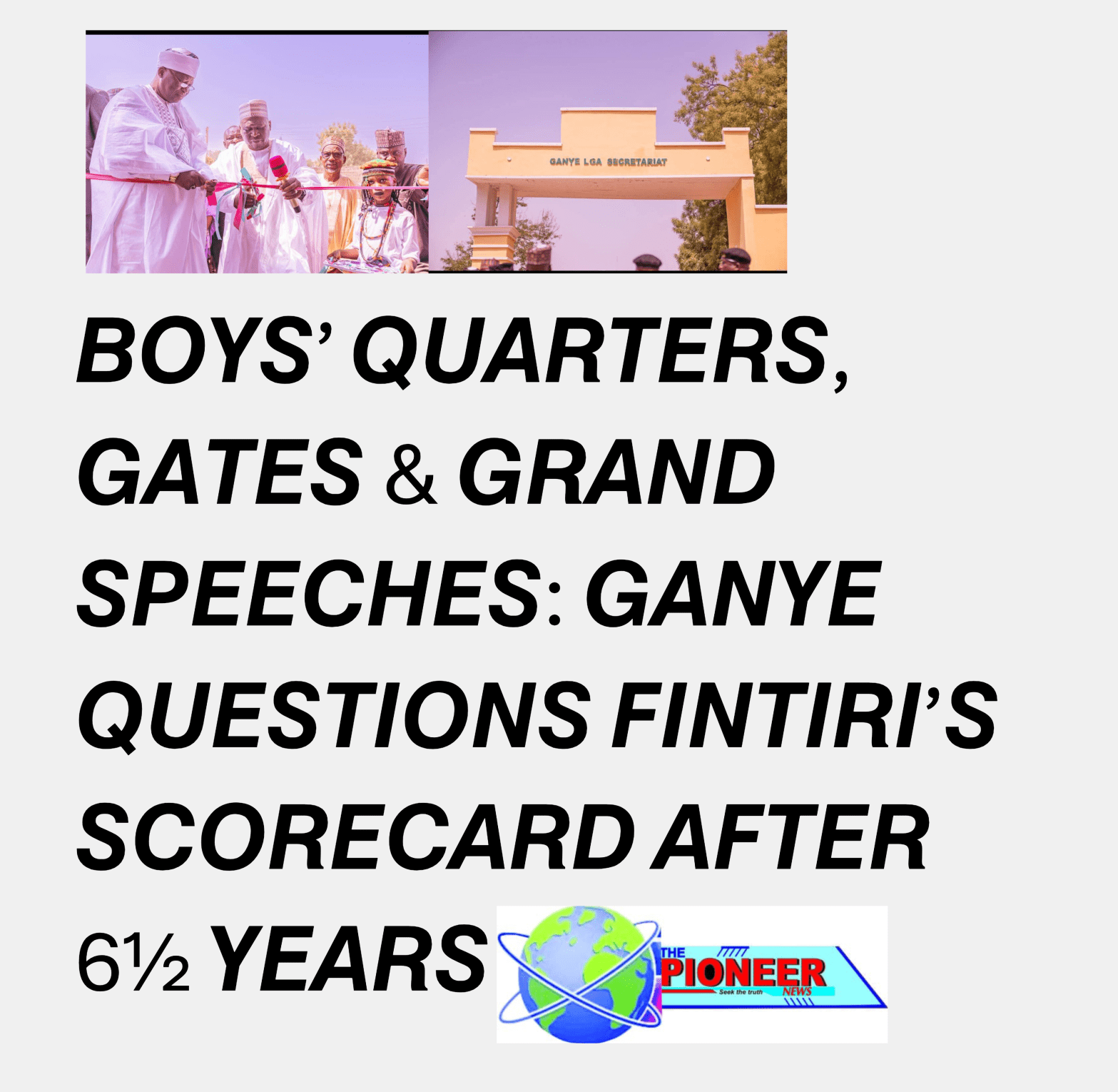
— As PDP Flaunts “Projects,” Residents Ask: Is This the Best We Deserve?
Ganye Local Government Area was on full display as Governor Ahmadu Umaru Fintiri stormed the town with the usual fanfare—speeches, ceremonies and commissioned structures. But beneath the applause and official rhetoric, a louder question echoed across the streets of Ganye: after six and a half years in power, is this truly the dividend of democracy the people were promised?
While the governor assured residents of his administration’s “unwavering commitment” to infrastructure and development, many locals say the reality on ground tells a far less inspiring story. Critics argue that what was presented as monumental achievements were, at best, symbolic projects and, at worst, a recycling of modest interventions dressed as legacy accomplishments.
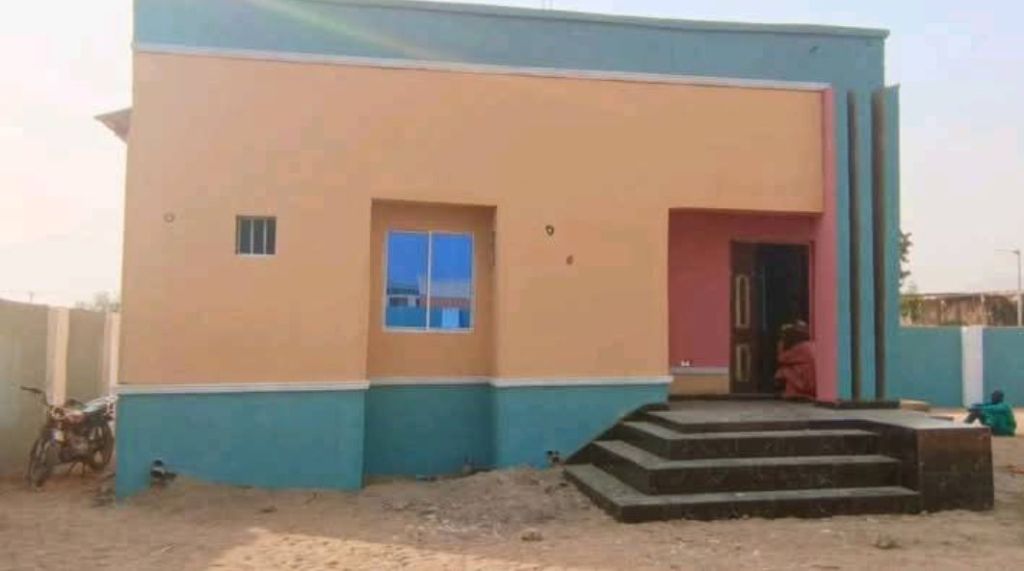
At the centre of the controversy is the commissioning of structures many residents consider unworthy of grand celebration. A boys’ quarters reportedly built by the local council chairman, now christened and commissioned in the name of a palace, has drawn sharp criticism. “When did a boys’ quarters become a people-oriented project?” one community leader asked. “Is this what six years of governance has reduced us to?”
Equally questioned is the obsession with gates—welcome gates, palace gates, secretariat gates. While gates may beautify an environment, critics insist they do little to address the pressing needs of the masses. Can gates create jobs? Can gates fix healthcare? Can gates lift farmers, traders, youths and women out of hardship? For many in Ganye, the answer is a resounding no.
Governor Fintiri also highlighted the completion of the Ganye–Sanga Sumi road, a project initiated under the previous APC administration. While acknowledging its importance, residents argue that finishing a project inherited from a former government cannot be the headline achievement of a six-and-a-half-year tenure. “Is completing one inherited road all the PDP can point to after all these years?” a youth activist queried.
Despite lofty claims of free education, empowerment programmes and job creation, critics say the lived experience of Ganye people contradicts the glossy narrative. Poor infrastructure in rural communities, limited economic opportunities, and unfulfilled promises continue to define daily life for many residents.
For a local government with enormous agricultural, commercial and human potential, expectations were high. But as one elder bluntly put it, “Ganye was promised transformation; what we got were speeches and signboards.”
As the political drums begin to beat louder, the people of Ganye appear increasingly unwilling to be swayed by ceremonies alone. The message from the streets is clear: development must go beyond gates and renamed buildings—it must touch lives, empower communities, and leave a legacy that speaks louder than political propaganda.
In Ganye today, the verdict from many residents is harsh but firm: the PDP-led government has failed to match words with meaningful action. And as history has shown, the ballot box has a long memory.
 PIONEER NEWS