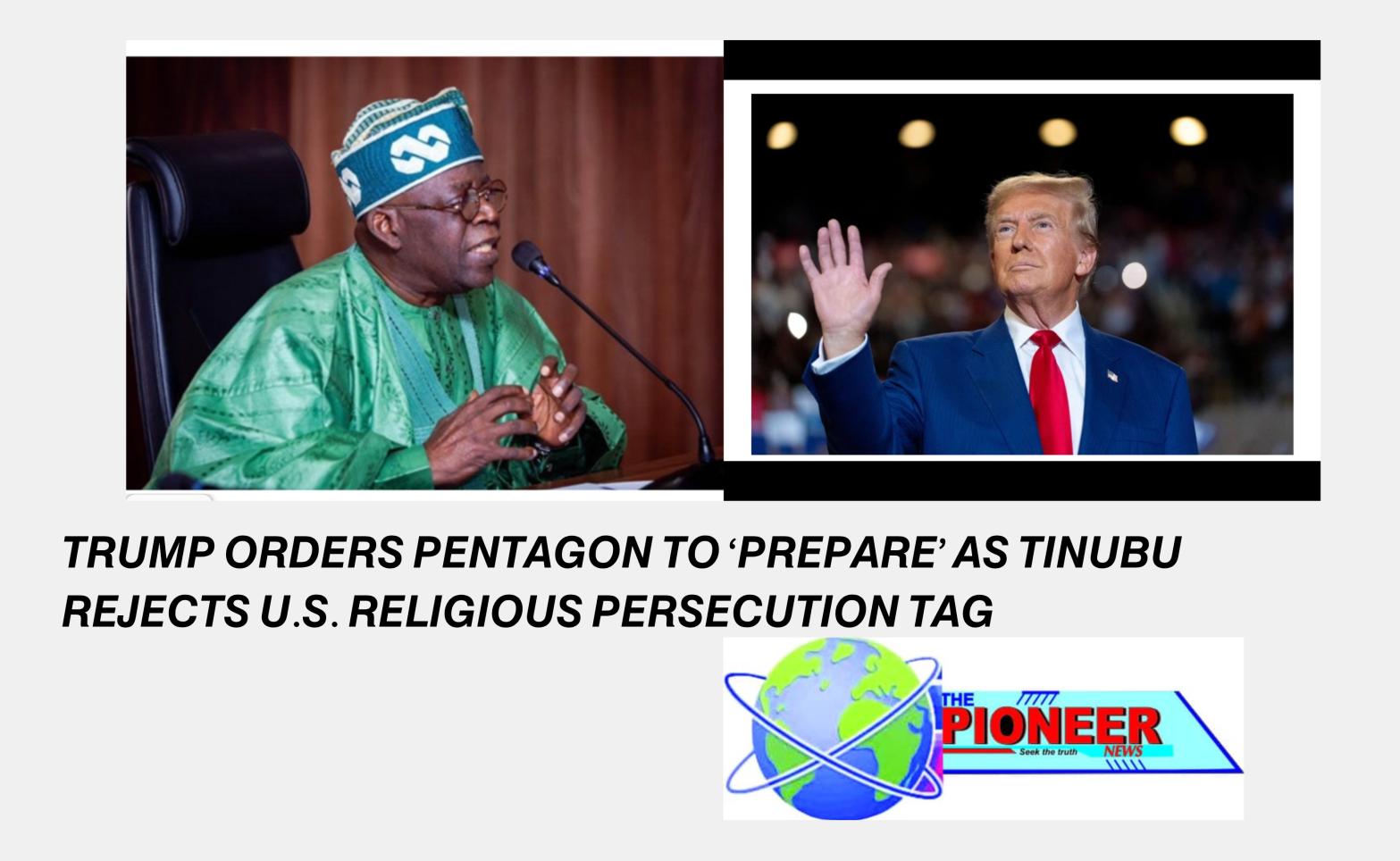
A major diplomatic storm has erupted between Nigeria and the United States after U.S. President Donald J. Trump ordered the Pentagon to prepare for what he described as a “possible show of force” in Nigeria. The move follows his designation of the country as a “Country of Particular Concern” (CPC) over alleged persecution of Christians.
President Bola Ahmed Tinubu swiftly rejected the claim, describing Trump’s allegations as “false, provocative, and deeply misleading.” He maintained that Nigeria guarantees freedom of worship under its Constitution and remains committed to protecting all citizens, regardless of faith.
In an official statement, the Ministry of Foreign Affairs condemned the U.S. classification as “distorted and unhelpful,” insisting that the country’s security challenges affect both Christians and Muslims alike. It accused Trump of politicizing complex security issues and urged Washington to base its judgments on verified facts rather than rhetoric.
The ministry reaffirmed Nigeria’s commitment to counterterrorism cooperation with the U.S. but warned that unilateral actions or threats could damage long-standing bilateral relations.
According to reports by Reuters, Associated Press, and The Washington Post, Trump’s directive to the Pentagon involves contingency planning rather than an immediate military move. However, analysts say the order signals a hardening of U.S. policy and could lead to sanctions or aid restrictions if not diplomatically resolved.
The designation places Nigeria alongside countries such as Iran, North Korea, and Myanmar, which have faced previous U.S. religious freedom sanctions.
ANALYSTS WARN OF ESCALATION
Security and diplomatic experts warn that Trump’s stance could strain cooperation between both nations, especially in joint counterterrorism efforts across West Africa.
“This move is more symbolic than operational for now, but it sends a dangerous message that could polarize religious relations within Nigeria,” said a senior political analyst in Lagos.
At the Presidential Villa in Abuja, President Tinubu reaffirmed his administration’s commitment to religious tolerance, unity, and security, emphasizing that “Nigeria will not be bullied or misrepresented before the world.”
He assured Nigerians that the government is in active diplomatic contact with Washington to clarify the situation and safeguard the nation’s sovereignty.
While some U.S.-based advocacy groups applauded Trump’s declaration, international observers, including Al Jazeera and Amnesty International, urged caution, stressing the need for balanced reporting and credible evidence on alleged religious persecution.
Regional bodies, including the African Union, are reportedly monitoring the situation, wary that the diplomatic fallout could destabilize U.S.–Africa relations at a delicate time.
BOTTOM LINE
Trump’s controversial order — a mix of diplomacy, ideology, and power politics — has thrown Nigeria–U.S. relations into turbulence. With both sides holding firm, the coming days will determine whether dialogue prevails or if the world’s most populous Black nation faces a deeper diplomatic chill with Washington.
TRUMP ORDERS PENTAGON TO ‘PREPARE’ AS TINUBU REJECTS U.S. RELIGIOUS PERSECUTION TAG
 PIONEER NEWS