Delta opts out of suit as FG defends President’s action
• Verdict to determine limits of executive powers
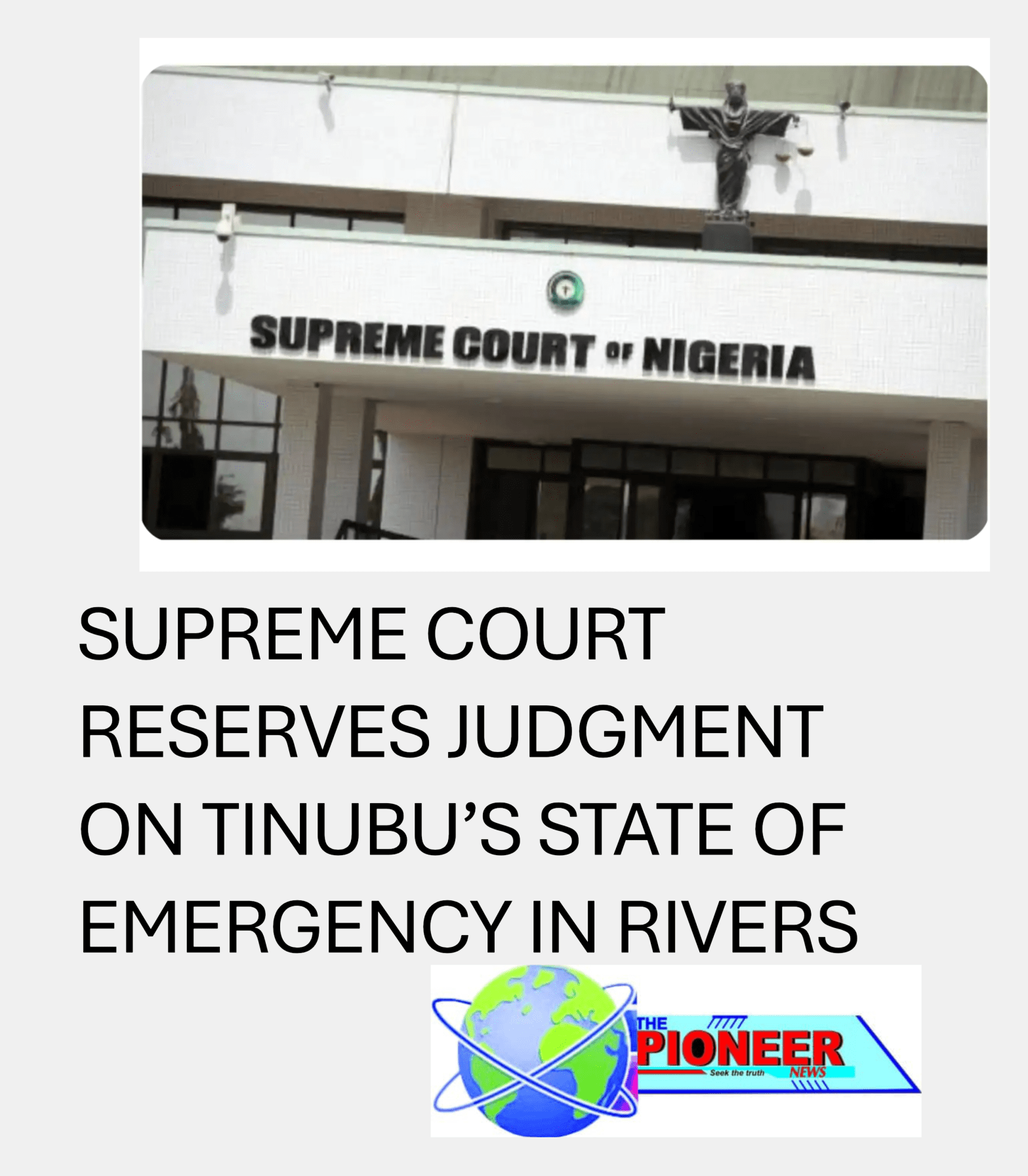
ABUJA – The Supreme Court has reserved judgment in the suit challenging President Bola Ahmed Tinubu’s declaration of a state of emergency in Rivers State, a case that could shape the future interpretation of presidential powers in Nigeria’s democratic setting.
A seven-member panel of justices led by Justice Inyang Okoro took the decision on Tuesday after hearing final arguments from all parties in the matter. The court said a date for its verdict would be communicated to the parties in due course.
The Attorneys General of ten states are plaintiffs in the suit, with the Federal Government and the National Assembly as defendants. However, Delta State, one of the plaintiffs, withdrew from the case during Tuesday’s session— a move that was not opposed by the Federal Government’s counsel, Lateef Fagbemi (SAN).
Fagbemi argued that President Tinubu’s decision was constitutional, noting that the emergency declaration became necessary to address the deepening political crisis that had paralysed governance in Rivers State.
He explained that the governor, Siminalayi Fubara; his deputy, Ngozi Odu; and members of the State House of Assembly were not removed from office but temporarily suspended to restore peace and order in the state.
“The President acted within the bounds of the Constitution and in the interest of national stability,” Fagbemi told the court, urging the justices to dismiss the suit in its entirety.
However, counsel to the plaintiffs, Eyitayo Jegede (SAN), countered that their case does not question the President’s power to declare a state of emergency but rather challenges the scope of that declaration and its implications for the offices of the governor, deputy governor, and lawmakers.
“The key issue before this honourable court is whether such a declaration can validly interfere with the tenure and authority of elected officials,” Jegede stated.
It would be recalled that President Tinubu declared a state of emergency in Rivers State in March 2025 following a protracted political feud between Governor Fubara and his predecessor, Nyesom Wike, now Minister of the Federal Capital Territory.
The declaration, which temporarily halted normal political activities in the oil-rich state, expired in September 2025, leading to the restoration of democratic governance.
As the nation awaits the Supreme Court’s decision, legal experts say the judgment will not only determine the fate of the Rivers case but also clarify the constitutional boundaries of executive authority during political crises.
 PIONEER NEWS