The National Assembly has unveiled a major electoral reform proposal that could alter Nigeria’s political calendar, setting the next presidential and governorship elections for November 2026, six months earlier than usual.
The proposed change is contained in the Electoral Act (Amendment) Bill 2025, presented during a public hearing jointly organised by the Senate and House Committees on Electoral Matters in Abuja on Monday.
According to the bill, “Elections into the office of the President and Governor of a State shall be held not later than 185 days before the expiration of the term of office of the last holder of the office.” The new timeline, if approved, will move the elections from February to November 2026.
Chairman of the House Committee on Electoral Matters, Hon. Adebayo Balogun, explained that the decision was designed to ensure that “all election litigations are fully resolved before the inauguration of new officeholders.”
He disclosed that lawmakers are seeking amendments to Sections 285 and 139 of the 1999 Constitution to shorten the timeline for election petitions — reducing tribunal rulings from 180 to 90 days, appellate court judgments from 90 to 60 days, and limiting the overall process to 185 days.
The proposed bill introduces a range of sweeping reforms aimed at enhancing credibility, efficiency, and transparency in Nigeria’s electoral process:
Mandatory Electronic Transmission: The bill seeks to make electronic transmission of election results compulsory.
The proposed Section 60(5) states: “The Presiding Officer shall transmit the results, including the total number of accredited voters, to the next level of collation both electronically and manually.”
Early Voting Provision: Security agents, INEC staff, accredited journalists, and election observers would be allowed to cast their votes at least 14 days before the general election to ensure smooth operations on election day.
Stiffer Sanctions For Electoral Offences: Any presiding officer who issues unstamped ballot papers or result sheets would face a ₦1 million fine or a one-year jail term.
During the hearing, the Independent National Electoral Commission (INEC), represented by Prof. Abdullahi Zuru, threw its weight behind the proposal, describing electronic voting and compulsory result transmission as “critical to restoring public confidence and reducing post-election disputes.”
The new bill comes months after a similar proposal to conduct all elections in Nigeria on the same day sparked widespread debate across the political landscape.
While opposition parties — including the Peoples Democratic Party (PDP), Labour Party (LP), African Democratic Congress (ADC), and New Nigeria People’s Party (NNPP) — backed the plan, the ruling All Progressives Congress (APC) warned it could lead to logistical chaos and security risks.
That initiative, championed by the House Committee on Constitution Review led by Deputy Speaker Benjamin Kalu, was part of a broader effort to streamline Nigeria’s electoral system, cut costs, and minimise post-election bandwagon effects.
If adopted, the current bill will represent one of the most far-reaching electoral reforms in Nigeria’s history, reshaping the timing, structure, and integrity of future elections.
With just over a year to the proposed 2026 polls, political observers say the reform — if passed — will test the readiness of both INEC and the political class to adapt to a more transparent, technology-driven electoral order.
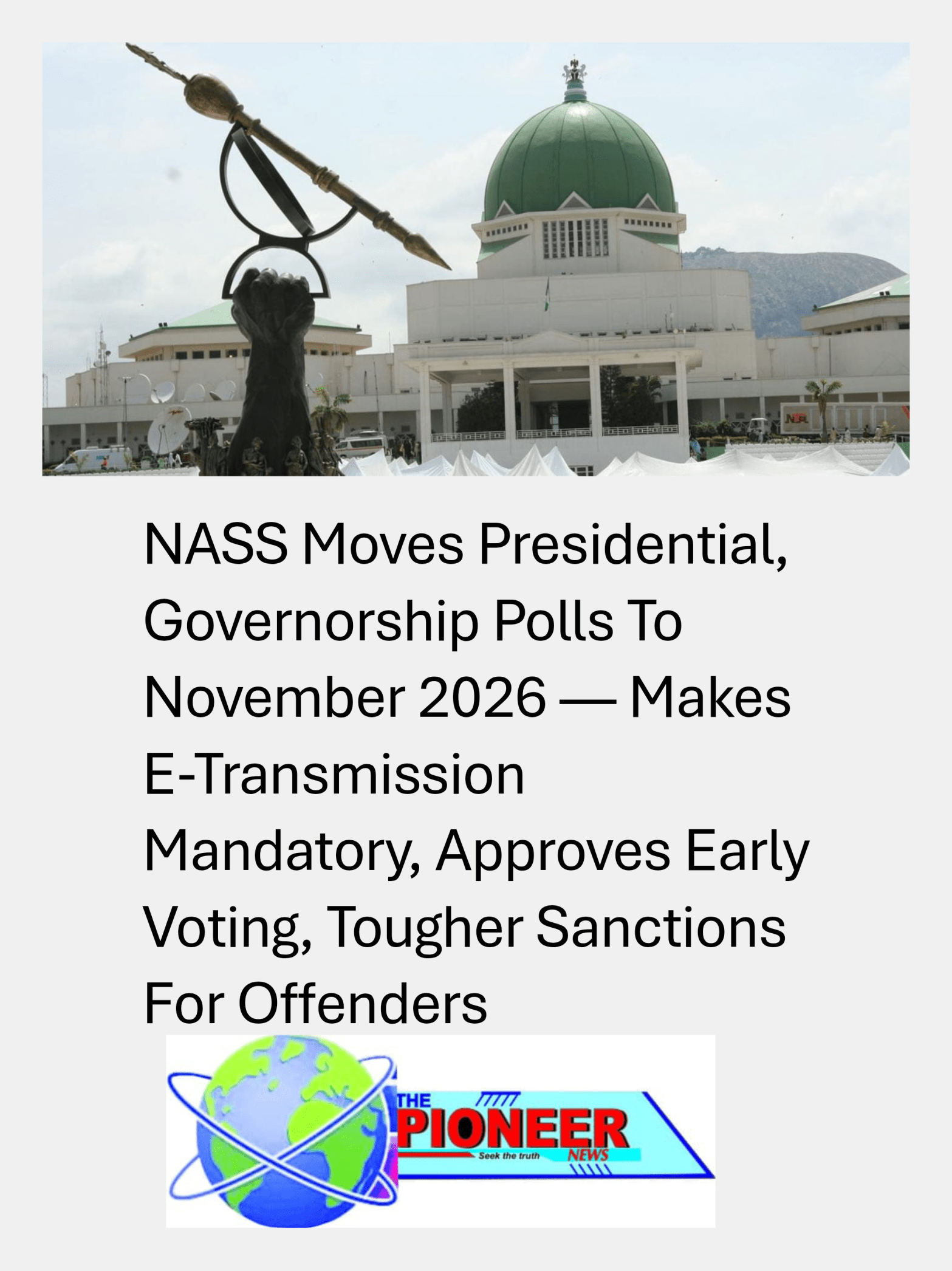
NASS Moves Presidential, Governorship Polls To November 2026 — Makes E-Transmission Mandatory, Approves Early Voting, Tougher Sanctions For Offenders
 PIONEER NEWS