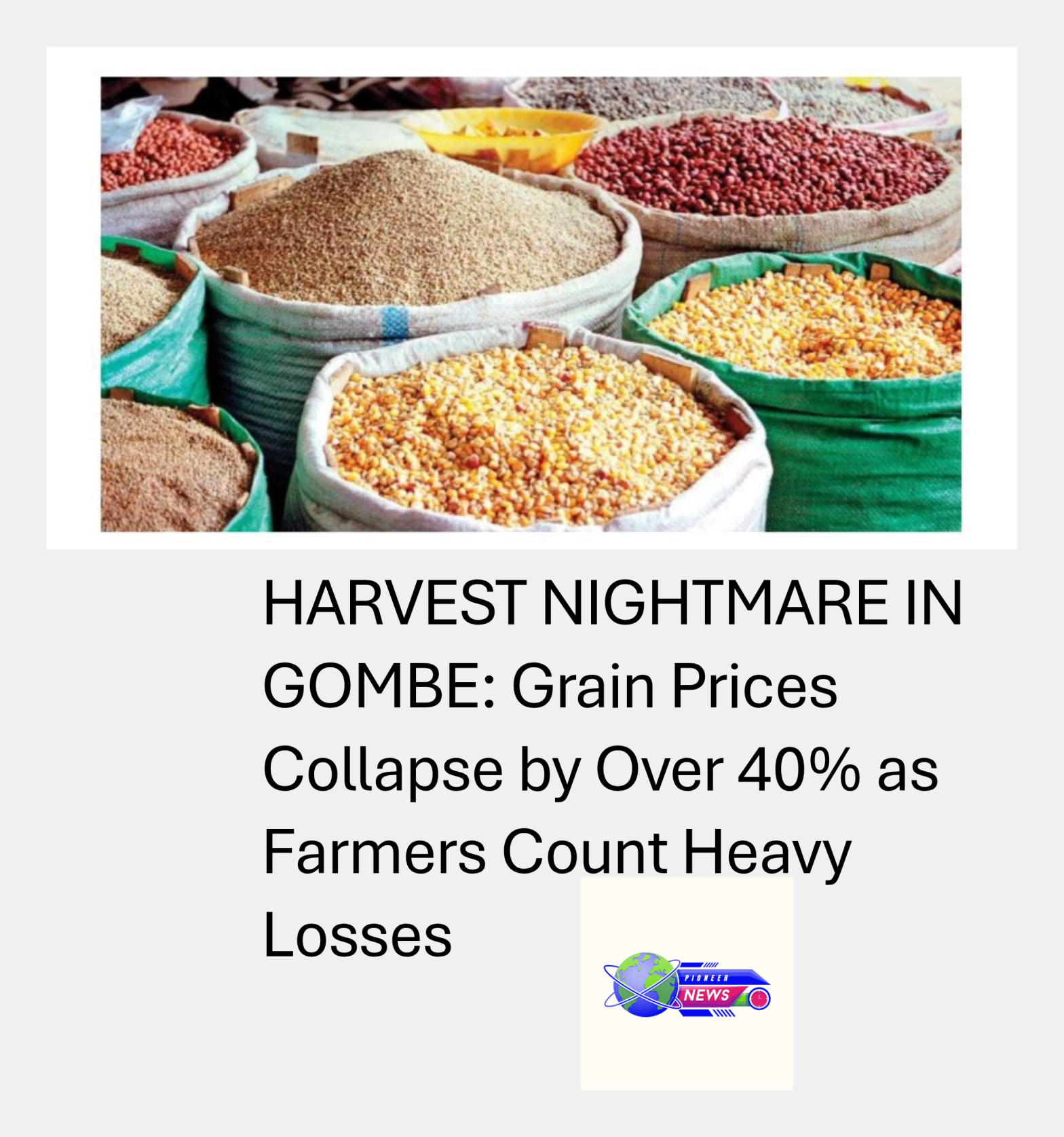
“We can’t even recover transport money,” lament desperate farmers as markets flood with unsold produce
By NAN
Gombe, Nigeria — The joy of harvest has turned into heartbreak for thousands of farmers across Gombe State as grain prices crash to historic lows, wiping out months of labour and investment.
From Gombe Central to Tudun Hatsi Market, the story is the same — panic, frustration, and despair. Prices of major food staples have fallen by more than 40 percent compared to last year, a decline traders blame on bumper harvests, weak consumer demand, and rising food imports.
A News Agency of Nigeria (NAN) market survey on Friday revealed shocking price drops:
Maize: ₦20,000 (down from ₦60,000)
Beans: ₦80,000 (was ₦145,000)
Local Rice: ₦100,000 (down from ₦130,000)
Paddy Rice: ₦25,000 (was ₦170,000)
Groundnut: ₦95,000 (was ₦120,000)
Wheat: ₦70,000 (was ₦56,000)
Millet: ₦22,000
Soybean: ₦60,000 (down from ₦110,000)
At Tudun Hatsi Market, traders sit beside overflowing grain sacks, their faces etched with worry.
> “Prices are still dropping as more farmers bring in their harvests. People want to buy, but there’s no money in circulation,”
lamented Ali Musa, Secretary of the Tudun Hatsi Grain Market.
According to him, merchants who stocked up last season are now counting their losses.
> “Many are selling at giveaway prices just to avoid total ruin,” he said.
For many farmers, the situation is devastating. Rising costs of fertilisers, labour, fuel, and transport have eroded any potential profit.
> “We spent everything to cultivate our farms. Now we can’t even recover transport money,”
said Malam Zakari, a maize and rice farmer from Hinna, Yemaltu/Deba LGA.
He appealed to the government for urgent support to stabilise the sector.
> “We need affordable fertilisers, soft loans, and insurance. Without that, farmers will give up next season. We can’t survive like this,” he warned.
While consumers may celebrate the fall in food prices amid Nigeria’s economic hardship, experts caution that the trend could have dire consequences for national food security.
Agric analysts note that Gombe’s grain price collapse mirrors a wider crisis spreading across the North — from Bauchi to Kano and Taraba — where oversupply meets dwindling purchasing power.
If left unchecked, the experts warn, what should have been a season of bounty may instead usher in a new wave of agrarian poverty and food production decline.
> “If farmers can’t sustain production, the next planting season will see fewer participants — and that will drive prices up again, worsening food inflation,”
one expert noted.
For now, Gombe’s once-thriving grain markets remain choked with unsold produce — a stark reminder that without deliberate government action, plenty today could mean scarcity tomorrow.
 PIONEER NEWS