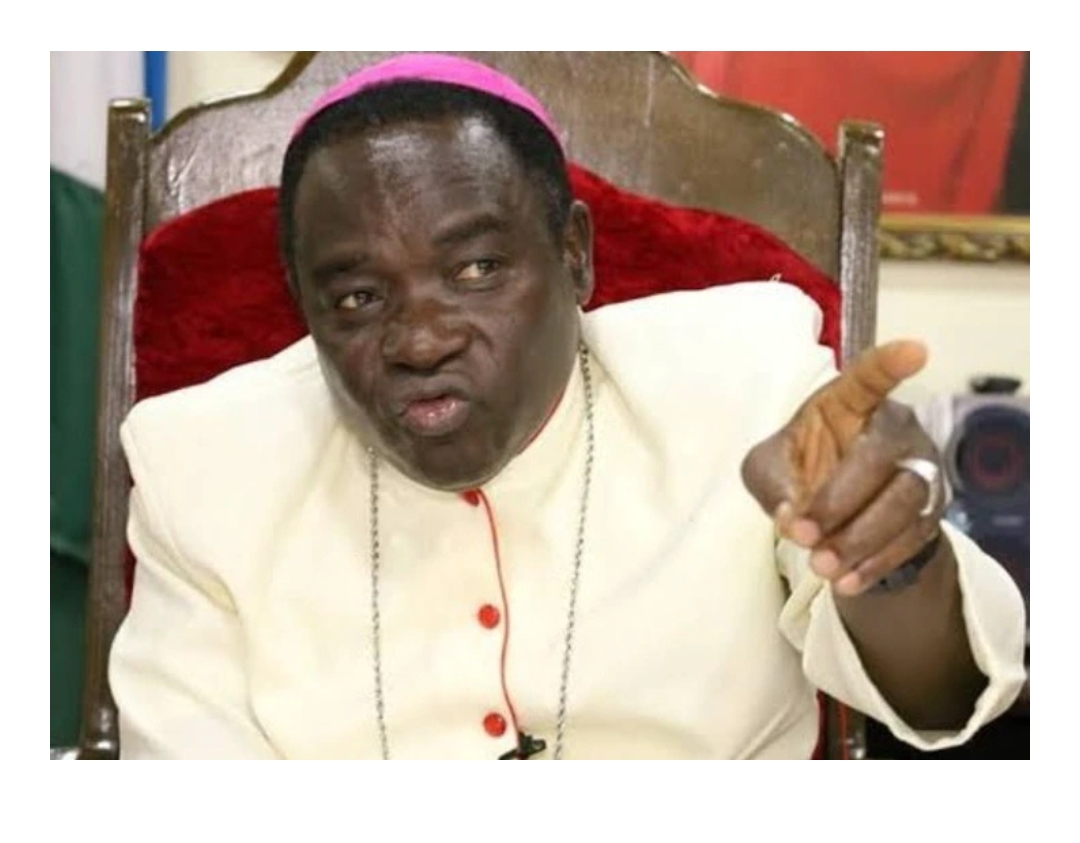
Catholic Bishop Decries Erasure of Missionary Legacy in Northern Nigeria’s Education System
The simmering debate over religion, heritage, and education in northern Nigeria flared up again this week after Bishop Matthew Hassan Kukah, Catholic Bishop of Sokoto Diocese, questioned what he described as a disturbing trend: the takeover and renaming of Catholic mission schools by successive governments.
In a video interview shared by Arise TV, Bishop Kukah lamented that institutions painstakingly established by Catholic missionaries—schools that not only delivered quality education but also produced some of Nigeria’s finest leaders—have been stripped of their original Christian identities and rechristened with Muslim titles.
“Many of the prestigious schools across the North were built by Catholic missionaries,” Kukah explained, “but over the years, government authorities took them over, erasing their history and legacy.”
To drive home his point, the fiery cleric posed a provocative question: “Can you imagine if a Christian president or governor took over a school named after the Sardauna of Sokoto and renamed it St. Thomason? What would happen? The outrage would be unimaginable. Yet this is exactly what has happened to Catholic-founded schools.”
Kukah noted that while he often raises the issue with his Muslim friends, the responses he gets reflect how sensitive—and sometimes one-sided—the matter is. He further observed that beyond the Southwest, very few schools founded by Muslims have functioned outside strictly Islamic frameworks, whereas Catholic institutions served all Nigerians irrespective of faith.
His comments shine a spotlight on a long-standing and delicate question in Nigeria’s socio-political fabric: the fate of mission schools in a multi-faith society. For decades, governments in the North have rebranded mission-founded institutions, igniting quiet but persistent grievances within the Christian community.
Analysts say Kukah’s intervention reopens a critical national conversation—one about fairness, respect for cultural and religious contributions, and the urgent need for balance in managing Nigeria’s pluralistic heritage.
With educational history entwined in the broader debate of religion and politics, Kukah’s rhetorical salvo is likely to stir fresh dialogue—and perhaps controversy—about whether Nigeria is ready to confront the legacies of its past with fairness and honesty.
 PIONEER NEWS