
By our correspondent
Governor Ahmadu Umaru Fintiri on Thursday chaired the Adamawa State Executive Council (SEC) meeting at the newly inaugurated Council Chamber of Government House, Yola, where the council approved projects worth over ₦26 billion to accelerate infrastructure development, agriculture, and social services across the state.
Among the approvals, one decision stood out for the people of Ganye, Jada, and Toungo: the council approved ₦460 million for the accreditation of nine academic programmes at the College of Agriculture, Science, and Technology, Ganye—the only higher institution serving the three local governments under the historic Ganye Chiefdom.
Briefing journalists after the meeting, Commissioner for Information and Strategy, James Iliya, said the council approved ₦3.89 billion for the construction of Plum Road in Michika, ₦6.59 billion for the Mubi–Garta–Kamale Road, ₦4.43 billion for Sukur Road in Madagali, and ₦3.24 billion for Kishinga Road. He added that ₦1.5 billion was approved for dry-season fertilizer procurement, ₦1.73 billion for 22 Massey Ferguson tractors, ₦481 million for Jada water supply upgrade, and ₦328.5 million for a road sweeping truck in Yola.
But for the people of Southern Adamawa, it was the ₦460 million earmarked for Ganye College that drew the loudest applause. The funding will secure accreditation for nine programmes, unlocking opportunities for students to pursue quality education, acquire modern skills, and contribute to agricultural innovation and food security.
The College of Agriculture, Science, and Technology, Ganye, is the pride of the chiefdom and the intellectual hub of Southern Adamawa. For decades, it has struggled with inadequate funding and limited accreditation, which has hindered its ability to compete with other institutions in the state.
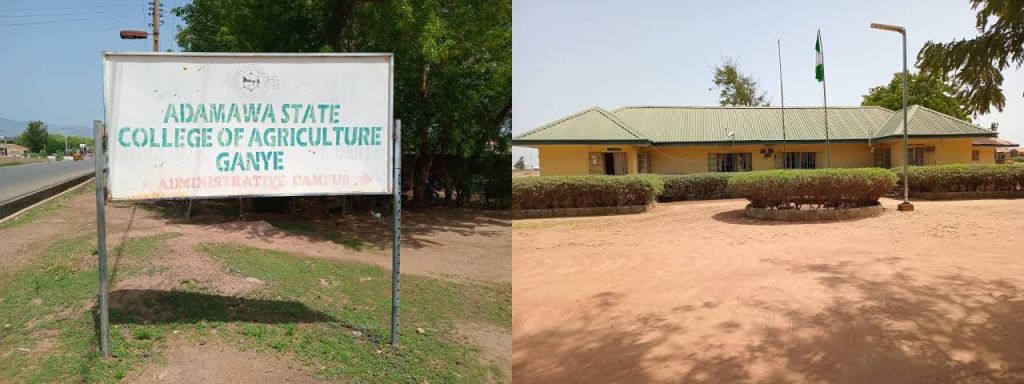
Governor Fintiri’s intervention is therefore more than just a budgetary approval—it is a strategic lifeline that ensures thousands of students from Ganye, Jada, and Toungo no longer have to travel far or face limitations in their pursuit of higher education.
While billions are rightly going into roads, tractors, and fertilizers, this investment in knowledge shows that the administration recognizes that true development is not only about building highways but also about empowering human capital. Roads may connect communities, but education connects generations.
By strengthening Ganye College, Fintiri is sowing seeds that will yield future agricultural experts, researchers, and leaders who will sustain Adamawa’s economy for decades to come.
The allocation has restored hope that Southern Adamawa is not left behind in the state’s development drive. It is a recognition of the unique educational needs of Ganye Chiefdom and a promise that infrastructure and human capital development can go hand in hand.
Governor Fintiri’s ₦26 billion approvals signal bold steps toward infrastructure renewal. Yet, beyond the asphalt and tractors, the decision to prioritize Ganye College of Agriculture stands as one of the most profound investments—an investment in knowledge, equity, and the future of Southern Adamawa.
 PIONEER NEWS