By Pioneer News
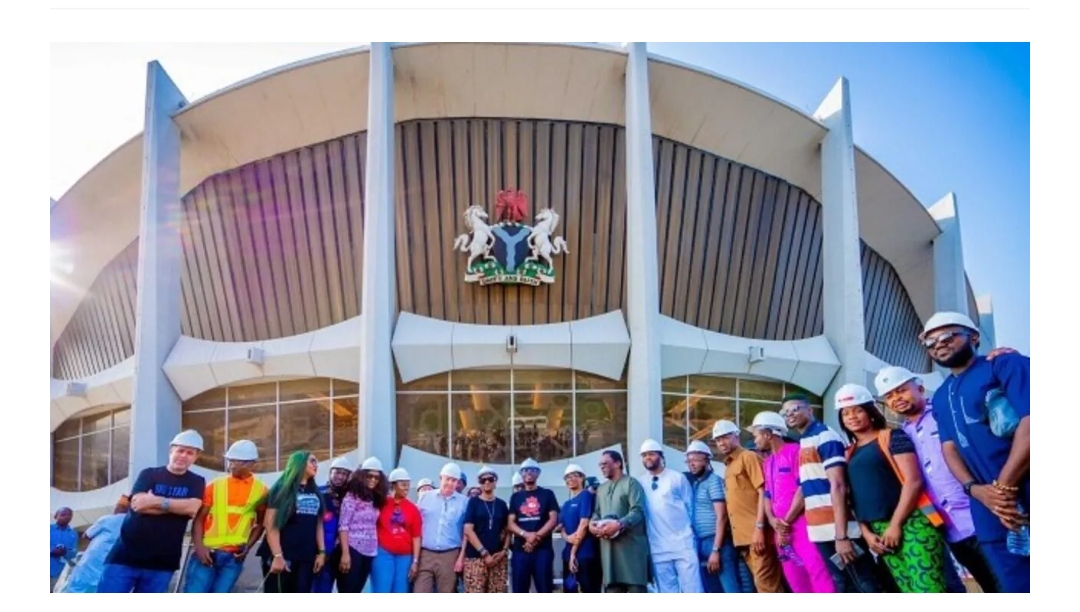
Nigeria’s cultural heartbeat roared back to life on Independence Day as President Bola Ahmed Tinubu recommissioned the refurbished National Arts Theatre, Iganmu, Lagos—reborn as the Wole Soyinka Centre for Culture and Creative Arts.
The historic October 1, 2025, event—coinciding with Nigeria’s 65th Independence Anniversary—was as symbolic as it was grand. After decades of decline and neglect, the once-ailing edifice has undergone a ₦68 billion transformation, repositioning it as a world-class hub for art, literature, and entertainment.
A Monument Reimagined
The new Soyinka Centre boasts ultramodern performance halls, cinemas, exhibition galleries, an African literature library, rehearsal studios, medical and media facilities, and lushly landscaped grounds. Significantly, it is now directly integrated with Lagos’ Blue Line rail, creating seamless access for visitors.
“The theatre’s silhouette remains, but within these walls, Nigeria has birthed a future of endless artistic possibilities,” declared Olayemi Cardoso, Governor of the Central Bank of Nigeria (CBN). He revealed that the Bankers’ Committee pooled ₦68 billion—not as an act of corporate social responsibility, but as a strategic cultural investment.
“This is more than a renovation; it is a rebirth,” Cardoso said, urging Nigerians to guard against a return to years of decay.
A Legacy City Reclaims Its Crown
Governor Babajide Sanwo-Olu of Lagos described the reopening as a “homecoming for Lagos”, recalling the city’s role as host of FESTAC ’77, the global cultural jamboree that once defined Nigeria’s artistic pride.
“Today’s commissioning is only the beginning,” Sanwo-Olu affirmed. “We envision this hub as not just a monument, but a living heartbeat of urban renewal and artistic excellence.”
Tinubu’s Call for Renewal
President Tinubu, who unveiled the renamed complex, urged Nigerians to believe in their country’s promise.
“We must speak positively about our nation and lift Nigeria by believing in her potential,” the President said, announcing his personal commitment to an endowment fund that will guarantee maintenance, accessibility, and job creation at the centre.
Soyinka’s Humble Acceptance
In a rare public honour, Nobel Laureate Professor Wole Soyinka—who has long been skeptical of monuments bearing his name—accepted the gesture with a mix of humour and gravity.
“If a group of bankers got together, using some of my money also, in order to honour me, what’s wrong with that?” Soyinka quipped, drawing laughter from the crowd. He, however, reminded leaders and citizens alike that the theatre must serve future generations of artists.
Reflecting on the centre’s journey—from its 1976 completion, FESTAC ’77 glory, years of neglect, and now its rebirth—Soyinka said the renewed complex must never again be left to rot.
Culture Meets Commerce
Stakeholders hailed the restoration as a landmark fusion of culture and commerce, one that could unlock the power of Nigeria’s creative industries in job creation, tourism, and global cultural influence.
With a modern face, global-standard facilities, and the name of Africa’s first Nobel Laureate in Literature emblazoned upon it, the Wole Soyinka Centre for Culture and Creative Arts now stands not just as a monument, but as a declaration: Nigeria’s creative voice is back on the world stage.
 PIONEER NEWS