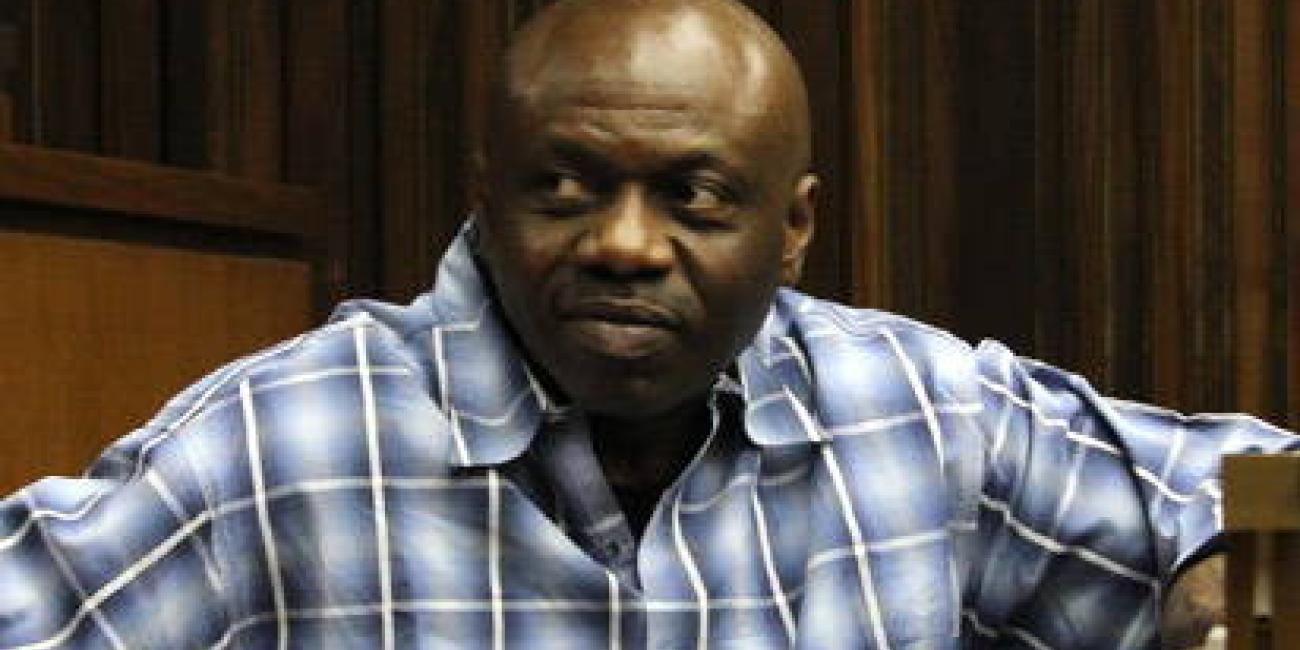
ABUJA— Tension is mounting across the Niger Delta and beyond as the Ijaw Nation Forum, the umbrella body of the Ijaw ethnic nationality, has petitioned South African President Cyril Ramaphosa, demanding the immediate release of imprisoned militant leader, Henry Okah, who has been in custody since 2010.
Okah, now 60, is serving a 24-year sentence in South Africa for his alleged role in the twin car bombings that rocked Abuja on October 1, 2010—an attack claimed by the Movement for the Emancipation of the Niger Delta (MEND), the militant group he was widely believed to have led.
In a strongly worded petition submitted to the South African presidency, the Forum described Okah’s incarceration as “unjust, unlawful, and politically motivated,” urging Ramaphosa to “order the prompt, unconditional, and safe release of our son, Henry Okah, who has been unjustly incarcerated since October 2, 2010.”
The petition carries the weight of powerful endorsements from Niger Delta traditional rulers, community leaders, and activists, including Alfred Diette-Spiff, the Amayanabo of Twon-Brass and former Rivers State Governor, as well as Dr. Felix Tuodolo, ex-president of the Ijaw Youth Council, alongside several diaspora voices.
The Forum insists that Okah’s arrest by South Africa’s Directorate of Priority Crimes (the Hawks) was illegal, arguing it violated international legal protocols.
“That was an original error,” the group declared, “because it was the responsibility of Interpol’s South African branch—not the Hawks—to effect such an arrest under the provisions of the Protection of Constitutional Democracy Against Terrorist and Related Activities Act (POCDATARA) 2004.”
According to the petition, the charges leveled against Okah stemmed from a “protracted armed conflict” in Nigeria’s Niger Delta, a conflict they insist should fall under the purview of international humanitarian law—not South Africa’s criminal justice system.
The Ijaw group framed Okah not as a criminal, but as a freedom fighter in a decades-long battle against environmental degradation, economic exploitation, and political marginalization in the oil-rich region.
“The armed conflict in the Niger Delta has always been a quest for self-determination—a people’s collective resistance against oppression and the exploitation of our petroleum resources by the Nigerian state in collaboration with Western oil multinationals,” the petition stated.
The Forum stressed that while it does not condone violence, it recognizes the legitimacy of Okah’s struggle. “We shall no longer remain passive observers while a man who dedicated his life to the cause of justice for his people continues to suffer an even greater injustice in foreign hands,” the statement declared.
Diaspora Push and Global Appeal
The petition, submitted on behalf of the Forum by Kabowei Akamande, a US-based Ijaw activist, marks a renewed global push by Niger Delta stakeholders to secure Okah’s freedom.
Established in 1995, the Ijaw Nation Forum has been at the forefront of advocacy for justice, environmental protection, and resource control in the Niger Delta. With Okah’s continued imprisonment, the group believes the Ijaw struggle is incomplete.
As calls for his release gain momentum, all eyes are now on Pretoria to see whether President Ramaphosa will yield to pressure from the Niger Delta’s most influential voices.
IJAW NATION DEMANDS FREEDOM: PETITIONS PRESIDENT RAMAPHOSA FOR IMMEDIATE RELEASE OF JAILED NIGER DELTA LEADER HENRY OKAH
 PIONEER NEWS