
By Philip Bradford Adams
Over 2,000 Shops Demolished as Adamawa Governor Defends Market Cleanup
The Dawn of Demolition
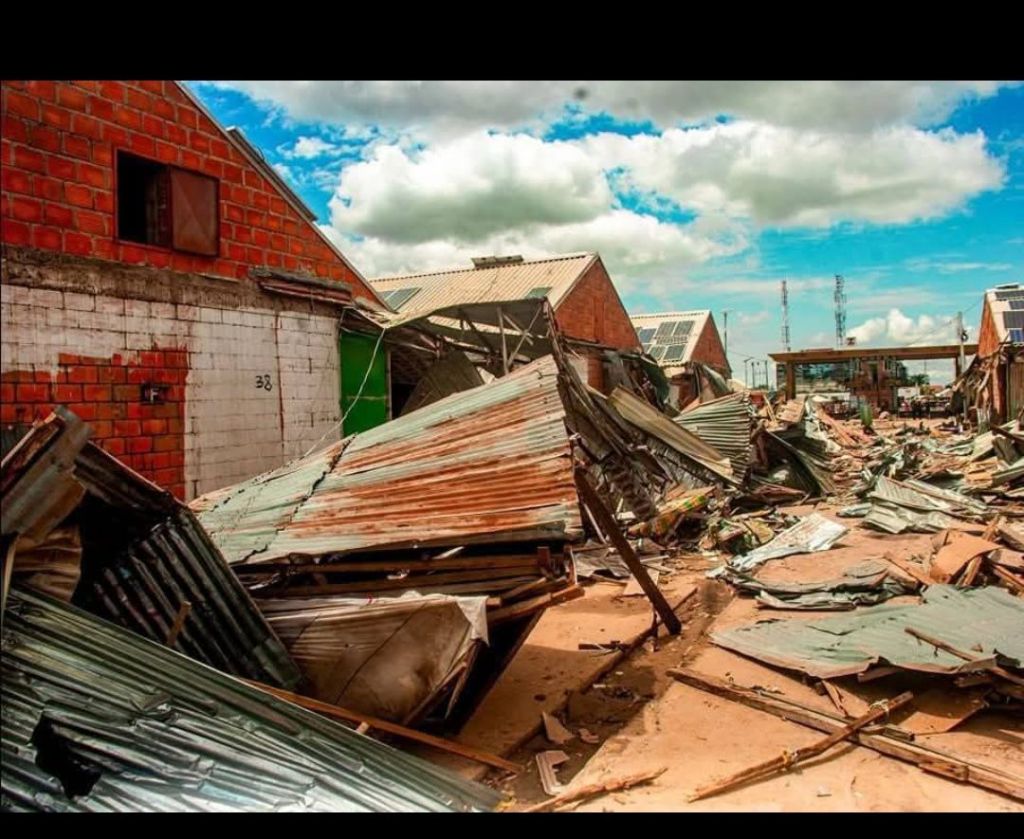
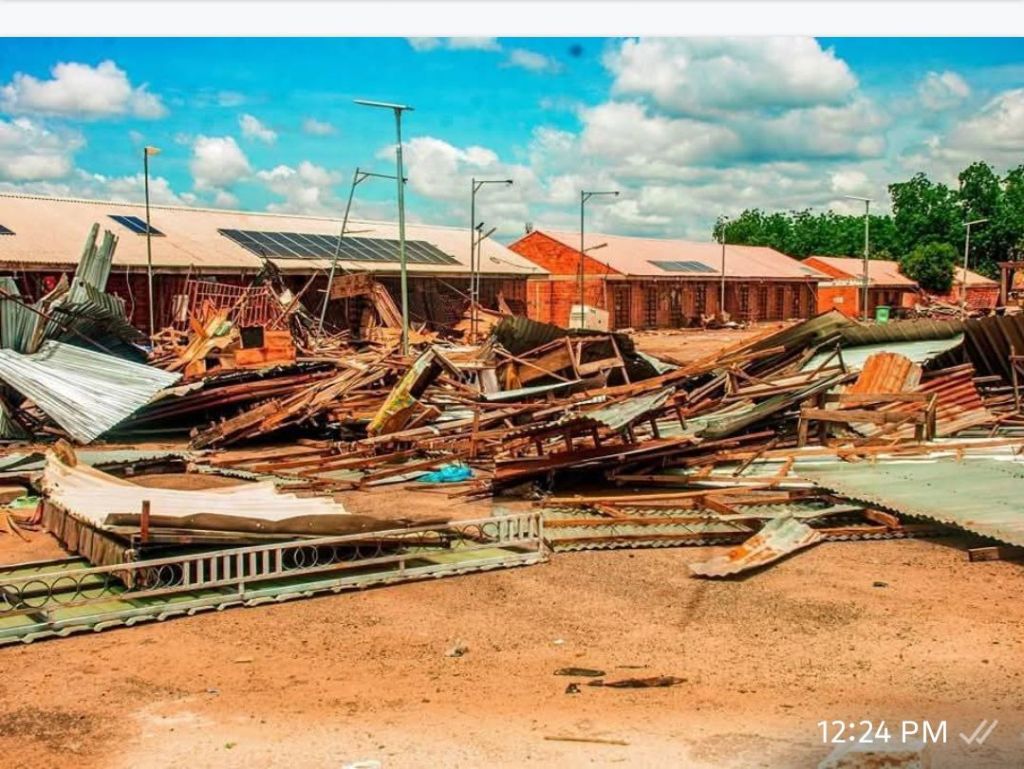
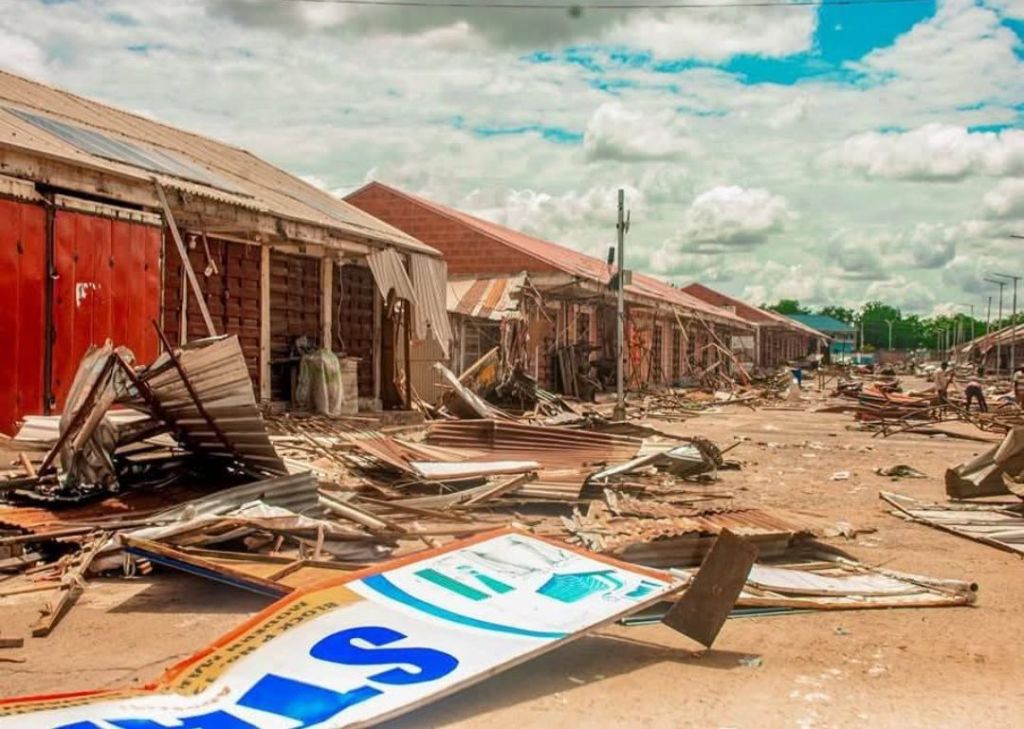
The morning calm in Yola was shattered last week as bulldozers stormed the Jimeta Ultra-Modern Market, flattening more than 2,000 makeshift shops and attachments in a sweeping government operation.

For Governor Ahmadu Umaru Fintiri, the demolition was a bold step to restore order and reclaim the market’s master plan. But for thousands of traders, it was a devastating blow that left them stranded, their livelihoods buried in rubble.
Government’s Stand: “Restoration, Not Destruction”
Officials say the market had become dangerously congested. Entrances were blocked, internal roads narrowed, and emergency access routes obstructed by unauthorized structures.
Commissioner for Commerce and Industry, Ishaya John Dabari, defended the move:
> “This is not destruction, it is restoration. Jimeta Market must return to its original design. Traders were duly notified, meetings were held, deadlines extended. Only illegal structures were removed.”

Authorities insist that legally acquired shops were untouched and that the exercise will ultimately make the market cleaner, safer, and more profitable.
On the Ground: Voices from the Rubble
For many affected traders, the government’s assurances ring hollow.
In an exclusive interview with The Pioneer Newspaper team, several traders expressed grief, anger, and confusion over the sudden demolition:
Hajiya Salamatu Umar, a provisions seller:
> “I have traded here for 15 years. They say my shop was illegal, but every year I paid levies to officials. If it was illegal, why did they collect our money? We are left with nothing now.”
Aliyu Ibrahim, a young shoemaker:
> “They talk about master plan, but where do we go? I feed my parents and siblings from this stall. Today, I am jobless. Who will answer for us?”
Danladi, another trader:
> “We woke up to bulldozers. We thought government should help citizens in this hardship, not destroy their only source of survival.”
The interviews reveal a deep sense of betrayal — some traders acknowledge the need for order but fault the timing and lack of alternative arrangements.
Government Pushes Back
Reacting to The Pioneer’s coverage, officials dismissed claims that legitimate shop owners were affected.
According to Commissioner Dabari:
> “Most of these receipts the traders are parading did not come from the government. They were issued by touts and self-appointed market associations. We cannot allow illegality to thrive just because someone collected money from them. Only attachments and extensions outside the original master plan were removed. Every genuine shop remains intact.”
The state government maintains that it had given ample notice, including radio announcements and community meetings, before enforcement began.
At a Glance: The Demolition in Numbers
2,000+ illegal shops/attachments demolished
3,000+ traders affected
Zero compensation for “illegal structures”
Market closed indefinitely during the operation
Political Fallout: Fintiri on a Tightrope
Analysts warn that Governor Fintiri may be facing more than an urban planning challenge. The demolition has triggered a political storm that could dent his popularity:
Backlash from traders, a critical voting bloc in Yola and beyond.
Opposition parties seizing the moment to brand him “anti-people.”
Civil society and labour groups threatening protests if alternatives aren’t provided.
His legacy at stake — from a people-friendly leader to one remembered for wielding bulldozers instead of dialogue.
A political analyst in Yola remarked:
> “Markets are not just commercial hubs; they are political battlegrounds. By choosing bulldozers over negotiation, Fintiri may have gained order but lost trust — and that could cost him dearly.”
Beyond the Rubble: Order vs Compassion
Few dispute the need for market order. Safer, accessible spaces benefit everyone. But critics argue governance must balance law with humanity.
At a time of biting economic hardship, they say, a government should show empathy — offering alternative trading spaces, phased enforcement, or relief measures. Without that, the exercise risks being remembered as an act of force, not reform.
What Next for Jimeta?
Will the state provide alternative trading grounds?
Can displaced families survive without compensation?
Will Fintiri’s administration rebuild trust before resentment hardens into resistance?
The Verdict
The demolition of Jimeta Ultra-Modern Market is more than an urban clean-up. It is a defining test of leadership for Governor Ahmadu Umaru Fintiri.
History may judge him as the man who restored order to Yola’s busiest market — or the leader who trampled livelihoods in the name of planning.
For now, Jimeta’s dust has settled, but the political storm is only just beginning.
 PIONEER NEWS
One thought on “Bulldozers in Jimeta: Traders Count Losses as Fintiri Gambles with Political Future”