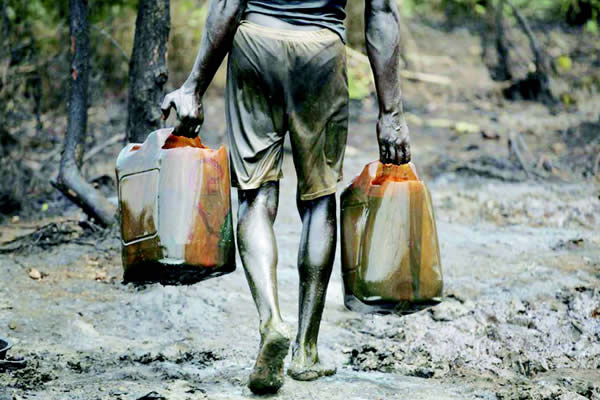
Nigeria’s decades-long battle against crude oil theft has reached a historic milestone, with new figures showing losses have plunged to their lowest level since 2009 — a breakthrough hailed as a major victory for Africa’s largest oil producer.
According to the Nigerian Upstream Petroleum Regulatory Commission (NUPRC), crude oil losses between January and July 2025 stood at 2.04 million barrels, averaging 9,600 barrels per day. This marks a 50.2 per cent reduction compared with the same period last year, and a staggering 94.57 per cent drop from the record-breaking losses of 2021.
By contrast, Nigeria lost 4.1 million barrels in 2024 at 11,300 barrels daily, while the worst year on record — 2021 — saw 37.6 million barrels siphoned, averaging 102,900 barrels per day.
In a statement on Thursday, NUPRC’s Head of Media and Strategic Communications, Eniola Akinkuotu, described the development as a “clear departure from the high-loss years that crippled Nigeria’s oil revenues and undermined investor confidence.”
How Nigeria Got Here
NUPRC credited the turnaround to a combination of tighter regulatory oversight, improved metering audits, community engagement, and stronger collaboration with security agencies.
“The commission has adopted a balanced mix of kinetic and non-kinetic strategies,” the statement read. “On the kinetic front, we have intensified cooperation with security forces, oil operators, and host communities to safeguard infrastructure. On the non-kinetic front, we have introduced stricter audits, new regulatory frameworks, and closed loopholes that enabled theft.”
The Petroleum Industry Act (PIA), signed into law in 2021, was also highlighted as a game-changer, giving regulators more teeth to enforce compliance. Since then, losses have fallen dramatically year by year — from 20.9 million barrels in 2022 to 4.3 million in 2023, and now down to record lows in 2025.
New Evacuation Routes, Fresh Safeguards
To consolidate gains, NUPRC Chief Executive Gbenga Komolafe has approved 37 new crude oil evacuation routes to prevent bottlenecks and minimize theft risks. Industry insiders believe this will further strengthen monitoring and accountability in oil transportation.
Industry, Government Reactions
The Independent Petroleum Producers Group (IPPG) confirmed in June that theft levels had dropped sharply compared with two to three years ago. Its Executive Coordinator, Oyeleke Banmeke, praised the Tinubu administration for prioritizing security in the Niger Delta, historically the epicenter of pipeline vandalism and illegal bunkering.
Analysts say the breakthrough is more than a statistical victory — it is a critical boost for government revenues at a time of mounting fiscal pressure. The development is also expected to restore investor confidence in Nigeria’s oil sector, which has long been plagued by sabotage, corruption, and regulatory uncertainty.
Looking Ahead
With oil theft trending downward and new safeguards in place, experts believe Nigeria may finally be turning the corner in protecting its most vital economic lifeline. But they also warn that sustained vigilance is crucial to ensure criminal networks do not regroup.
For now, however, the numbers tell a story of unprecedented progress: Nigeria’s oil industry has not been this secure in over 16 years.
Nigeria Records Lowest Oil Theft in 16 Years — Losses Fall 94% From 2021 Peak
 PIONEER NEWS