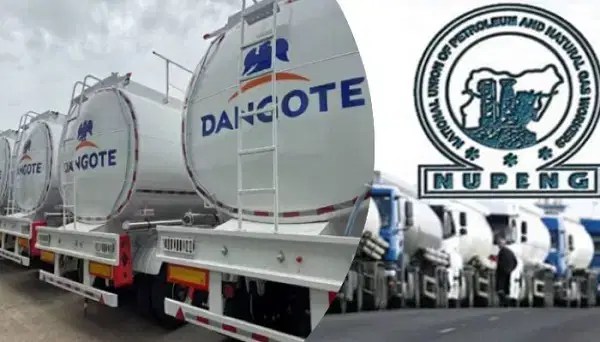
— Industrial Harmony Restored After DSS-Brokered Truce
By Victor Ahiuma-Young & Johnbosco Agbakwuru
The dust is yet to settle after the stormy face-off between the Nigeria Union of Petroleum and Natural Gas Workers (NUPENG) and Africa’s biggest refinery, Dangote Industries, a dispute that shook the energy sector and tested the resilience of Nigeria’s labour laws.
What began as a quiet boardroom maneuver spiraled into a full-blown industrial crisis when Dangote management allegedly floated a rival body, the Direct Trucking Company Drivers Association (DTCDA), in what NUPENG decried as an “illegal attempt” to undercut workers’ constitutional rights to unionise.
The Ministry of Labour swiftly waded in, declaring the parallel union unlawful, affirming NUPENG as the only legally recognised representative of refinery workers. But the workers’ strike that followed sent shockwaves across the petroleum supply chain, halting tanker loading and sparking fears of nationwide fuel shortages.
On Tuesday, under tight security at the Department of State Services (DSS) headquarters in Abuja, an unprecedented negotiation session convened — with the Minister of Labour and Employment, Muhammadu Dingyadi, flanked by the Minister of Finance and senior government officials.
Explaining the unusual venue, Dingyadi told reporters:
> “The DSS headquarters was chosen deliberately to provide a neutral, secure ground for dialogue. No employer has the right to dictate or interfere with workers’ freedom of association. Today, the rule of law has prevailed, industrial peace has been restored, and workers’ rights stand protected.”
Emerging from the tense talks, NUPENG President Williams Akporeha declared the strike suspended:
> “All contentious issues have been resolved. Our members are unionised at the Dangote Petrochemical Refinery, tankers are loading again, and the strike is over. This is a landmark victory for lawful unionisation.”
On reports that Dangote’s representatives staged a walkout, Akporeha clarified:
> “There was no walkout. One representative left briefly due to medical reasons. Yes, Monday night’s talks broke down when management tried to insert clauses we could not accept, but today we have harmonised all issues and signed the agreement.”
He warned that the creation of any parallel union in the future would face instant resistance.
Labour experts say the agreement carries heavy legal and global implications. Nigeria’s Trade Unions Act (2004), Labour Act (2004), and Section 40 of the 1999 Constitution all guarantee workers’ rights to free association, union membership, and collective bargaining — rights now reaffirmed in this landmark truce.
Internationally, Nigeria is bound by ILO Conventions 87 and 98, which outlaw employer interference in unions and prohibit parallel associations — exactly the misstep Dangote was accused of.
Lessons for Corporate Nigeria
Analysts hail the resolution as a watershed moment: a stern warning to employers tempted to undermine legitimate unions, and a reassurance to workers that the law remains firmly on their side.
For workers, it safeguards their voices and shields them from victimisation. For employers, it highlights the costly risks of sidestepping due process.
With tankers back on the road and tension eased, the refinery has resumed operations. Yet, NUPENG insists it will remain vigilant:
> “Any fresh attempt to circumvent lawful unionisation will be met with immediate resistance,” the union warned.
The Dangote–NUPENG standoff may be over, but its ripple effects will shape Nigeria’s industrial relations for years to come. More than just a labour dispute, it is now a blueprint for how workers’ rights, the rule of law, and industrial harmony must coexist in Africa’s largest economy.
 PIONEER NEWS