By International Desk
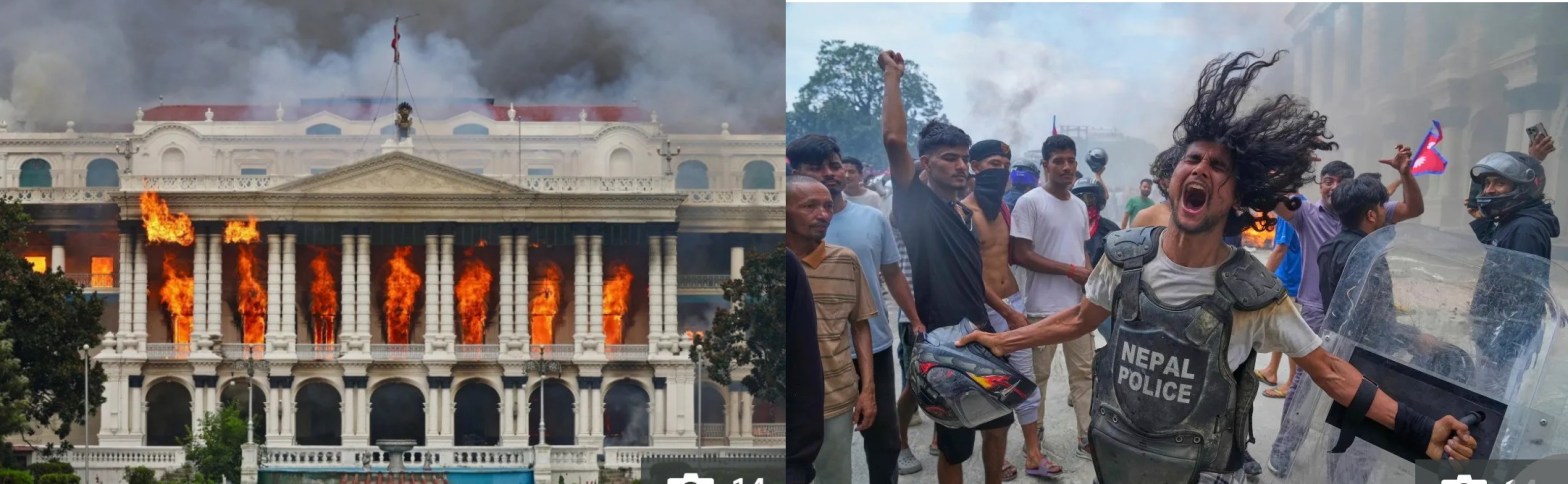
Kathmandu is burning. Nepal has been plunged into one of the bloodiest uprisings in its history as furious Gen Z protesters torched parliament, stormed government offices, and forced the resignation of Prime Minister KP Sharma Oli after a sweeping ban on Facebook, Instagram, and other social platforms ignited nationwide chaos.
At least 19 people are dead, over 500 injured, and countless government buildings reduced to ash. Among the casualties is Rajyalaxmi Chitrakar, the former first lady and wife of ex–Prime Minister Jhalanath Khanal, who was trapped inside her blazing home as mobs set it alight.
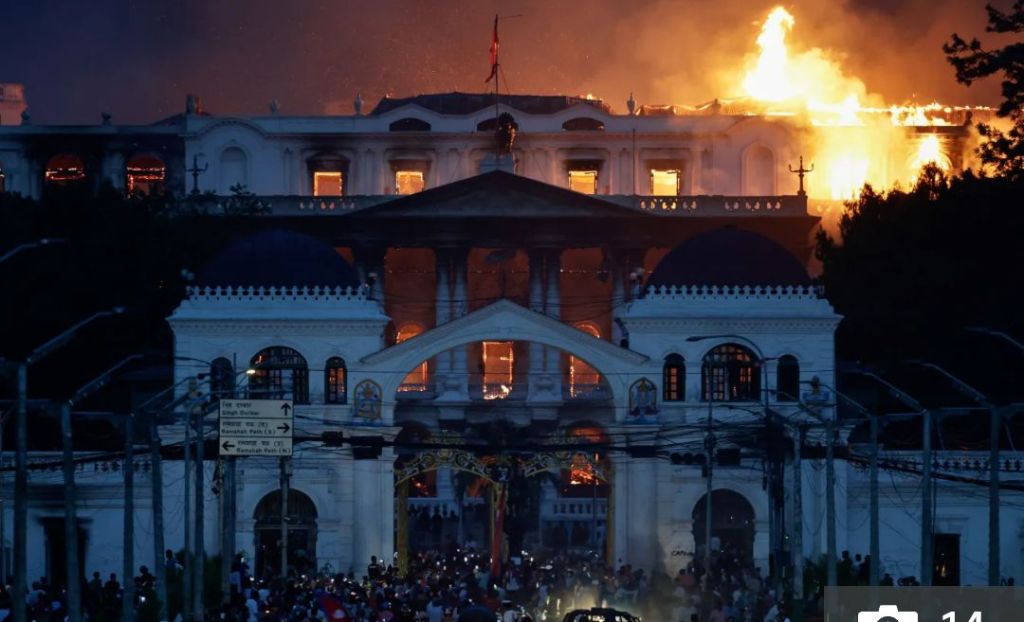
Eyewitnesses described scenes of apocalyptic destruction: the historic Singha Durbar palace engulfed in flames, smoke billowing across the capital, and streets littered with charred vehicles and shattered glass.
“Kathmandu is burning. Smoke is emanating across the capital’s seat of power as protesters set fire to many important offices,” lawmaker Rajendra Bajgain told The Telegraph.
The Attorney General’s office, Supreme Court, Parliament, and even Oli’s private residence were razed in a fiery wave of rage. Riot police armed with tear gas and water cannons were overrun as protesters—many wielding makeshift shields and weapons seized from security forces—shouted slogans demanding freedom and an end to corruption.
Facing unrelenting pressure, four-time Prime Minister Oli announced his resignation, citing Nepal’s “extraordinary situation.” His dramatic exit has left the country’s political future hanging in the balance.
⚡ Why Gen Z Revolted
The spark? A sudden government decree banning more than a dozen global platforms, including Facebook, X, Instagram, and YouTube, for refusing to register under new laws. Officials defended the move as necessary to curb fake news and online fraud.
But for Nepal’s digitally native youth, the ban struck at the heart of their identity. “For Gen Z, digital freedom is personal freedom,” The Kathmandu Post wrote. “Cutting off access feels like silencing an entire generation.”
Crowds of young demonstrators carried placards scrawled with “Enough Is Enough” and “End Corruption Now”, insisting the revolt was about more than social media—it was about broken promises, deep-rooted corruption, and a political system they no longer trust.
Officials have appealed for calm, promising dialogue and urging protesters to stand down. But with Oli gone, parliament burned to the ground, and public anger boiling over, Nepal teeters on the edge of a full-blown revolution.
“This isn’t just about social media—it’s about a generation refusing to stay silent,” one protester declared, his voice hoarse from shouting in the smoke-filled streets.
As Kathmandu smolders, the question remains: Is this the dawn of Nepal’s digital revolution—or the collapse of its fragile democracy?
 PIONEER NEWS