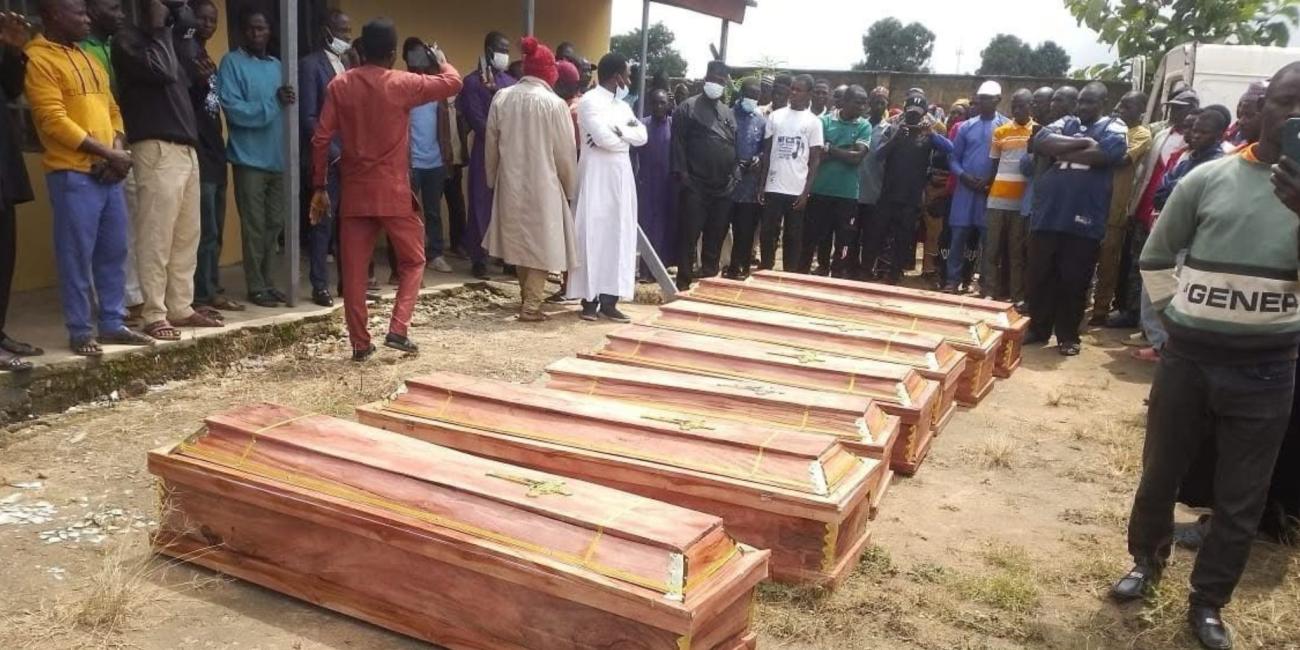
Grief and outrage enveloped Unguwan Rimi village in Kauru Local Government Area of Southern Kaduna on Saturday, as families and religious leaders laid to rest seven victims of last week’s brutal terrorist attack. Heartbreakingly, most of the dead were children whose lives were cut short in the carnage.
The burial, witnessed by devastated villagers, came just days after heavily armed terrorists stormed the community late Sunday night into the early hours of Monday, killing seven and forcing many adults to flee into the darkness to save their lives.
> “We buried them with heavy hearts. They were our children, our future. We feel abandoned,” a community source told SaharaReporters via WhatsApp.
While the community was still reeling, bandits struck again in Kokob-Bajaga village of Kajuru Local Government Area on Tuesday. According to a community leader, the attackers killed one person, injured another, and abducted six villagers in yet another bloody raid.
> “The soldiers only came after to evacuate the corpse. But our people live in constant fear. We don’t know who will be next,” he lamented.
These attacks have ignited fresh debates over Governor Uba Sani’s much-publicized “Kaduna Model” peace pact with bandit warlords—men accused of mass killings, kidnappings, and extortion, including infamous figures like Yellow Jambros and Dogo Gide.
Under the deal, hundreds of fighters reportedly surrendered, with some enrolling in rehabilitation programmes. Roads once abandoned due to banditry reopened, and displaced villagers cautiously returned home, sparking hope that peace was finally within reach.
But last week’s killings have thrown a harsh spotlight on the fragility of this peace. Critics, including religious leaders and victims’ representatives, argue that the government sidelined those most affected by the violence and rewarded criminals with promises of reintegration, disarmament, and rural development.
The peace accord has also deepened regional controversy. While the Northwest Governors’ Forum previously agreed to reject negotiations with criminals, Kaduna’s unilateral decision to engage them stands as a bold gamble—one that many now fear may be collapsing under renewed bloodshed.
Governor Sani, however, has continued to defend his approach, describing it as a “carrot-and-stick” strategy. “Peace must be pursued from a position of strength,” he declared, insisting that insecurity cannot be solved by force alone.
As freshly dug graves dot the earth in Southern Kaduna, the big question remains: Has Kaduna’s gamble with warlords brought the peace its people crave, or is the fragile truce already unravelling?
For grieving families in Unguwan Rimi, the answer is painfully clear—the promise of peace means little when their children lie in shallow graves.
 PIONEER NEWS