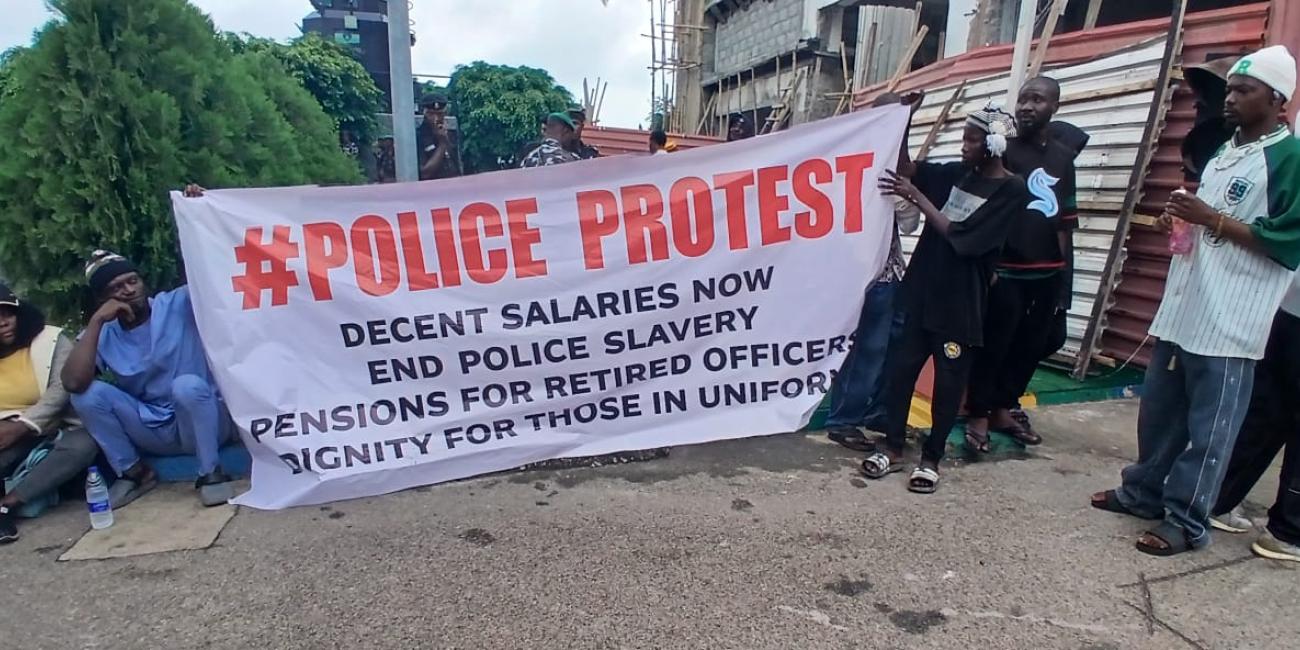
The Nigerian Union of Retired Police Officers under the Contributory Pension Scheme (CPS), with chapters spread across the 36 states of the federation including the Federal Capital Territory (FCT), has rejected a fresh invitation from the National Pension Commission (PENCOM) for dialogue, insisting that the only acceptable solution is the Nigeria Police Force’s complete withdrawal from the CPS.
The rejection comes barely weeks after their first meeting with PENCOM’s Director-General on August 7, 2025, where the retired officers made what they described as a “clear and non-negotiable demand” — the establishment of a dedicated Nigeria Police Pension Board and a transition to the Defined Benefit Scheme (DBS).
In a strongly worded letter dated August 15 and received by PENCOM on August 18, five senior retired officers signed on behalf of the union, declaring that they had “nothing further to discuss” with the commission unless it was to implement their request.
The letter, signed by Ret. SP Manir M. Lawal Zaria, Ret. ASP Greg Amayo, Ret. DSP Iliyasu Aliyu, Ret. ASP Jonah Anayangnan, and Ret. DSP Bitus Zikka, partly read:
> “We have jointly decided not to attend any further invitation for meetings, whether at the headquarters or across geopolitical zones. Our position remains unchanged — the Nigeria Police Force must exit the Contributory Pension Scheme and a Police Pension Board must be established without further delay.”
This firm stance comes against the backdrop of widespread protests held across the country on July 22, when retired police officers stormed the streets in heavy rains, chanting solidarity songs and carrying placards at the entrance of the National Assembly in Abuja. They were joined by civil rights activists, including the convener of the #RevolutionNow Movement, Omoyele Sowore.
The aggrieved retirees, many in their 60s and 70s, decried what they described as “inhumane pension packages,” with many receiving as little as ₦14,000 to ₦22,000 monthly after decades of service to the nation.
Speaking during the protest, retired Chief Superintendent of Police, Manir Lawal, expressed the frustration of his colleagues:
> “We have served this country faithfully and deserve to retire in dignity. The current scheme has impoverished us. At 67 years of age, many of us cannot feed our families or pay for medical care. This pension system is exploitative and unjust, and we demand an immediate end to it.”
In a rare alignment with the retirees, the Inspector-General of Police, Kayode Egbetokun, has publicly admitted that he is not opposed to the force’s exit from the Contributory Pension Scheme. He acknowledged that inadequate retirement benefits remain a concern not just for retirees but also for serving officers, many of whom fear a future of hardship after service.
The demand for a Police Pension Board has been long-standing, with stakeholders arguing that the peculiar and hazardous nature of police service requires a pension system tailored to the needs of law enforcement personnel. Critics of the CPS say it is better suited for civil servants with more predictable career paths, unlike police officers who risk their lives daily.
For now, retired police officers remain resolute — no more negotiations, no more partial concessions. Their demand is clear: Total exit from the CPS and the creation of a Police Pension Board — nothing less.
 PIONEER NEWS