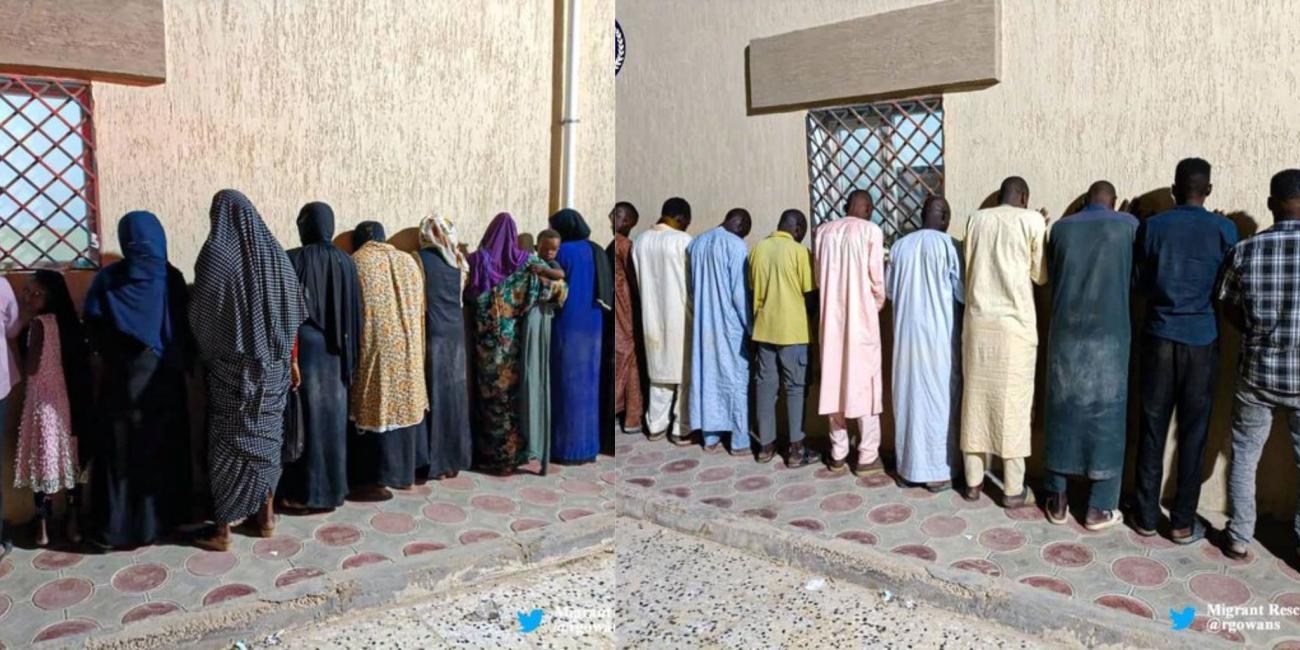
In a dramatic late-night operation, Libyan police in the eastern city of Ajdabiya stormed a residential building allegedly converted into a prostitution den for undocumented migrants, leading to the arrest of 36 individuals of Nigerian and Chadian nationalities.
According to Migrant Rescue Watch (MRW), the raid was carried out on the orders of the public prosecutor following weeks of discreet surveillance and intelligence gathering. The suspects—comprising 18 men, 18 women, and children—were immediately handed over to the Directorate for Combating Illegal Migration (DCIM) for further investigation and legal processing.
> “During the raid, 36 undocumented migrants (18 men and 18 women and children) of Chadian and Nigerian nationalities were arrested. All transferred to DCIM for completion of legal procedures,” MRW confirmed in a statement.
The DCIM, a government agency under the Ministry of Interior, is responsible for handling undocumented migrants in Libya. It operates numerous detention centres across the country and works in collaboration with local security forces. However, the agency’s detention facilities have long attracted global criticism over their conditions.
International watchdogs, including Amnesty International and Human Rights Watch, have repeatedly accused the DCIM of human rights violations, citing cases of arbitrary detention, overcrowding, poor sanitation, forced labor, and instances of abuse. In 2024 alone, reports revealed that at least 30 official detention centres were active across Libya, with children being arbitrarily detained in 11 of them.
This latest crackdown underscores Libya’s intensified efforts to curb illegal migration and human trafficking, issues that have plagued the country since the fall of Muammar Gaddafi in 2011. Libya’s location along the central Mediterranean migration route has made it both a transit hub and a hotspot for criminal networks exploiting desperate migrants seeking to reach Europe.
The fate of the arrested Nigerians and Chadians now rests with the DCIM, which will process their cases under Libyan immigration law—a process that has historically raised concerns about transparency, accountability, and respect for human rights.
 PIONEER NEWS