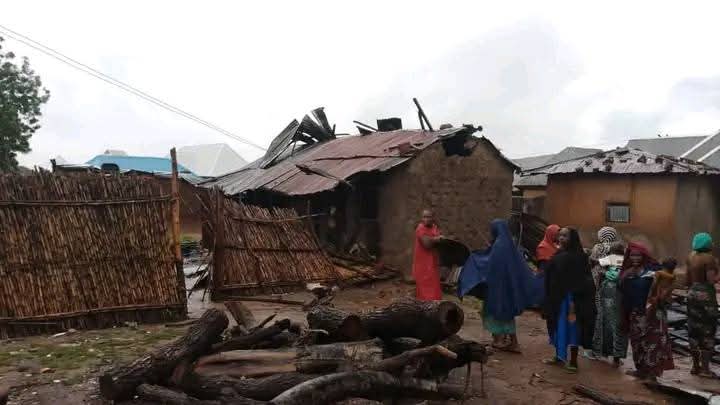
A fierce rainstorm tore through parts of Plateau and Niger States on Sunday, leaving widespread devastation in its wake as more than 50 homes, schools, religious centres, and farmlands were destroyed, displacing scores of residents and threatening food security.
In Plateau State, the Shimankar District in Shendam Local Government Area was the worst hit. Eyewitnesses described scenes of panic and despair as heavy winds and torrential rains wreaked havoc on the Menkaat community. Roofs were ripped off, walls crumbled, and livelihoods were washed away in an instant.
Lawrence Longwalk, a resident of the affected area, painted a grim picture of the disaster. “We’ve been hit seriously by this rainstorm. At least 50 houses were damaged. Two primary schools and a worship centre in Shimankar were completely flattened,” he lamented. “From the level of destruction, it’s clear that urgent government intervention is needed.”
The disaster underscores the growing vulnerability of rural communities in Plateau State during Nigeria’s increasingly unpredictable rainy season. As of press time, the Executive Secretary of the State Emergency Management Agency (SEMA), Sunday Abdu, was unreachable. However, a staff member who chose to remain anonymous confirmed the agency’s awareness of the tragedy and disclosed that plans were underway to assess the damage and provide relief.
Meanwhile, in Niger State, early Sunday rainfall submerged large swathes of farmland across Kafin Koro in Paikoro Local Government Area and 18 communities in Lapai Local Government Area. The floods, which residents say began at dawn, swept through major farming zones, destroying crops worth millions of naira.
Communities affected include Dere, Eshi, Apataku, Tsakanabi, Kuchi Kakanda, Arah, Achiba, Rebba, Ebwa, Pele, Edda, Rigido, Gbami, Yawa, Baka, and Muye. Farmers are already counting their losses, with fears of looming food shortages if swift action is not taken.
Reacting to the disaster, the Special Adviser to the Niger State Governor on Communication, Media and Strategy, Jonathan Vatsa, issued a passionate appeal to residents in flood-prone areas to relocate to safer grounds.
“We, as a government, will continue to be proactive by appealing to the people, especially those in lowland areas, to immediately move upland to avoid a repeat of the Mokwa disaster,” Vatsa stated.
“We understand the emotional and cultural ties to their ancestral homes and farmlands, but their safety is paramount. With the recurring flood alerts and the current level of devastation, it is no longer a matter of choice but necessity.”
This double blow from nature raises serious concerns about the preparedness of local and state emergency response systems. It also calls into question the effectiveness of early warning mechanisms in vulnerable communities already battling poverty, insecurity, and underdevelopment.
As residents await support, the situation highlights the urgent need for a national disaster mitigation strategy that prioritizes infrastructure resilience, proactive relocation measures, and sustainable land use planning. Without swift intervention, more lives and livelihoods may be lost in the weeks to come.
 PIONEER NEWS