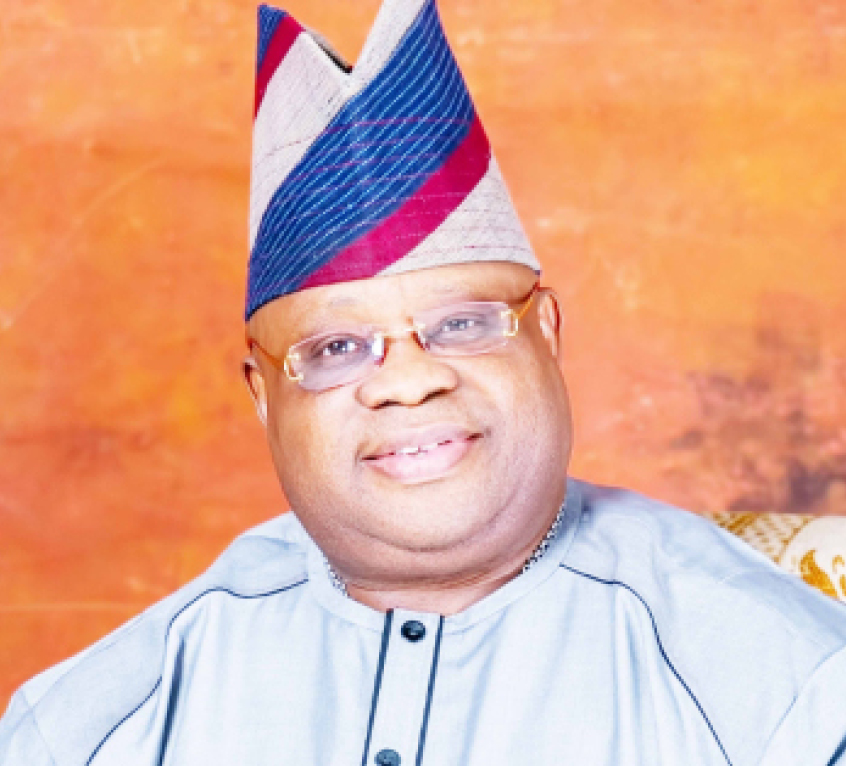
A major political tremor is rattling Osun State’s political landscape as Governor Ademola Adeleke is reportedly considering a defection from the Peoples Democratic Party (PDP) to the All Progressives Congress (APC) — a move that has thrown both camps into a state of uncertainty and stirred intense nationwide debate.
The swirling rumours of Adeleke’s imminent political migration have not only jolted the PDP but also triggered unease within the APC, with key players in both parties scrambling to assess the strategic and electoral implications ahead of the 2026 governorship election.
Although Governor Adeleke has yet to make a formal declaration, the flurry of realignments, defections, and public statements surrounding him suggests that this is far more than mere political hearsay. In a state where elections are fiercely contested and margins razor-thin, Adeleke’s next move could dramatically reshape Osun’s political future.
Within the PDP, fear and confusion reign as the party braces for what could be a catastrophic loss. Governor Adeleke’s popularity, incumbency advantage, and grassroots appeal are widely considered the glue holding the party together in Osun.
His perceived defection plan has sparked a domino effect, with notable exits already underway. Senators Olubiyi Fadeyi (Osun Central) and Francis Fadahunsi (Osun East) have resigned from the PDP, citing internal rifts and irreconcilable differences — widely interpreted as precursors to a mass exodus in sync with Adeleke.
Multiple PDP stakeholders have already pledged allegiance to the governor, vowing to follow him to any political platform of his choice. At a high-powered stakeholders’ meeting in the Government House Banquet Hall in Osogbo, every influential organ of the party — from the National and State Assembly members to the State Executive Council, ALGON, elders’ caucus, and party leadership — resolved to decamp with Adeleke if he jumps ship.
Among the heavyweight attendees were Deputy Governor Prince Kola Adewusi, Senate Deputy Minority Leader Senator Lere Oyewumi, Representatives Bamidele Sallam, Clement Olohunwa, and Taofeek Ajilesoro, and High Chief Modupeola Adeleke, the governor’s sister. State Speaker Rt Hon Adewale Egbedun, Secretary to the State Government Hon Teslim Igbalaye, Chief of Staff Hon Kazeem Akinleye, and PDP Chairman Hon Sunday Bisi also stood firm behind the governor.
Commissioners, special advisers, and even local government executives have vowed to follow suit. “Wherever our Governor leads, we shall follow,” declared Aare Ganiyu Ayobami Olaoluwa Asejere, speaking for the Commissioners’ Forum.
While Adeleke’s potential crossover should ideally be a coup for the APC, the response within the party has been far from enthusiastic. Several APC loyalists have expressed deep reservations about welcoming the governor into their fold.
Osun APC spokesman, Mogaji Kola Olabisi, said the party’s key stakeholders — including Chief Bisi Akande, National Secretary Senator Ajibola Basiru, and former Governor Adegboyega Oyetola — have not been briefed and dismissed the rumour as speculative.
Senator Iyiola Omisore launched a blistering attack, accusing Adeleke of lobbying governors and APC stalwarts to gain entry. “What is Adeleke bringing to APC? Nothing,” he quipped. “He should try a new party if he is truly popular.”
Kehinde Ayantunji, a former aide to Oyetola, warned that Adeleke’s entry could demoralize core APC supporters, especially given lingering grievances over governance issues. “He is politically stranded and desperate for asylum. But our members deserve respect and must be consulted,” he insisted.
Dr. Akin Ogunbiyi, one of the APC’s governorship hopefuls, downplayed any potential threat. “We are focused on strengthening our internal base. Whether he joins or not is immaterial,” he said after declaring his ambition at the APC secretariat.
The controversy has drawn heavy fire from political analysts, who describe the development as another example of Nigeria’s ideological vacuum. Comrade Waheed Saka decried Adeleke’s alleged move as “shameless political opportunism,” blasting it as proof of “jumpology” — a term describing rampant, self-serving defections in Nigeria’s political theatre.
“Osun people deserve consistent, principled leadership — not this circus,” Saka declared. Another analyst questioned why a governor with Adeleke’s popularity would seek asylum in the APC rather than rejuvenate a new platform. “If he’s truly formidable, why not the SDP or LP?” the analyst asked.
Hopes that Adeleke might consider the African Democratic Congress (ADC) as a fallback have also dimmed. A recent feud with former Governor Rauf Aregbesola — now the interim National Secretary of the ADC — has effectively closed that door.
At a rally in Osogbo, Aregbesola declared the ADC’s mission to unseat Adeleke in 2026, provoking a fierce rebuttal from the governor, who blasted Aregbesola’s “failed legacy” and dismissed his credibility. The public war of words has sealed off any chance of alliance.
As the 2026 governorship race draws near, Osun finds itself at a political crossroads. The potential defection of a sitting governor — along with a significant portion of the PDP’s machinery — would not just be a dramatic twist, but a historic turning point in the state’s political evolution.
Whether Adeleke stays, defects, or carves a new path entirely, one thing is certain: the political architecture of Osun will never be the same again.
 PIONEER NEWS