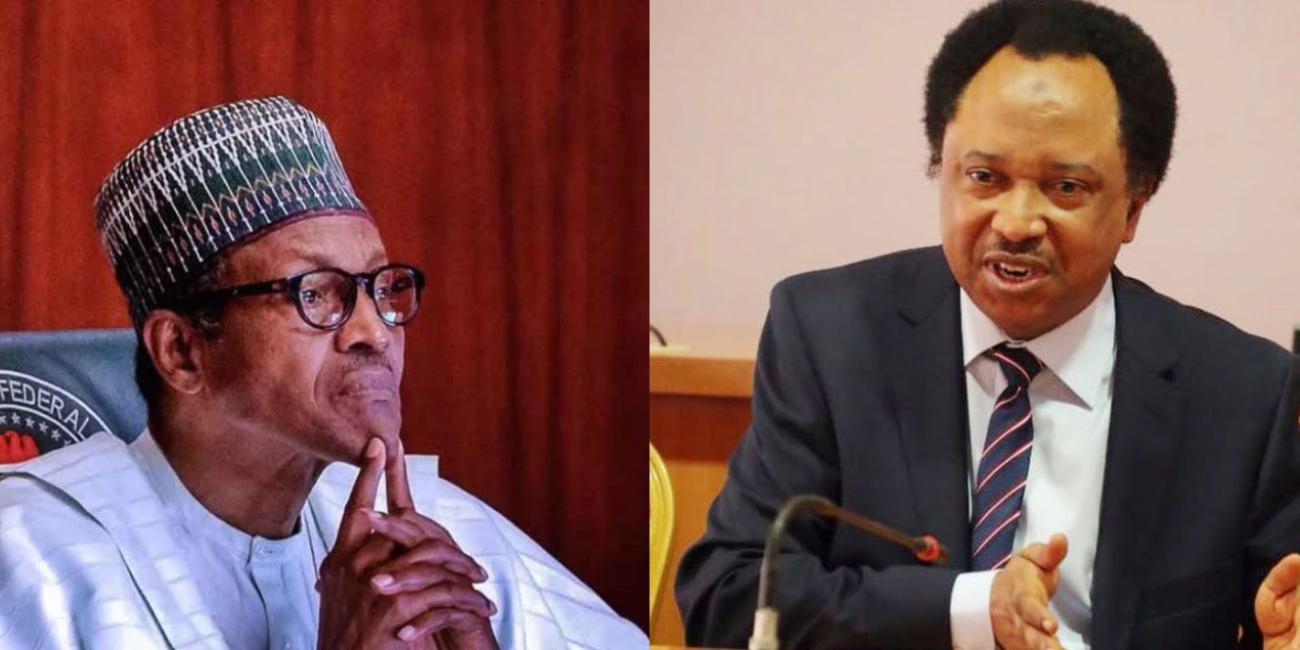
In the wake of former President Muhammadu Buhari’s death, former Kaduna Central Senator, Shehu Sani, has issued a blunt and cautionary message to Nigerian leaders, urging them to reflect deeply on the public outrage that followed the announcement of Buhari’s demise.
Sani, known for his outspoken views on governance and justice, described the reaction of Nigerians—particularly the younger generation—as a reflection of a changing national psyche, where citizens are no longer willing to suppress their anger or whitewash the legacies of failed leaders.
> “The present and future crop of Nigerian leaders should take lessons from the wave of unrefined emotions of Nigerians in the last 48 hours. A new generation of retributive citizens has evolved: unrestrained in their anger, unfiltered in their bitterness, and unforgiving in their souls,” Sani wrote on his verified X (formerly Twitter) page.
Since the news of Buhari’s passing in London after a prolonged illness broke, social media has been flooded with bitter commentaries, videos, and posts criticizing the former military ruler’s controversial legacy—particularly regarding his human rights record, economic policies, and perceived detachment from the suffering of ordinary Nigerians.
In one viral video, a Nigerian woman—believed to be from the North—tearfully expressed her refusal to mourn Buhari, saying she endured extreme hardship during his tenure.
> “I swear to Almighty Allah, I didn’t feel anything when I heard Buhari is dead. No grief, no sympathy. My life has never been the same since he became president. His children thrived and lived in luxury, while people like me were reduced to nothing. I cannot and will not forgive Buhari,” she said emphatically.
Adding fuel to the fire, Buhari’s death has reignited painful memories of the 2015 Zaria massacre—a brutal military crackdown on members of the Islamic Movement in Nigeria (IMN), also known as Shiites. The massacre, carried out under Buhari’s administration, left hundreds dead and is widely condemned by human rights organizations both locally and internationally.
Prominent journalist Saifullahi M. Kabir took to Facebook to memorialize the victims and directly blamed Buhari for what he described as “a genocidal war against innocent civilians.” Kabir listed young female university students and religious leaders who were reportedly killed during the operation, claiming that many bodies were either burned or dumped in mass graves without proper Islamic burial rites.
> “Fatima Ali Munjibir, Nusaiba Yakubu Zurmi, Nusaiba Shafiu Kazaure, Fatima Isa Waziri, and Khadija Ibrahim Dasuqi – these were not terrorists, they were devout students and daughters of this nation. Buhari’s hands are soaked with their blood,” Kabir lamented.
Shehu Sani’s call for introspection serves as a dire warning to those occupying or seeking power in Nigeria. He argues that the days when leaders could rule with impunity and expect a polished eulogy in death are over. Today’s citizens, especially the younger generation, are bolder, angrier, and less willing to forgive.
> “This generation won’t be silenced or swayed by empty tributes. The dead will be judged by their deeds, not their titles,” Sani concluded.
As the dust continues to settle on Buhari’s death, the national conversation has shifted from mourning to accountability—an ominous signal that future leaders may face the same harsh verdict if they fail to serve the people justly.
 PIONEER NEWS