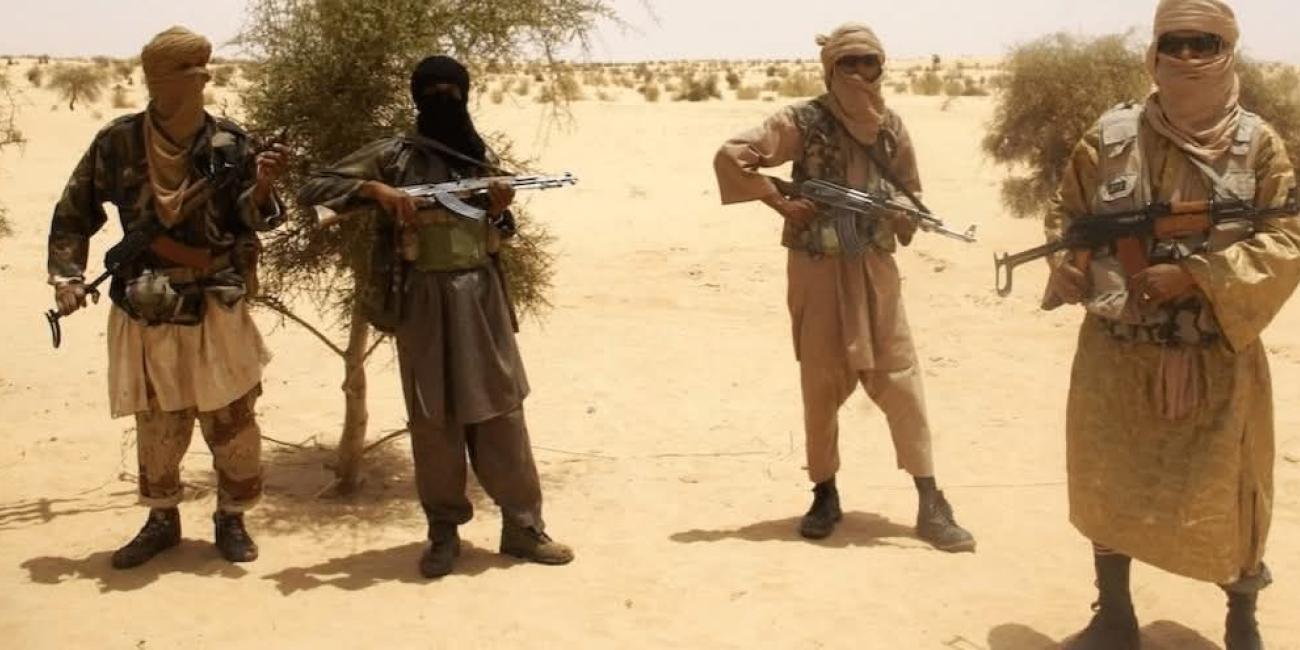
A reign of terror has gripped Baruten Local Government Area of Kwara State, as a newly emerged militant group, identified as the Mahmuda Terrorist Group, launched a brutal assault on Kemanji village, leaving a trail of blood and despair in its wake.
At least seven residents were killed in separate attacks that spanned last Friday and Sunday, with an unknown number of villagers abducted and farmlands torched in what sources have described as a deliberate strategy to cripple rural livelihoods and instill fear across the region.
According to insider accounts obtained by SaharaReporters, three victims, including a woman, were killed in cold blood on Sunday, while four others were slaughtered while working on their farms the previous Friday. The assailants, dressed in combat gear, reportedly set fire to a local farm settlement, reducing years of toil to ashes.
> “The Mahmuda terrorists stormed Kemanji village on Sunday, killed three people, including a woman, and abducted many others,” a source revealed. “On Friday, they brutally murdered four farmers. It’s now too dangerous to go to the farms—many who do, never return alive.”
This is not the first time the Mahmuda group has unleashed chaos in the region. In April, SaharaReporters reported the group’s emergence as a rising insurgent force operating in ungoverned territories around the Kainji Lake National Park (KLNP)—a vast forest reserve sprawled across Kwara, Niger, and parts of Kebbi states. These dense woodlands, once a symbol of biodiversity, have now become terrorist enclaves.
Communities in Kemaanji, Tenebo, Baabete, Nuku, and Nanu within Kaiama LGA, as well as several villages in the Yashikira district of Baruten LGA, have fallen victim to the group’s expanding influence. In Niger State, the Babana and Wawa districts in Borgu LGA have also been overrun by militants linked to Mahmuda.
In one of their most gruesome operations, militants ambushed a local vigilante group in Kemanji, killing more than 15 fighters and civilians.
“They call themselves the Mahmuda Group,” a local security source disclosed. “Their leader has been issuing audio threats to nearby communities. They kill, kidnap, and extort ransoms without restraint.”
Beyond the killings and abductions, what deeply troubles observers is how ungoverned spaces have turned into breeding grounds for insurgent networks. The Kainji Lake National Park, once protected, now lies virtually abandoned, exploited by armed groups, timber merchants, and illegal miners who strike covert deals to continue their illicit operations.
“At first, there was tension between militants, loggers, and vigilantes,” a source explained. “But eventually, the loggers struck a deal with the militants. Now, they harvest trees freely while the terrorists collect levies and use the proceeds to fund their deadly enterprise.”
Experts say this dangerous synergy between economic opportunists and terror groups is fueling insecurity and eroding rural livelihoods.
> “The surge in insecurity is devastating the social fabric and economy of local communities,” one analyst noted. “With militants in control of ungoverned spaces, we’re witnessing a slow-motion collapse of security in these rural areas.”
As the Mahmuda group’s menace grows unchecked, the Federal Government, Kwara State authorities, and security agencies face mounting pressure to reclaim control of the Kainji corridor and dismantle this new threat before it metastasizes into a full-blown regional insurgency.
 PIONEER NEWS