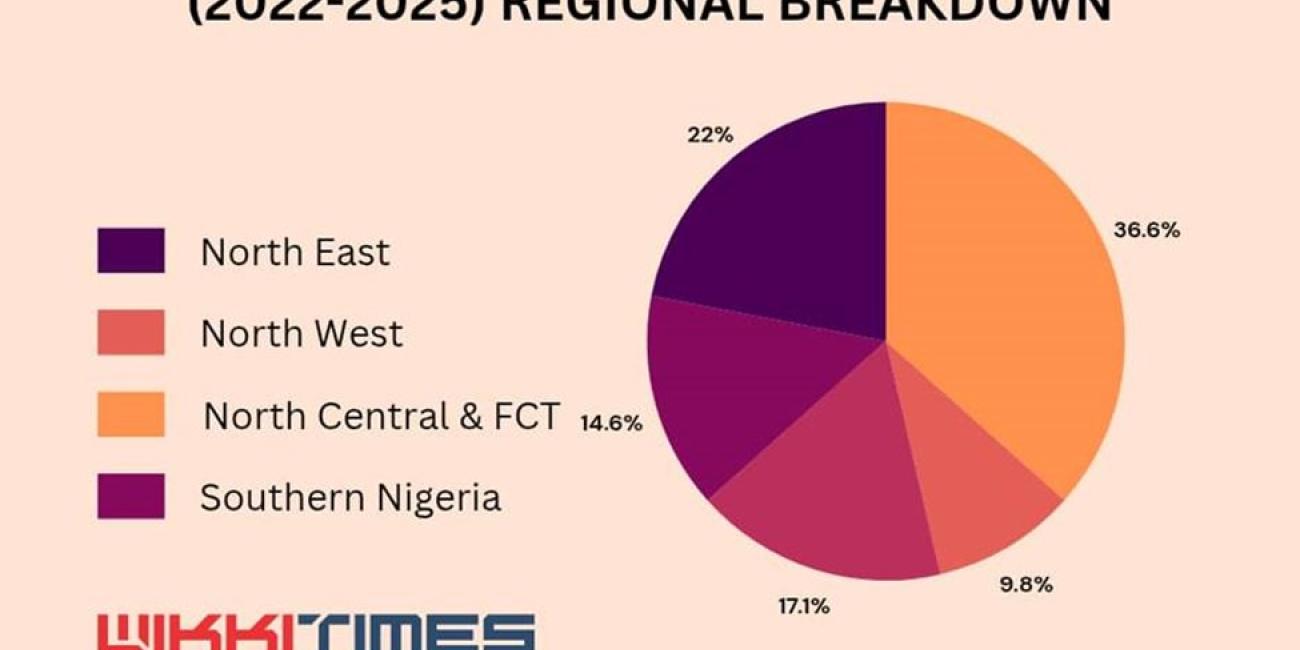
The Nigeria Union of Journalists (NUJ) is widely perceived as the bulwark of press freedom — a powerful watchdog safeguarding journalists’ rights, fighting for better working conditions, and upholding ethical standards across Nigerian media. Its official website proclaims this lofty mission: “The NUJ works to ensure a safe and thriving press landscape in Nigeria.”
But beneath this polished promise lies a starkly different reality — one where journalists are routinely abandoned, harassed, persecuted, and sometimes jailed, while the very institution tasked with defending them offers silence, complicity, or even cheers on the persecutors.
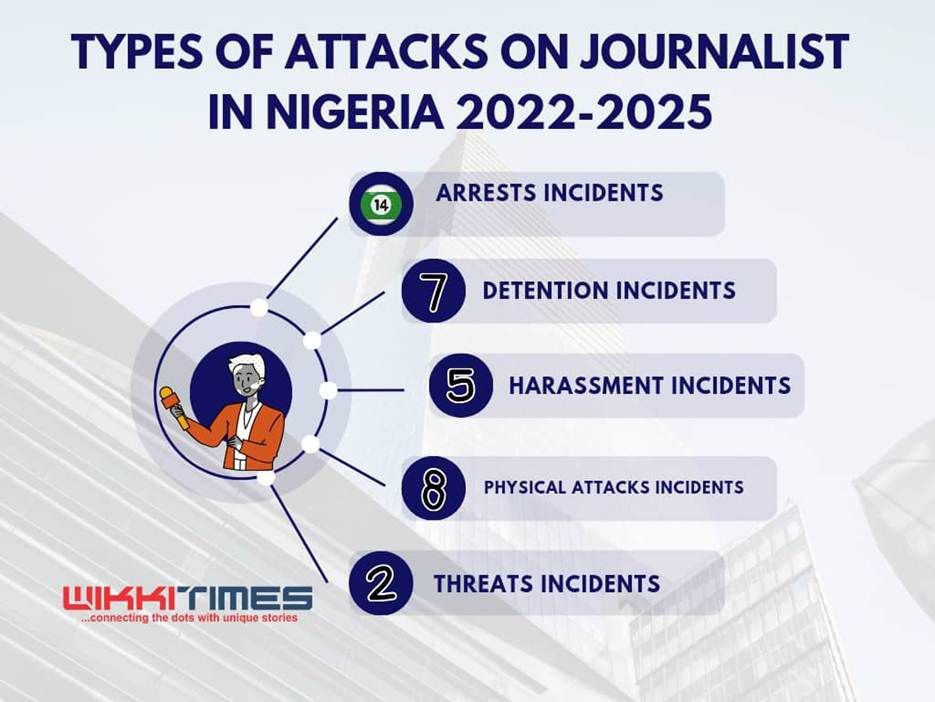
A deep dive by WikkiTimes, in collaboration with the Centre for Journalism Innovation and Development (CJID), exposes how the NUJ — especially at the state level — has repeatedly turned its back on embattled journalists. Instead of shielding its members from political oppression, the union has embraced their oppressors, handing out awards and accolades in an apparent bid to curry favour with the very politicians eroding media freedom.
NUJ’s Culture of Silence and Complicity
Rather than boldly challenging those in power, the NUJ’s typical response to violations against its members has been tepid press statements — if any — followed by uncomfortable silence. Worse still, state chapters have often been seen celebrating those responsible for attacking journalists.
One of the most glaring cases was in March 2024, when the NUJ honoured former Kogi State Governor Yahaya Bello with a Lifetime Achievement Award in Media Empowerment — a man with a well-documented record of hostility towards the press. The award was presented at the union’s 70th anniversary event in Abuja, drawing outrage from media stakeholders and victims of Bello’s past abuses.
In Gombe State, journalist Hassan Kera was forced to flee and miss his own brother’s funeral due to threats linked to his work. Yet, rather than defending him, the NUJ lavished praise on Governor Inuwa Yahaya, who has consistently targeted dissenting voices in the media. Journalists in the state faced trumped-up charges, unlawful arrests, and harassment, all while the union looked the other way.
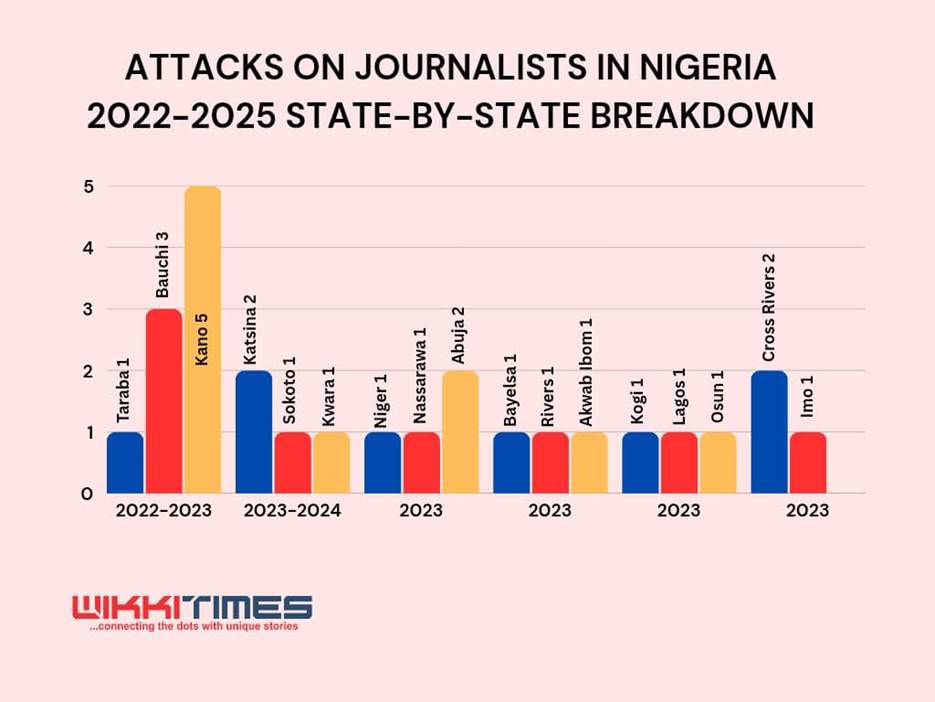
The situation in Bauchi State is even more alarming. During the 2023 elections, Khalid Idris Doya, a reporter with LEADERSHIP Newspaper, was jailed for 10 days after sharing a viral video allegedly showing a state commissioner involved in vote-buying. Not only did NUJ fail to intervene, but it later handed Governor Bala Mohammed the award for being a “media-friendly governor.” This, after the same governor had publicly threatened another journalist and ordered the arrest of WikkiTimes publisher, Haruna Mohammed Salisu, for merely interviewing residents during the elections.
In Kano State, a journalist was hit by a stray bullet inside Government House. But instead of demanding justice, the NUJ accepted the government’s explanation that “a metal fell” on him. Even while Jaafar Jaafar, publisher of Daily Nigerian, was hounded into exile for exposing Governor Ganduje’s dollar-stuffing scandal, the NUJ found it fitting to present Ganduje with an award of excellence in 2019.
In Kaduna, Nasir El-Rufai received NUJ’s nod despite a long record of silencing critical journalists. Governor Zulum of Borno, under whose watch attacks on journalists have spiked, was handed the 2024 Good Governance Award by the union.
According to the NUJ Constitution (Article 2, Objective 1), the union’s primary goal is to “safeguard the freedom of the press and the freedom of journalists to engage in legitimate professional activities.” Yet, the actions — or inactions — of the union have consistently betrayed this mission.
In 2023, four female journalists from the Bauchi Radio Corporation (BRC) were dismissed for allegedly “insulting” the First Lady of Bauchi State, Hajiya Aisha Bala Mohammed, in a private off-air conversation. Maryam Aliyu Kobi, one of the victims, revealed that there was no formal hearing, no evidence presented, and no support from NUJ or RATTAWU, the broadcasting union.
Equally troubling was the NUJ’s indifference to the 2022 arrest of two journalists — Chika Udenkwo (AIT) and Joseph Atabo (Blueprint) — in Gombe, for reporting on the demolition of an opposition campaign office. Another journalist, Dahiru Hassan Kera, was declared persona non grata and forced into hiding. None of these incidents triggered a serious response from the union.
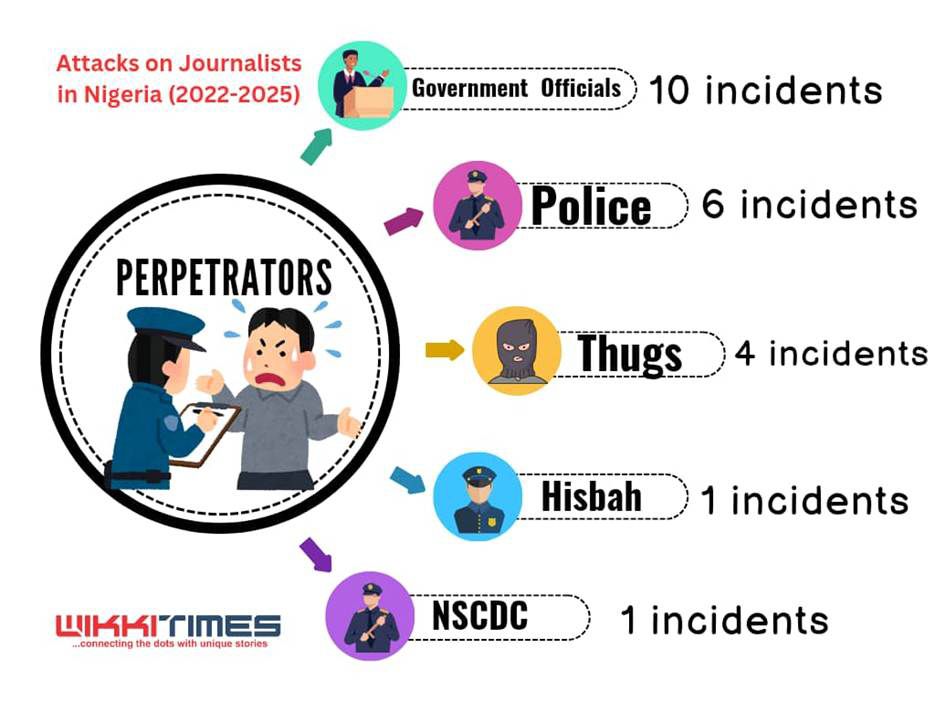
From Abdulwahab Muhammad of VOA to Ibanga Isine, Agba Jalingo, and Jaafar Jaafar, journalists across Nigeria have faced detention, exile, and even threats to life. Many of these persecutions were enabled through abuse of the Cybercrime Act 2015, wielded like a club by governors desperate to silence dissent.
Governors in Nigeria’s three-tier federal system wield enormous power — and they’re not afraid to use it. Through a mix of intimidation, strategic patronage, and economic pressure, they control a significant chunk of local media. In 2024, Nigeria ranked 112th out of 180 countries on the World Press Freedom Index, reflecting the growing peril for independent journalism.
Reporters Without Borders described Nigerian governors as some of the most dangerous threats to press freedom in the country, accusing them of persecuting journalists who dared to hold them accountable.
From Ganduje’s use of cybercrime laws to silence Daily Nigerian, to Ben Ayade’s intimidation of Agba Jalingo, to El-Rufai’s targeting of Ibanga Isine, and Bala Mohammed’s harassment of Haruna Mohammed, the trend is chilling and consistent.
In response to the damning allegations, NUJ National President Comrade Alhassan Yahya denied abandoning journalists.
He claimed the union always advocates for its members and condemned harassment of journalists, regardless of the perpetrator. Yahya referenced past interventions, including personally securing bail for WikkiTimes’ publisher during an earlier encounter with former Speaker Yakubu Dogara.
He also defended the union’s award processes, asserting that there is a vetting system and promising reforms to reposition the NUJ for better protection of journalists.
> “We condemn in totality anywhere or anybody harassing journalists, whether you are a governor or not, or even a president… Under my watch, we will re-strategise,” Yahya said.
While his reassurances offer a glimmer of hope, the damage done by years of inaction and perceived collusion remains significant. For journalists across Nigeria, trust in the union meant to protect them is rapidly eroding.
In an era of growing authoritarianism and democratic backsliding, a vibrant, free, and protected press is not a luxury — it is a necessity. If the NUJ is to remain relevant, it must urgently reclaim its mandate, sever its unholy alliances with political elites, and become the fearless voice it was born to be.
Otherwise, history will remember it not as a protector of the press, but as a silent accomplice in its suffocation.
This investigation was produced by WikkiTimes in partnership with the Centre for Journalism Innovation and Development (CJID), as part of a series on the state of press freedom in Nigeria.
 PIONEER NEWS