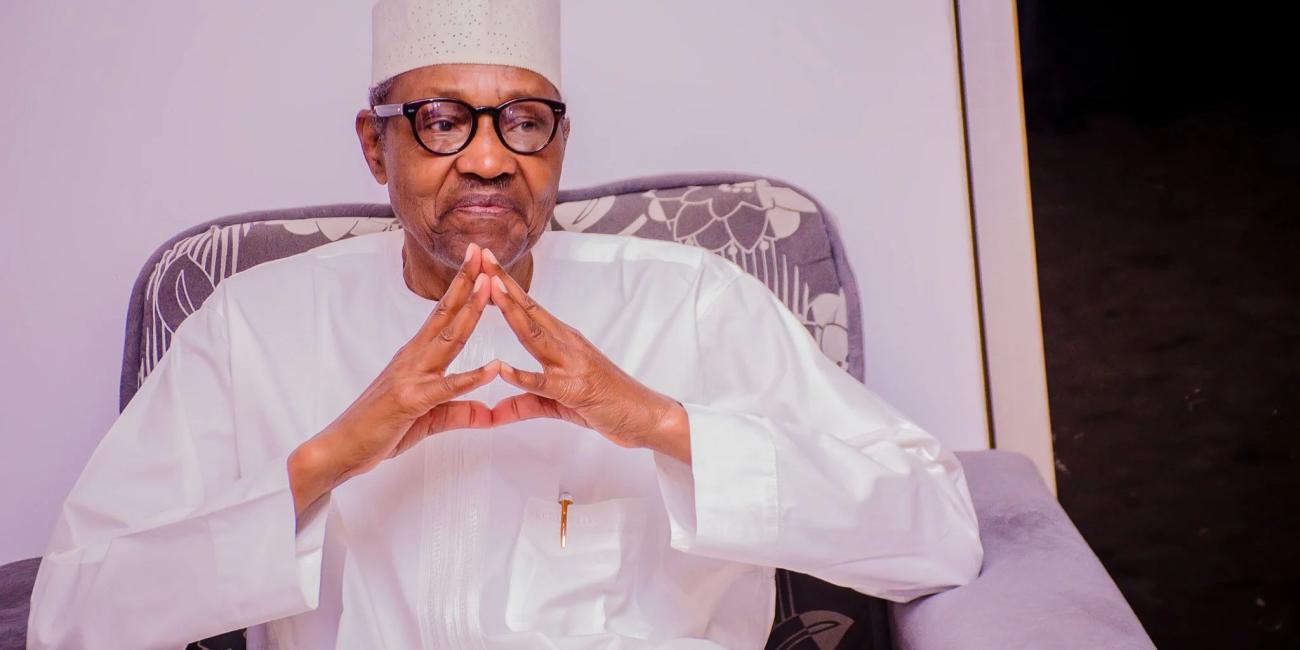
Former Nigerian President Muhammadu Buhari is currently recuperating in London after a serious health scare that landed him in the Intensive Care Unit (ICU) of a United Kingdom hospital, according to a report by Empowered Newswire. The former president, who has been out of the country for several weeks, is said to be stabilising and regaining strength, with plans to return to Nigeria once his doctors give the green light.
Sources close to the 81-year-old former leader confirmed that what was initially described as a “routine medical check-up” took a drastic turn, prompting an emergency admission into intensive care. Buhari was reportedly discharged from the ICU just last week. However, the specific nature of his ailment remains undisclosed, continuing the long-standing tradition of secrecy surrounding the health of Nigerian leaders.
In a related development, Buhari’s influential uncle and long-time confidant, Mallam Mamman Daura, is also said to be recovering in the UK following an undisclosed illness, further deepening concerns over the health of the former president’s inner circle.
Buhari’s absence from the 50th anniversary of the Economic Community of West African States (ECOWAS) in Lagos on May 28 raised eyebrows, with many speculating that his health condition was far more serious than initially stated. In a public message at the time, Buhari expressed regret for missing the event, citing “routine medical check-ups” in the UK that required his urgent attention.
Adding to the intrigue, a photograph circulated on May 1 showing Buhari in London alongside former Economic and Financial Crimes Commission (EFCC) Chairman, Abdulrasheed Bawa. The purpose of Bawa’s visit remains unknown, fueling further speculation.
Buhari’s latest health scare has once again thrown the spotlight on one of the most controversial aspects of his presidency — his frequent overseas medical trips. Throughout his eight-year tenure, Buhari made multiple medical visits abroad, with London being his most preferred destination. These trips drew intense scrutiny, especially given his campaign promises to revamp Nigeria’s ailing healthcare system and discourage medical tourism.
His first known foreign medical trip as president occurred in February 2016. Although initially labeled a short vacation, it was later revealed he received medical treatment during the visit. In June of the same year, he returned to London to treat an ear infection, sparking backlash from the Nigerian Medical Association (NMA), which argued the condition could have been treated locally by competent professionals.
The most controversial episode came in 2017 when Buhari embarked on a “medical vacation” that lasted over 150 days in two stretches — 50 days between January and March, followed by another 104-day absence beginning in May. No official diagnosis was ever disclosed, leaving Nigerians in the dark about the true state of their president’s health. During these prolonged absences, then Vice President Yemi Osinbajo served as acting president.
From 2018 to 2023, Buhari continued to shuttle between Abuja and London for what were repeatedly described as “routine check-ups.” Notably, in 2021, he traveled abroad for treatment at a time when Nigerian doctors were on strike, drawing heavy criticism for the perceived insensitivity.
His final known trip as president took place in May 2023 following the coronation of King Charles III. He extended his stay in the UK to undergo a dental procedure.
Cumulatively, Buhari is believed to have spent over 230 days abroad on medical grounds during his presidency. Media estimates place the cost of these trips — factoring in the operation of the presidential jet and entourage expenses — at between ₦1.1 billion and ₦5.4 billion, excluding actual medical bills and lodging.
The president’s reliance on foreign healthcare became a potent symbol of the government’s failure to deliver on its healthcare promises. Activists, civil society groups, and healthcare professionals decried the hypocrisy of a president who campaigned to end medical tourism but actively participated in it.
Dr. Osahon Enabulele, former President of the World Medical Association, once described the situation as a “national embarrassment.” Similarly, pro-democracy activist Omoyele Sowore and other opposition figures frequently slammed Buhari for not establishing a single world-class hospital in Nigeria capable of treating top officials and citizens alike.
Despite the overwhelming backlash, Buhari remained unapologetic. He often defended his choices by citing the consistency and familiarity of his UK-based doctors, while his administration maintained a veil of secrecy regarding his medical records — further entrenching a troubling culture of opacity around the health of public office holders.
As the former president recovers in a foreign hospital once again, the irony is not lost on Nigerians: a leader who promised to heal the nation’s broken health system now finds himself dependent on another country’s care, with a legacy many consider deeply stained by unfulfilled healthcare reform promises.
 PIONEER NEWS