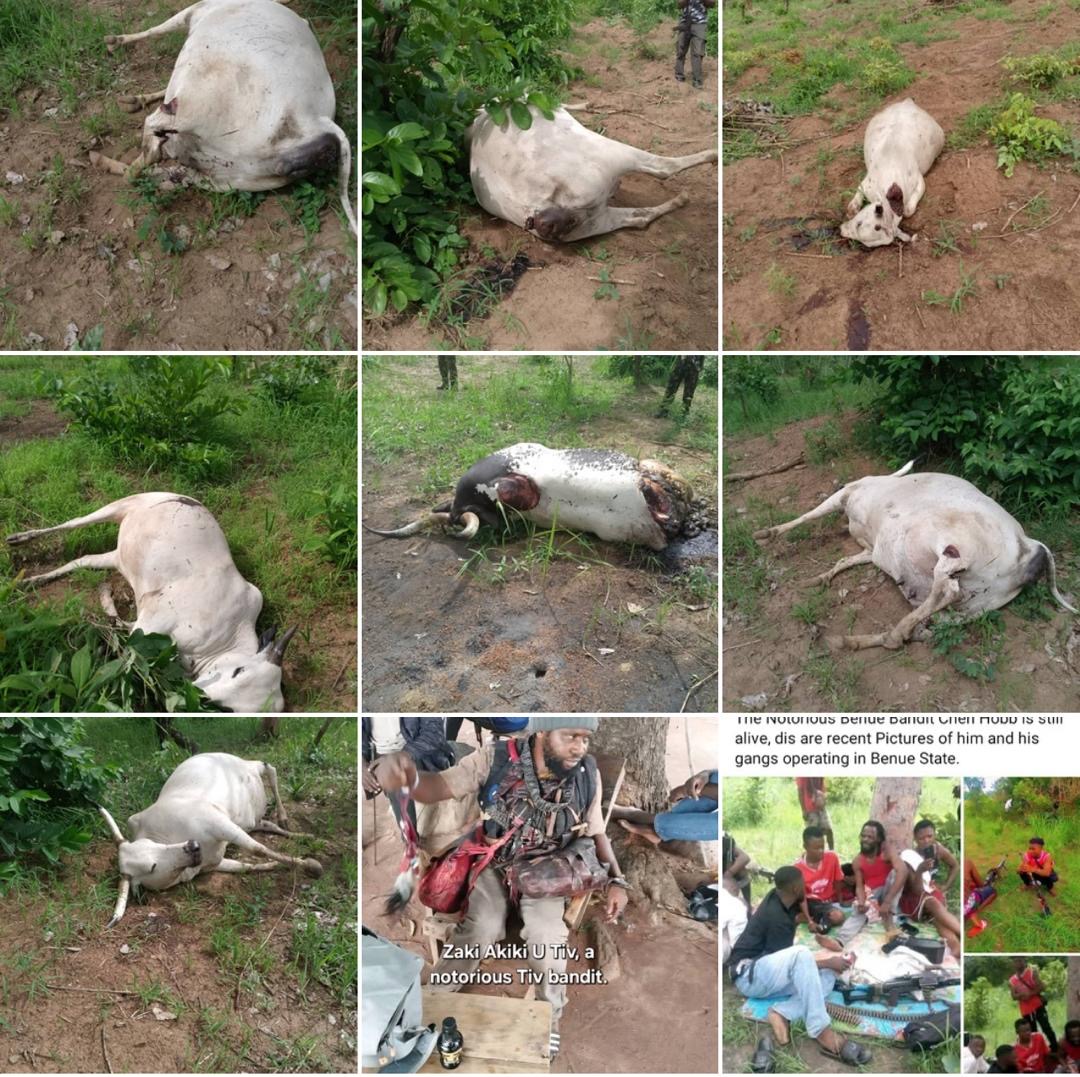
The fragile peace in North Central Nigeria is fast unraveling, as chilling reports emerge of a deepening cycle of retaliatory violence, ethnic cleansing, and growing state silence. Renowned security analyst and counterinsurgency expert, Zagazola Makama, has raised the alarm, revealing via his official X (formerly Twitter) handle that no fewer than 20 Fulani men were gruesomely killed, and over 200 cattle either shot or maimed in a fresh wave of brutal attacks between June 21 and 22.
This latest bloodshed occurred in the southern axis of Makurdi, Benue State, where armed Tiv militias allegedly targeted Fulani settlements. Survivors from the Fulani communities—mostly women and children—have fled into the forests or sought refuge in neighboring states including Nasarawa and Plateau, abandoning their maimed livestock and razed homes.
Makama, citing credible security sources, stated that this surge in violence is not random. Rather, it appears to be part of a calculated strategy to forcibly dislodge Fulani populations from their ancestral grazing lands and consolidate ethnic territorial control. Shockingly, sources claim that local politicians, traditional rulers, and retired security officers are not just complicit, but actively arming militias and fueling the ethnic agenda.
> “These attacks are coordinated. There’s a clear agenda to arm one side while making it look like one-sided aggression. Every Fulani—man, woman, child, or cow—is now branded a bandit,” a senior security official told Makama under anonymity.
In a grim parallel, Plateau State witnessed another harrowing attack over the same weekend. In Mangu Local Government Area, twelve innocent passengers, mostly women and children, traveling from Zaria to Quan’an Pan for a wedding, were ambushed and killed. The 18-seater bus they were traveling in was set ablaze, incinerating some of the victims alive. The attackers were reportedly youths involved in a local reprisal militia.
The North Central region—encompassing Benue, Plateau, Nasarawa, Taraba, and spilling into Gombe, Bauchi, Sokoto, Zamfara, and Katsina in the North West—is now considered a hotbed of multi-layered ethno-communal and ethno-religious warfare. The primary battle line remains between sedentary farming communities and nomadic Fulani herders, with both sides locked in a deadly arms race.
In the North West, the violence has evolved into intra-ethnic warfare between the Hausa and Fulani, where local Hausa vigilante groups, known as Askarawa, are fighting back against violent Fulani elements. In each case, retaliatory attacks are justified by both sides as either defensive or revenge missions—feeding an endless cycle of death and destruction.
The worsening security vacuum has opened the door for transnational jihadist groups to exploit the chaos. The al-Qaeda-affiliated Katiba Macina, a brigade of the Jama’a Nusrat al-Islam wal-Muslimin (JNIM), has reportedly been using Fulani victimhood as a potent recruitment narrative. This has seen many disillusioned Fulani youths, already traumatized by communal violence, drawn into extremist networks stretching from Mali, Burkina Faso, and Niger into northern Nigeria.
Perhaps most troubling is the deafening silence from state and federal authorities over these killings of Fulani non-combatants. While attacks on farming communities receive widespread condemnation and swift security deployment, massacres of Fulani civilians are met with indifference, leading many to suspect state complicity or ethnic bias.
This lopsided response has intensified the climate of mutual distrust, reprisal attacks, and growing hostility. Without urgent and balanced intervention, analysts warn, Nigeria risks sliding into a far more entrenched and uncontainable ethno-sectarian conflict.
Security experts and civil society groups are now calling on the government to:
Publicly denounce all forms of violence, irrespective of the victims’ ethnicity.
Deploy impartial security forces to all affected areas to prevent further bloodshed.
Identify and arrest known sponsors of local militias, especially politicians, traditional rulers, and security personnel reportedly aiding the violence.
Launch disarmament campaigns and promote peacebuilding initiatives across ethnic lines.
The North Central zone now sits on a knife’s edge, threatened by internal militia warfare and external terrorist infiltration. Without swift, decisive, and equitable government action, Nigeria’s heartland could soon become the epicenter of a nationwide catastrophe.
 PIONEER NEWS