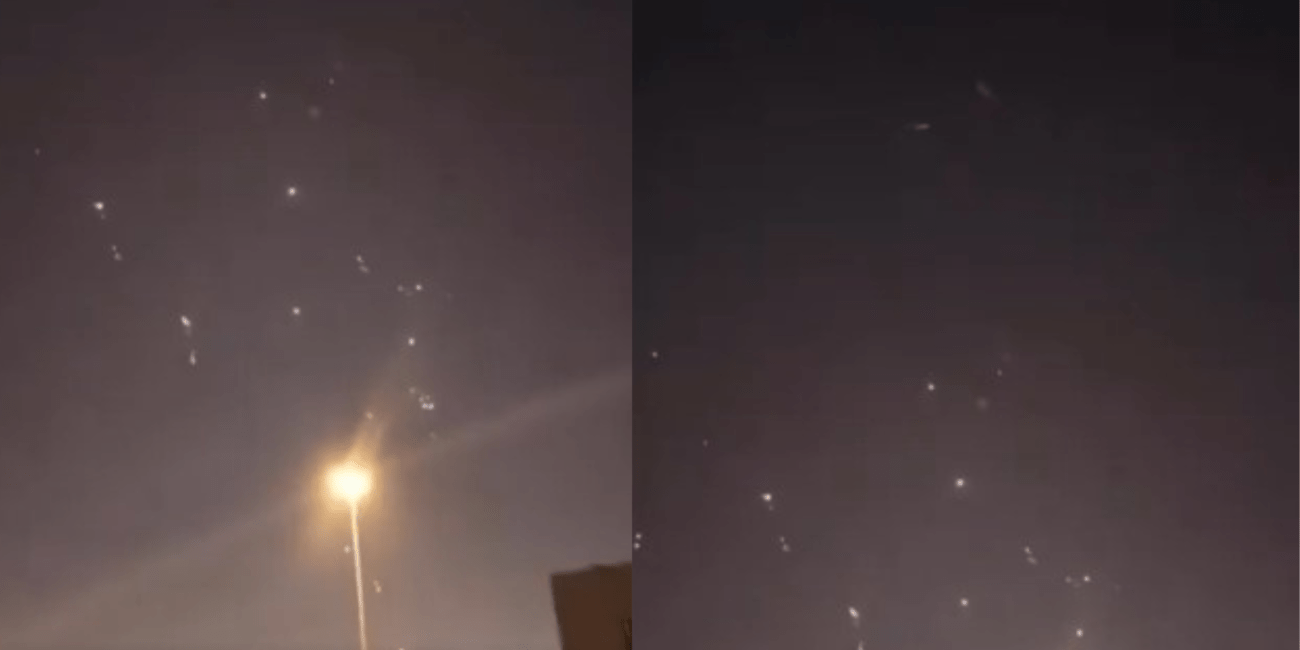
In a dramatic escalation of Middle Eastern tensions, Iran on Monday launched six ballistic missiles targeting the United States’ largest military installation in the region—the Al Udeid Air Base in Qatar—in what it declared a “direct and calculated retaliation” for a devastating U.S. airstrike on its nuclear facilities over the weekend.
According to Daily Mail, the missiles, launched from undisclosed Iranian positions, aimed squarely at the sprawling Al Udeid base, which hosts over 10,000 U.S. troops, a fleet of over 100 aircraft, including strategic bombers, surveillance planes, and aerial refueling tankers. The base serves as the nerve center for American military operations across the Middle East.
The attack came mere hours after a high-alert warning prompted the activation of advanced aerial defense systems at the base, narrowly thwarting what could have been a catastrophic blow. Within minutes of the missile assault, air raid sirens blared across other critical American military outposts in Bahrain, Kuwait, and Iraq, signaling a sweeping alert across the region and foreshadowing the potential for a broader military conflict.
A senior Iranian official, speaking to the press under anonymity, issued a chilling warning: “The United States can no longer hide behind the veil of Israel. It will pay directly and severely for the desecration of our nuclear sovereignty.” He added that Tehran was fully prepared for a drawn-out conflict lasting up to two years, asserting that Iran’s resolve was “unshakable in the face of American aggression.”
Further raising international alarm, Iran’s mission to the United Nations issued a fiery statement, holding not only the United States and Israel accountable for the attacks, but also the UK, France, and even Rafael Grossi, Director General of the International Atomic Energy Agency (IAEA). The mission accused them of complicity in what it described as “a campaign of terror against the Iranian people,” vowing that the blood of innocent civilians “will not be forgotten.”
As the missile smoke settled, diplomatic shockwaves rippled across the globe. SaharaReporters earlier revealed that Iran had reached out to Russia in a high-stakes bid for strategic reinforcement. In a rare and urgent move, Iran’s Supreme Leader, Ayatollah Ali Khamenei, dispatched Foreign Minister Abbas Araqchi to Moscow with a sealed message for Russian President Vladimir Putin.
According to Reuters, the letter appealed for a deepened alliance in light of what Tehran described as an “existential threat” posed by the United States and its allies. “Iran seeks not only support but strategic solidarity,” a senior Iranian source told the news agency. “We cannot face this storm alone.”
The immediate catalyst for Iran’s retaliation was a massive U.S. airstrike that obliterated several nuclear research sites within Iranian territory—a move widely condemned across parts of the global diplomatic community. President Donald Trump, who authorized the operation, coupled it with inflammatory rhetoric, hinting at “decapitating the regime” and targeting senior Iranian leaders, including Khamenei himself.
While Israeli officials have openly supported the U.S. move, Russian President Vladimir Putin has so far issued only measured statements, calling for “restraint on all sides” and offering Moscow’s services as a mediator in the growing nuclear confrontation. However, sources within Tehran have criticized Russia’s response as “lukewarm and insufficient,” expressing frustration that Moscow’s condemnation of Israeli airstrikes did not extend to Washington’s actions.
With both sides digging in their heels, the world watches anxiously as two nuclear-capable powers inch dangerously closer to a full-scale war. The question remains: is the Middle East on the verge of another devastating conflict—or can diplomacy pull the region back from the brink?
 PIONEER NEWS