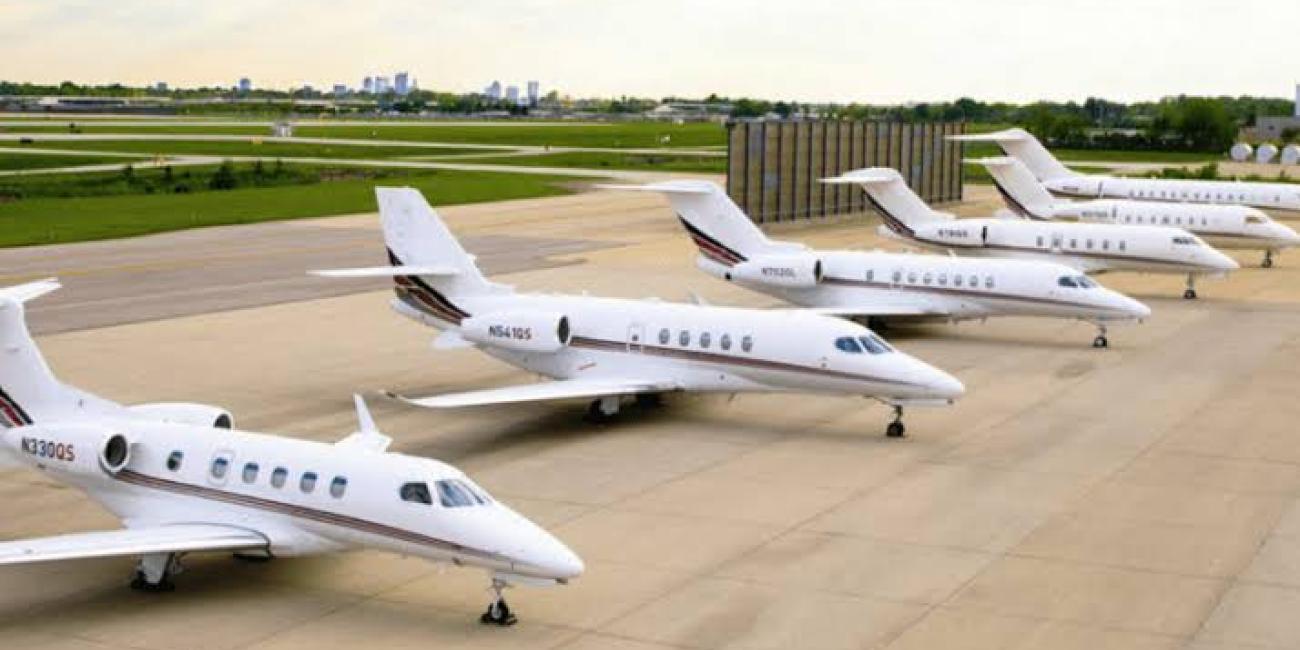
In a sweeping and unprecedented move, the Nigerian Customs Service (NCS) has grounded at least 60 private jets belonging to prominent business tycoons, top bank executives, oil moguls, and multinational company leaders over billions of naira in unpaid import duties.
The crackdown—described by insiders as the most aggressive in recent aviation history—targeted luxury aircraft such as the Bombardier Global 6000, 6500, and 7500 series, sealing hangars at Nigeria’s busiest airports including the Murtala Muhammed International Airport in Lagos and the Nnamdi Azikiwe International Airport in Abuja.
According to The PUNCH, the NCS launched the operation after months of delays and legal entanglements following a verification exercise initiated in October 2024 to audit private jet ownership and duty compliance. Although enforcement was initially postponed and the deadline extended to November 14, 2024, the Customs Service has now acted with decisive force—without issuing any further public notice.
“The aircraft are grounded for non-payment of customs duties. As soon as they regularise their payments and give what is due to Nigerians, the aircraft will be released,” said NCS spokesperson, Abdullahi Maiwada, confirming the enforcement.
He added, “We extended the deadline more than necessary. Now that we are acting, everyone knows why. This is about collecting revenue for Nigerians so that it will be used in the interest of Nigerians.”
Billionaire Jet Owners Scramble for Relief
The move has sent shockwaves through Nigeria’s elite circles, with many high-net-worth individuals frantically lobbying top government officials and even the Presidency for reprieve. Reports indicate that one major commercial bank has committed to settling its outstanding liabilities by next Tuesday, while another is negotiating discreetly through legal intermediaries.
An energy firm operating three luxury jets is also said to have promised to resolve its outstanding customs duties before the end of the week.
Despite the tough stance, a document dated June 4, 2025—allegedly signed by Deputy Comptroller-General C.K. Niagwan—suggests a sliver of relief for some operators. The document authorises the “temporary unsealing” of select grounded jets to allow owners submit relevant documentation and initiate structured discussions on how to settle outstanding obligations.
The document emphasized, however, that the gesture was not a waiver of the duties owed, but rather a tactical step to foster compliance.
Aviation Experts Sound Security and Economic Alarms
The clampdown has triggered mixed reactions among aviation experts and regulatory stakeholders.
Frank Oruye, a former Deputy Director of Engineering at the defunct Nigeria Airways, commended the Customs Service’s action but urged both parties to embrace international best practices. “Private jet owners must fulfil their tax obligations. At the same time, Customs must maintain professionalism and clarity in enforcement,” he said.
Oruye also pointed to historical frictions between Nigerian aviation operators and the NCS, particularly concerning high-value aircraft components like Rotables, which have long been the subject of customs disputes.
Adding a layer of national security concern, retired Group Captain John Ojikutu condemned the unchecked influx of foreign-registered private jets into Nigeria. “Many of the grounded jets are foreign-registered, posing significant security risks,” he said.
“When I was at the airport, I seized Abiola’s aircraft twice! This laxity is dangerous. In Demuren’s days, this would never have been allowed. Flying foreign aircraft in Nigerian airspace without proper clearance is a threat to our national security,” he warned.
Ojikutu placed part of the blame on both the Nigeria Customs Service and the Nigerian Civil Aviation Authority (NCAA) for their failure to properly regulate the entry and operations of such aircraft.
A Message to Nigeria’s Elite
The ongoing enforcement is not just about recovering billions in unpaid duties—it sends a bold message to Nigeria’s wealthy elite: the era of impunity in the skies is over.
As the NCS digs in its heels and jet owners weigh their legal and political options, the country watches closely. Will Nigeria’s power players finally be held accountable, or will influence and connections once again deflate efforts to enforce the law?
Only time—and the next wave of enforcement—will tell.
 PIONEER NEWS