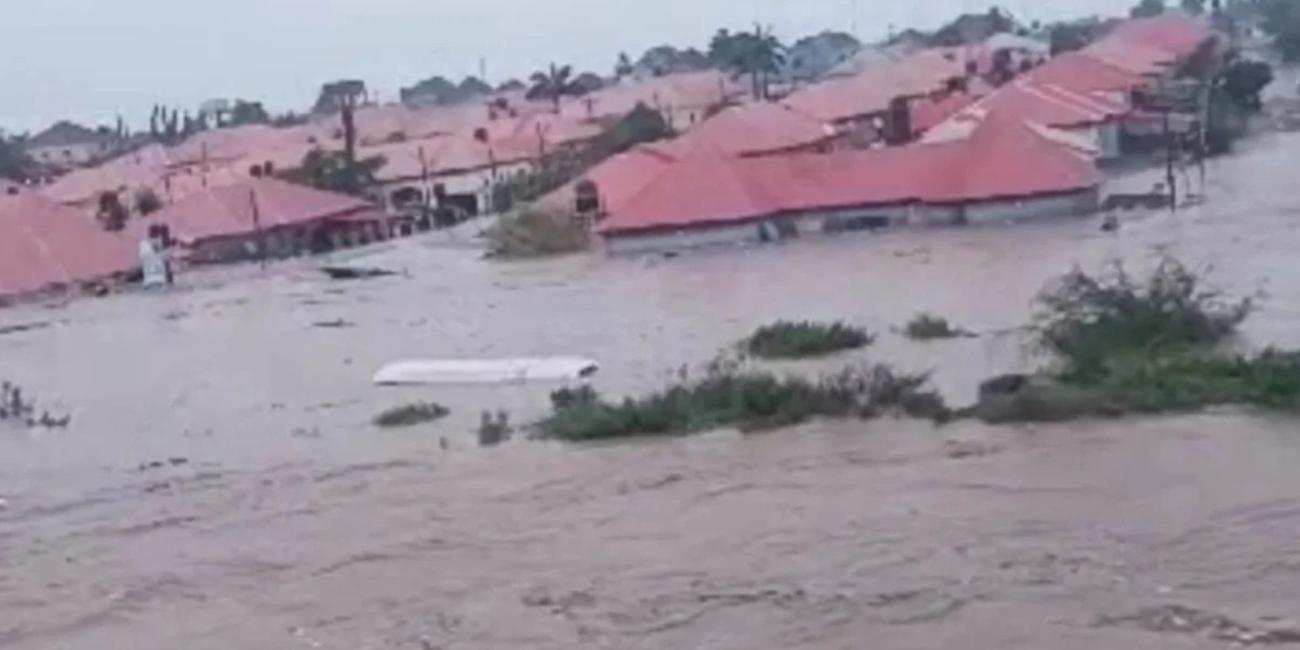
The death toll in the devastating Mokwa flood disaster in Niger State has risen as seven more corpses were recovered, pushing the total confirmed deaths to over 200, with hundreds still unaccounted for. The latest grim discovery underscores the scale of the tragedy that has ravaged communities and left a trail of grief, loss, and unanswered questions.
The Niger State Government confirmed the additional fatalities on Tuesday through a statement signed by the Secretary to the State Government, Abubakar Usman. According to Usman, four bodies were recovered on Monday, one early Tuesday morning, and two more later the same day as search-and-rescue efforts pressed on amid dwindling hopes of finding survivors.
While the official death toll now stands at over 200, residents fear the actual number may be far higher, with more than 500 people still missing. The magnitude of the destruction is staggering—over 3,000 homes obliterated, entire farmlands submerged, and thousands displaced in the worst flooding disaster the region has seen in decades.
However, what makes the Mokwa catastrophe even more chilling is that it wasn’t triggered by heavy rainfall. Survivors and local observers strongly suspect that the flooding was caused by a sudden release of water from the Kainji Dam—one of the largest dams in West Africa—located upstream on the Niger River.
Residents recounted that there was no significant rain prior to the flood, which struck with terrifying force in the early hours of May 29, 2025. Many were caught off guard as the water surged through communities while they were still asleep.
AbdulGafar, one of the victims who lost everything, shared his harrowing experience.
> “This wasn’t rainwater. If it was, we would have seen signs or felt the rain at night. It came like a force from nowhere—swift, loud, and destructive. I’ve lived here all my life. We’ve had erosion, yes, but nothing like this. This was different. It felt like the dam was opened.”
Similarly, another victim, Salihu Suleiman, recalled how he and his wife barely escaped with their lives.
> “We had just finished Subh (morning) prayer and returned to bed. Minutes later, my mother was banging on the door shouting that water was coming. I ran out in my singlet and boxers—no phone, no belongings—just the clothes on my back. Everything we had was swallowed by the water.”
Their testimonies align with reports that parts of New Bussa town in Borgu LGA had experienced partial flooding days earlier, suggesting an upstream water release. Some farmers in Mokwa also noticed rising water levels in the days leading up to the disaster but were unprepared for the devastation that followed.
The alleged unannounced release from the Kainji Dam, if proven true, could point to gross negligence or a failure in disaster communication mechanisms. The dam, constructed for hydroelectric power generation, irrigation, and regional water management, is supposed to be a pillar of development—not a harbinger of disaster.
Critics are now calling for a transparent investigation into the flood’s cause, demanding accountability and preventive measures to protect communities living downstream of the dam.
As rescue efforts falter and families continue to search desperately for their loved ones, the people of Mokwa are left to pick up the shattered pieces of their lives—clinging to hope, demanding justice, and praying that such a catastrophe never strikes again.
 PIONEER NEWS