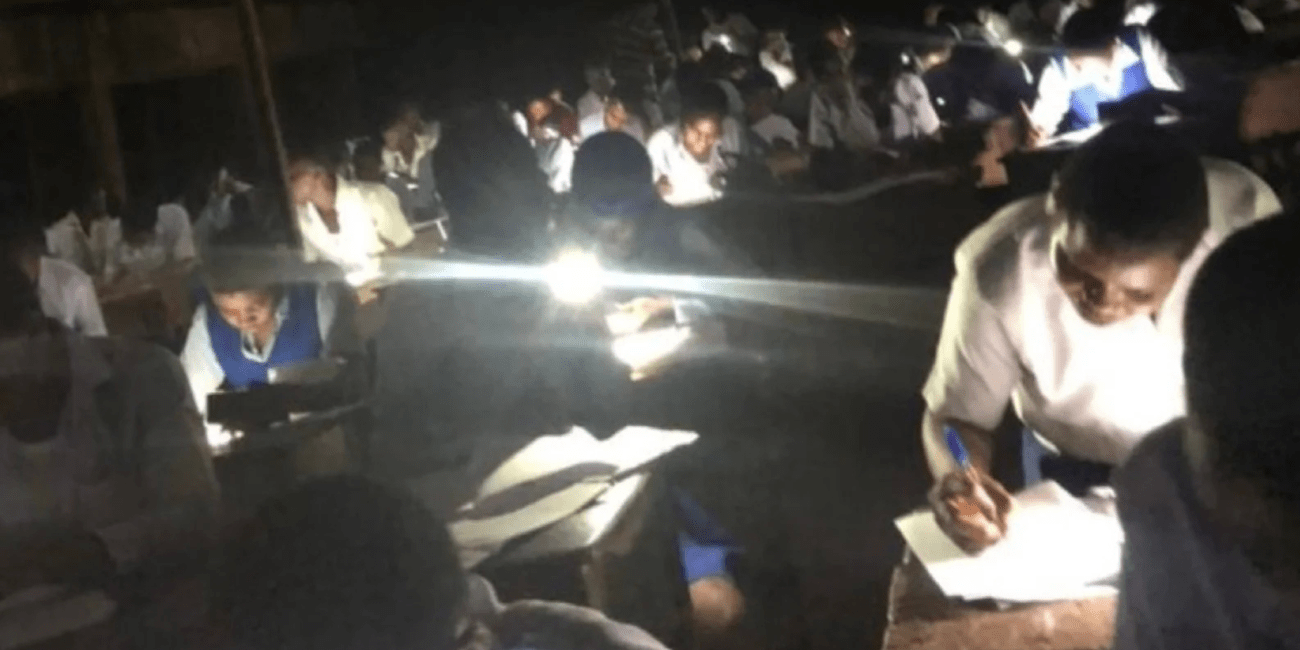
“It’s academic ambush!” – CCAC decries night-time WAEC exams, calls for cancellation or 20% compensation
The Citizenship Civic Awareness Centre (CCAC) has lashed out at the West African Examinations Council (WAEC), describing the late-night conduct of the English Language paper under deplorable conditions as a national embarrassment and a violation of students’ rights.
In a strongly worded statement issued by the Centre’s official, Adeola Soetan, CCAC condemned WAEC’s apology as grossly inadequate, insisting that nothing short of total cancellation and rescheduling of the affected exams—or at the very least, a compensatory 20% score boost—would suffice to address the chaos, trauma, and systemic failure that marred the process.
“The apology tendered by WAEC’s Head of National Office, Mr. Amos Dangut, falls far short of what is needed,” Soetan declared. “It does not begin to compensate for the psychological distress, academic sabotage, and security risks inflicted on candidates who were forced to write their exams in darkness. This was not an examination—it was an ambush.”
The English Language paper, a foundational subject for all secondary school students, was controversially conducted at night in several states including Kwara, Taraba, and parts of Delta State due to reported question leakages and unspecified security threats. However, CCAC and many Nigerians argue that these issues, which stem from WAEC’s internal lapses, should never have resulted in punishing the students.
In multiple reports verified by SaharaReporters, students in affected regions began their exams as late as 7:00 p.m. and continued into the night using torchlights due to the absence of electricity. One viral video from Unity Modern School in Asaba, Delta State, showed candidates hunched over their papers, frantically scribbling under the dim glow of phone flashlights while supervisors struggled to maintain order in total darkness.
A resident of Kwara State, Idris Yinka, shared his account: “They brought the exam papers at 6:50 p.m., and it started at exactly 7 p.m. The students finished at 8:25 p.m. They looked exhausted and traumatized.”
CCAC emphasized that such conditions not only breach WAEC’s own code of conduct—which mandates a conducive environment for testing—but also amount to institutional abuse of children.
“Students are not suspects to be interrogated at midnight. They are candidates deserving of dignity and fairness,” Soetan said. “To conduct an exam where students are forced to hold a pen in one hand and a torchlight in the other is barbaric. This is not just malpractice—it’s a moral collapse.”
He further accused WAEC of using students as scapegoats for its internal failures and described the decision to proceed with the exams under such conditions as “inhuman, discriminatory, and devoid of professional judgment.”
Soetan called out the glaring inequality in the process, noting that while some students wrote their exams under normal classroom conditions, others were subjected to stress-inducing and unsafe settings—an unacceptable disparity that compromises the integrity of the examination results.
“This is a two-tiered examination. One group wrote their exams in conducive environments. The other wrote like hostages, in fear, in darkness, with their futures hanging in the balance. How can WAEC justify that?”
He referenced the 1978 “Orijo ’78” WAEC exam scandal, in which authorities canceled the entire exercise due to leakage but ensured that students were not subjected to night-time hardship. “Even during Orijo ’78, students were treated with more respect. How is it that 47 years later, WAEC thinks ambushing students at night is the solution?”
Soetan didn’t stop there. He criticized the hypocrisy of older generations who impose such punishing conditions on young people and then deride them for academic underperformance.
“It is disgraceful that the same adults who orchestrate this academic cruelty turn around to call our youths unserious when they fail. The irresponsibility lies with the so-called ‘serious’ adults, not the victims.”
In his concluding remarks, Soetan issued a firm demand: “WAEC must immediately cancel all papers written under these disgraceful conditions. If a resit is impossible, then WAEC must award a 20% compensation to all affected students to restore fairness and hope.”
He warned that if WAEC fails to act, public confidence in the examination body could collapse, potentially sparking legal and civil backlash.
“This is not a plea. It’s a demand rooted in justice. Cancel and reschedule the affected papers now—or brace for the consequences of undermining an entire generation.”
 PIONEER NEWS