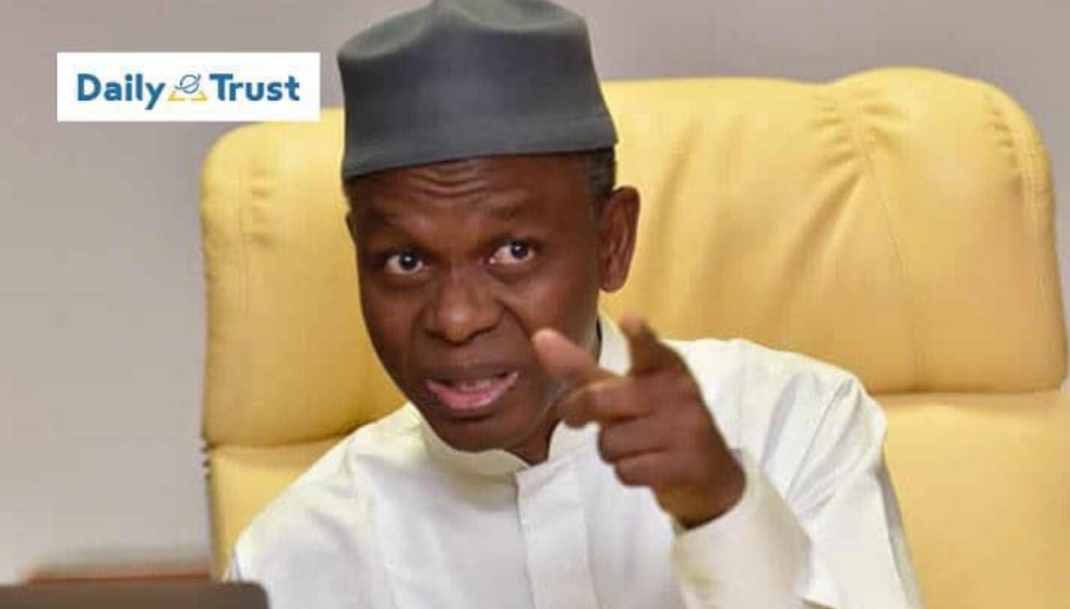
In a scathing critique of the current administration, former Kaduna State Governor Nasir El-Rufai has declared that Nigeria is facing its gravest crisis since its amalgamation in 1914—one he attributes to the takeover of national leadership by what he describes as “urban bandits.”
Speaking in Abuja at a public lecture titled “Weaponisation of Poverty as a Means of Underdevelopment: A Case Study of Nigeria”, organized to mark the 60th birthday of former Rivers State Governor, Rotimi Amaechi, El-Rufai minced no words as he unleashed a barrage of criticisms against the Bola Tinubu-led government.
> “Nigeria is in its biggest trouble since 1914. That is why many of us are quietly working and conspiring to build a formidable coalition that will take this country back on track—because right now, it is completely off course,” El-Rufai declared.
The former governor likened the current leadership to “urban bandits,” insisting that these are not the criminal elements hiding in forests or remote villages but political actors in suits who have hijacked governance and crippled the nation through incompetence and self-interest.
> “We’ve allowed a new breed of bandits—not the ones carrying AK-47s in the bushes—but urban bandits in agbadas and ties, to seize control of our leadership structures. These individuals don’t understand governance; they only understand the mechanics of acquiring power, not the responsibility of using it for the public good,” he said.
El-Rufai lamented the repeated election of leaders lacking both vision and competence, attributing Nigeria’s enduring economic hardship and security woes to the quality of people at the helm of affairs.
> “The tragedy of our democracy is that we keep handing power to those who lack the competence, capacity, and character to govern. Most of them have no blueprint, no policy knowledge—only ambition and hunger for control,” he said.
The outspoken former minister didn’t stop there. He issued a call to action for Nigerians to take the 2027 general elections seriously, warning that the future of the nation depends on electing leaders who can steer Nigeria out of its worsening state.
> “2027 must not be business as usual. Nigerians must critically assess those offering themselves for leadership. We must rise above ethnic, religious, and partisan sentiments and vote for individuals with proven competence, vision, and courage to lead this country to greatness.”
This isn’t the first time El-Rufai has taken a swipe at the Tinubu administration. In April, he openly stated that a strong opposition coalition could dethrone Tinubu in 2027. Now a member of the Social Democratic Party (SDP) following his defection from the All Progressives Congress (APC), El-Rufai has increasingly positioned himself as a prominent critic of the current regime.
> “Tinubu can rally all 36 governors, but if Nigerians decide they’ve had enough, it’s over. Sovereignty belongs to the people,” he previously stated.
El-Rufai’s bold rhetoric underscores a growing sense of disillusionment within and beyond political circles, as Nigerians grapple with mounting inflation, insecurity, and a weakening naira. His remarks have sparked fresh conversations about the direction of the country—and the kind of leadership needed to reverse its descent.
As the political temperature begins to rise ahead of the 2027 elections, El-Rufai’s explosive remarks could be a harbinger of deeper divisions within Nigeria’s political elite—and a rallying cry for those seeking radical change.
 PIONEER NEWS