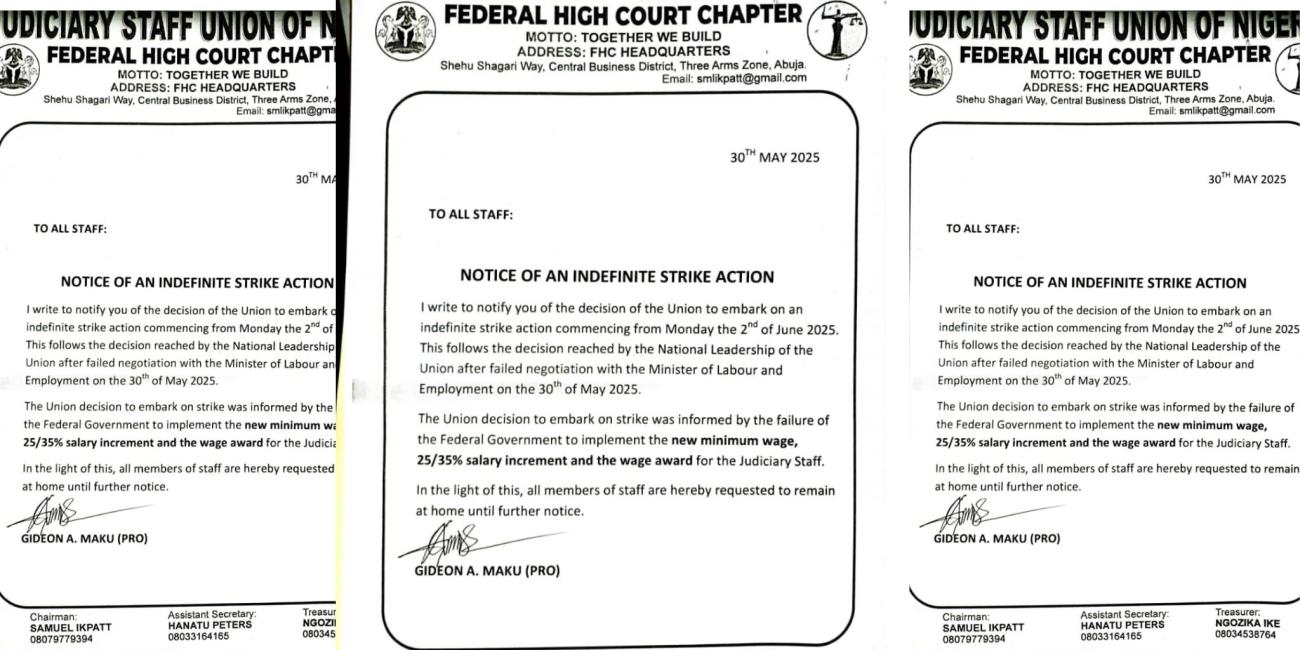
In a bold and unprecedented move, the Judiciary Staff Union of Nigeria (JUSUN), Federal High Court Chapter, has declared an indefinite nationwide strike, sending shockwaves across the country’s legal and political landscape. The industrial action, scheduled to commence Monday, June 2, stems from the federal government’s persistent failure to honor critical financial agreements made with judiciary workers.
A circular dated May 30, 2025, and signed by the union’s Public Relations Officer, Mr. Gideon A. Maku, directed the immediate shutdown of all Federal High Courts nationwide. The directive follows a collapse in negotiations between JUSUN’s national leadership and the Minister of Labour and Employment, which took place earlier on Friday.
According to Mr. Maku, judiciary workers have run out of patience after enduring five months of unpaid wage awards, as well as the government’s failure to implement the much-publicized N70,000 national minimum wage and the 25% to 35% salary increment promised to civil servants.
> “This action is not taken lightly. It is a direct response to the federal government’s consistent neglect, broken promises, and lack of political will to prioritize the welfare of judiciary workers,” the circular stated.
The union emphasized that the strike would remain in force indefinitely until the government shows a genuine commitment to meeting its obligations. JUSUN further instructed all its members to stay away from work and remain at home until further notice, effectively paralyzing judicial processes across the country.
Legal experts warn that the strike could have far-reaching consequences, crippling court operations, stalling ongoing trials, and delaying access to justice for millions of Nigerians. Human rights activists and civil society organizations have already begun voicing concerns about the implications of this industrial action on the nation’s fragile justice system.
As of press time, there has been no official response from the Ministry of Labour or the Presidency regarding efforts to resolve the crisis.
With the judiciary now at a standstill, all eyes remain on the federal government to act swiftly and avert a prolonged shutdown that could severely undermine the rule of law and the democratic process in Nigeria.
 PIONEER NEWS