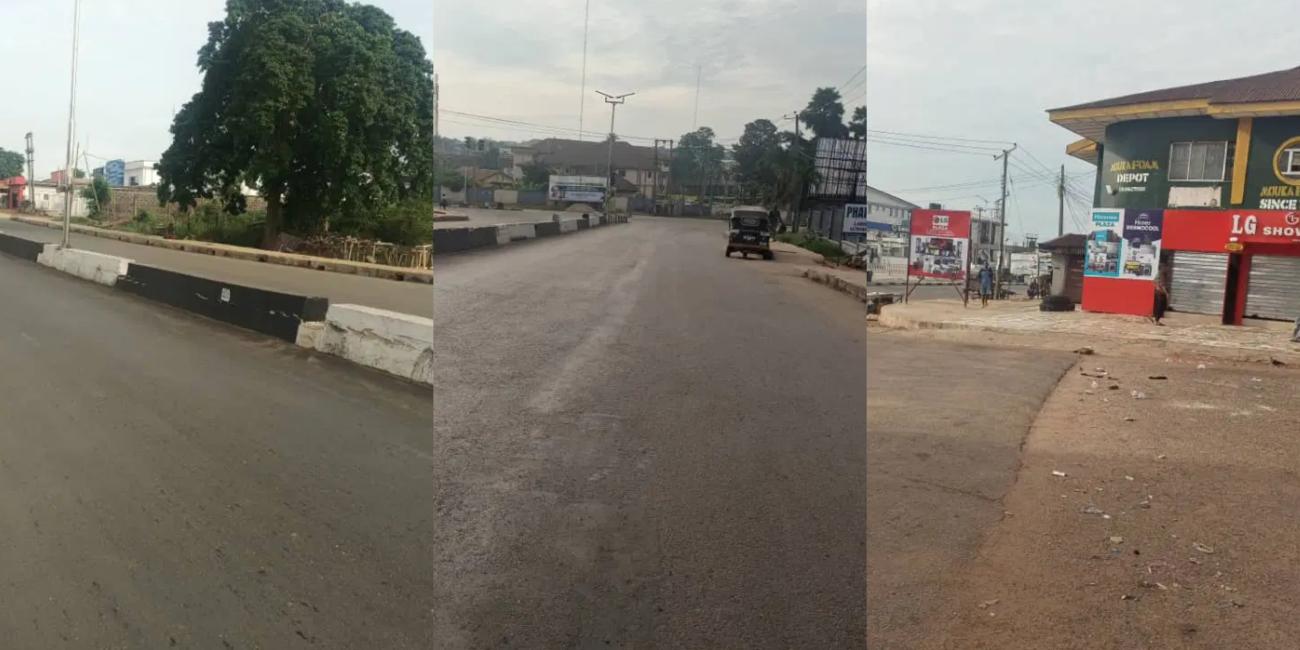
Economic, social, and political life across the South-East region of Nigeria came to a dramatic standstill on Friday, May 30, as residents observed the Indigenous People of Biafra (IPOB)’s sit-at-home directive to mark Biafra Remembrance Day. The order, issued annually by the separatist group, turned bustling cities into ghost towns in a poignant display of regional solidarity and simmering tension.
From the teeming markets of Onitsha to the government offices of Awka, from the streets of Enugu to the commercial arteries of Aba, the shutdown was near total. Roads were eerily silent, schools shuttered, and banks, markets, and public offices remained under lock and key. Public transport vanished, and even private vehicle movement dwindled to a trickle.
While some residents described their decision to stay home as a solemn gesture of remembrance for those who perished during the Nigerian Civil War (1967–1970), others admitted they complied out of fear—fear of reprisals from unknown enforcers of the order.
“It’s not just fear, it’s respect,” said Mr. Emmanuel, a resident of Awka. “Our fathers, our mothers, our children—millions died during that war. One day of silence is the least we can do to honour their sacrifice.”
For Obata, another resident, the shutdown transcends IPOB’s directive. “Even our brothers in the police and military feel it too. Many only follow orders. Deep down, they share our grief and memory.”
In Onitsha, the commercial heartbeat of Anambra State, compliance was described as “100%” by locals. “Since morning, I haven’t stepped out,” one resident told SaharaReporters. “The streets are empty. There’s no sign of business or movement.”
In Awka, while some smaller shops dared to open, the iconic Eke Awka market remained largely inactive. Major transportation hubs, banks, and offices were deserted, mirroring the silence across Umuahia, Owerri, and Aba.
In Enugu and Ebonyi states, compliance was partial. Although some shops opened and light movement resumed by midday, the usual chaos of interstate transport—especially heavy trucks from the North—was conspicuously absent. “It’s not the usual day,” an Enugu resident observed. “Even the mighty Ogbete Market is barely breathing. It’s open, yes, but who’s buying?”
In Abakaliki, the atmosphere was one of cautious observation. Chimdi, a local, noted, “The international market, motor parks—dead silent. It’s not absolute compliance, but the fear of the unknown keeps people inside.”
The Nigerian Civil War, ignited in 1967 following the declaration of the Republic of Biafra by the late Lt. Col. Chukwuemeka Odumegwu Ojukwu, claimed an estimated 1 to 3 million lives—mostly Igbo civilians. Today, May 30 serves as a painful reminder of those dark years, especially in the South-East, where memories still burn brightly.
Founded in 2012 by now-detained Nnamdi Kanu, IPOB has consistently advocated for the secession of the South-East and parts of the South-South, declaring May 30 a sacred day. The group reaffirmed this stance earlier in the week, describing the sit-at-home as a “peaceful civil disobedience” in honour of fallen heroes and heroines.
Security agencies had issued stern warnings ahead of the day, promising to deal with enforcers of the directive. Patrols were intensified across major cities, but no major incident of violence or unrest was reported at press time—a departure from some previous years.
Nevertheless, IPOB also warned that there would be consequences for any sabotage of the directive, reinforcing a tense atmosphere that underpins much of the South-East’s relationship with the Nigerian state.
The federal and state governments have repeatedly denounced IPOB’s directives as illegal and detrimental to national unity. However, the consistent success of these sit-at-home orders raises critical questions about authority, identity, and belonging.
Civil society organisations and rights groups continue to call for dialogue and inclusion rather than military crackdowns, urging the government to address the deep-rooted grievances that fuel separatist sentiments.
Friday’s haunting silence is more than just a protest—it is a statement of collective memory and unhealed wounds. The deserted streets, locked gates, and shuttered businesses form a powerful tableau of remembrance and resistance.
As Nigeria grapples with the twin challenges of national unity and regional discontent, the legacy of Biafra remains a potent force—echoing loudly in the silence of its commemorators.
 PIONEER NEWS