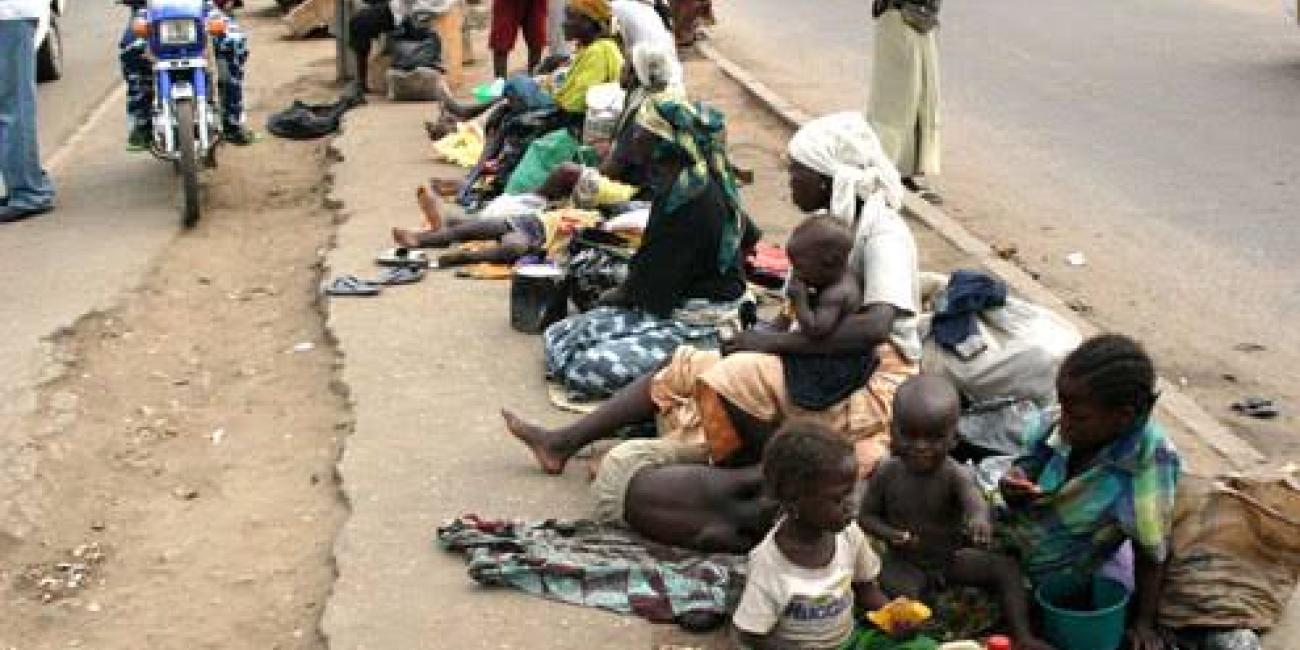
The Kwara State House of Assembly has issued a clarion call to Governor Abdulrahman Abdulrazaq, urging immediate and rigorous enforcement of the state’s Street Begging Prohibition Law to arrest the alarming surge of street begging and its ripple effects on security and public order.
The passionate appeal was made during Wednesday’s plenary session, following a motion titled “Need to Control the Trend of Street Begging in Kwara State and Mitigate the Associated Security Risk,” sponsored by Hon. Abdullahi Halidu Danbaba (APC/Kaiama/Kemanji/Wajibe). The motion, which drew widespread support from lawmakers, underscored the growing concerns over the socioeconomic and security implications of unchecked street begging across the state.
While delivering the House’s resolution, Speaker Yakubu Danladi-Salihu charged the Secretary to the State Government (SSG) to constitute a high-powered committee tasked with evaluating the scale, underlying causes, and security consequences of street begging in Kwara. The committee is also expected to develop actionable policy recommendations aimed at stamping out the practice.
In a forceful lead debate, Hon. Danbaba described the growing phenomenon as a time bomb, warning that beggars, especially children and women, are becoming easy targets for human traffickers, criminal syndicates, and exploiters who prey on their vulnerability. He emphasized that the presence of beggars in public spaces not only tarnishes the image of the state but also poses serious safety risks to both residents and visitors.
Echoing these concerns, several lawmakers pressed for the immediate creation of a grassroots-driven task force under the Ministry of Local Government, Chieftaincy Affairs, and Community Development. According to them, this task force should focus on identifying street beggars, facilitating their rehabilitation and social reintegration, and providing periodic reports to monitor progress and enforce compliance.
Meanwhile, in a separate but related legislative move, the Assembly also commenced the first reading of a bill seeking to amend the Kwara State Secret Cults and Secret Societies Prohibition Law. The proposed amendment is expected to introduce stricter punitive measures for offenders, streamline prosecution processes, and broaden the law’s scope to address emerging threats posed by cult-related violence.
The dual motions reflect the Assembly’s renewed commitment to strengthening public safety, social order, and the moral fabric of the state. Lawmakers called on all stakeholders—including traditional rulers, religious leaders, security agencies, and civil society—to join hands in eradicating street begging and stamping out cultism for a safer, more dignified Kwara.
 PIONEER NEWS