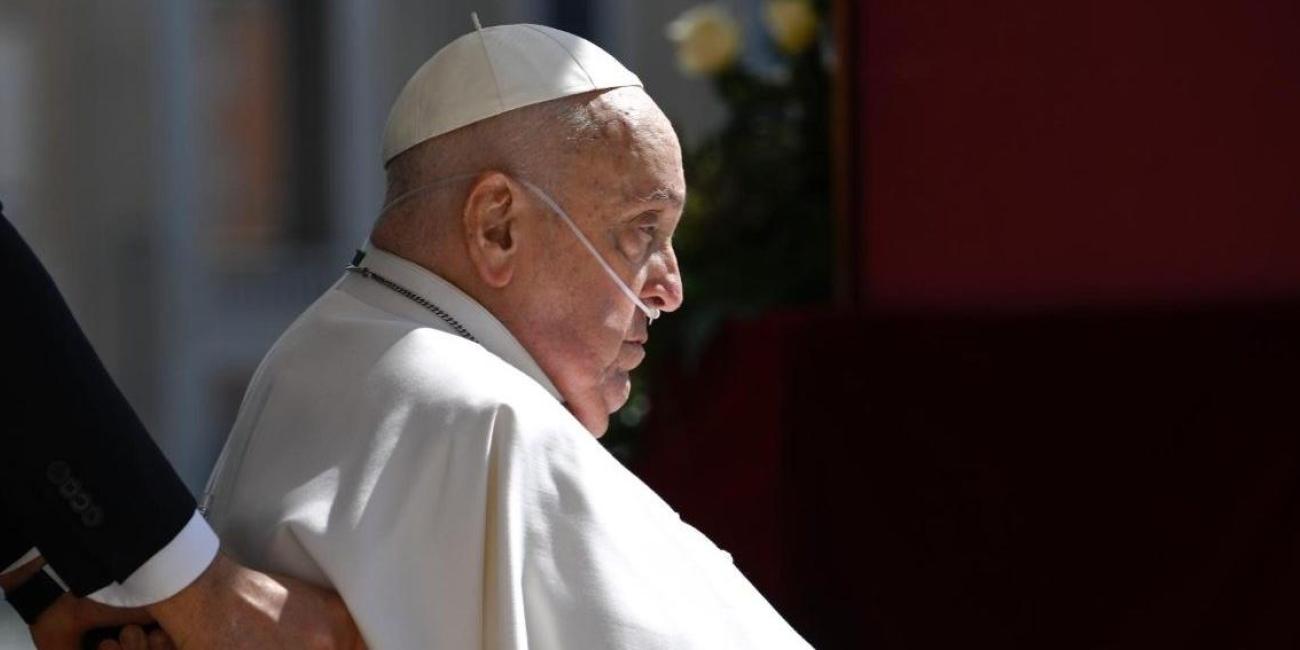
VATICAN CITY – In a solemn moment that reverberated across the globe, the Vatican confirmed the death of Pope Francis on Easter Monday. The beloved pontiff, who led the Roman Catholic Church with unparalleled humility and courage, passed away peacefully at 7:35 a.m. in his residence at Casa Santa Marta. He was 88.
His Holiness had been battling a prolonged illness that had recently intensified, resulting in multiple hospitalisations and curtailed public appearances during the Lenten and Holy Week liturgies. The news of his demise, though not unexpected, sent shockwaves through the global Catholic community and beyond.

Cardinal Kevin Farrell delivered the heart-wrenching announcement to the world:
“Dearest brothers and sisters, with deep sorrow I must announce the death of our Holy Father Francis. At 7:35 a.m. this morning, the Bishop of Rome, Francis, returned to the house of the Father. His entire life was dedicated to the service of the Lord and His Church.”
A Papacy of Firsts and Fierce Compassion
Born Jorge Mario Bergoglio in Buenos Aires, Argentina, Pope Francis made history in 2013 when he became the first pontiff from the Americas and the first Jesuit pope. Succeeding Pope Benedict XVI after his historic resignation, Francis ushered in a transformative era for the Church — one defined by radical inclusivity, moral clarity, and unwavering advocacy for the oppressed.
Throughout his papacy, Francis was a tireless voice for the poor, a fierce climate defender, and a bridge-builder across faiths and ideologies. He shunned papal luxuries, chose modest attire and transportation, and made it his mission to bring the Church closer to the margins of society.
Despite recurring health setbacks in recent years — including persistent respiratory issues and hospitalisations — the Pope remained spiritually vibrant, never ceasing to address the world’s most pressing moral and humanitarian issues.
A Final Benediction to the World
In what now stands as his final public appearance, Pope Francis delivered his Easter Sunday Urbi et Orbi blessing, his voice imbued with divine serenity and conviction. His message, now echoing with poignant finality, centered on hope, redemption, and love.
“Christ, my hope, has risen,” he declared to a hushed and reverent crowd, reminding the faithful that resurrection is not merely a past event but a present and eternal reality.
“Love has triumphed over hatred, light over darkness, and truth over falsehood… Evil no longer has power over those who accept the grace of this day.”
The Pope’s voice trembled as he turned to the wounded corners of the world. His plea for peace in the Middle East was one of his most powerful in recent memory.
He called for an “immediate ceasefire in the Gaza Strip,” demanded the release of hostages, and urged humanitarian corridors be opened for the suffering population.
“Come to the aid of a starving people that aspires to a future of peace,” he implored the global community.
Legacy of a Saint in Our Time
Pope Francis will be remembered not just as a religious leader, but as a spiritual giant who dared to confront injustice, modernise the Church’s tone, and make mercy the cornerstone of Christian witness.
He championed the rights of refugees and migrants, confronted the scourge of clerical abuse with unprecedented transparency, and called on world leaders to prioritize climate action as a moral imperative. Through it all, he remained the “Pope of the People,” beloved for his authenticity, tenderness, and boundless compassion.
As the world mourns, it also celebrates a life of profound faith and fearless humanity. The Church, though bereft, is not rudderless — it carries forward the enduring flame of a pontiff who reminded it, and the world, that “the name of God is Mercy.”
Details regarding funeral arrangements and the conclave to elect his successor are expected in the coming days.
Requiescat in pace, Pope Francis. You have run the race, kept the faith, and inspired a generation.
 PIONEER NEWS