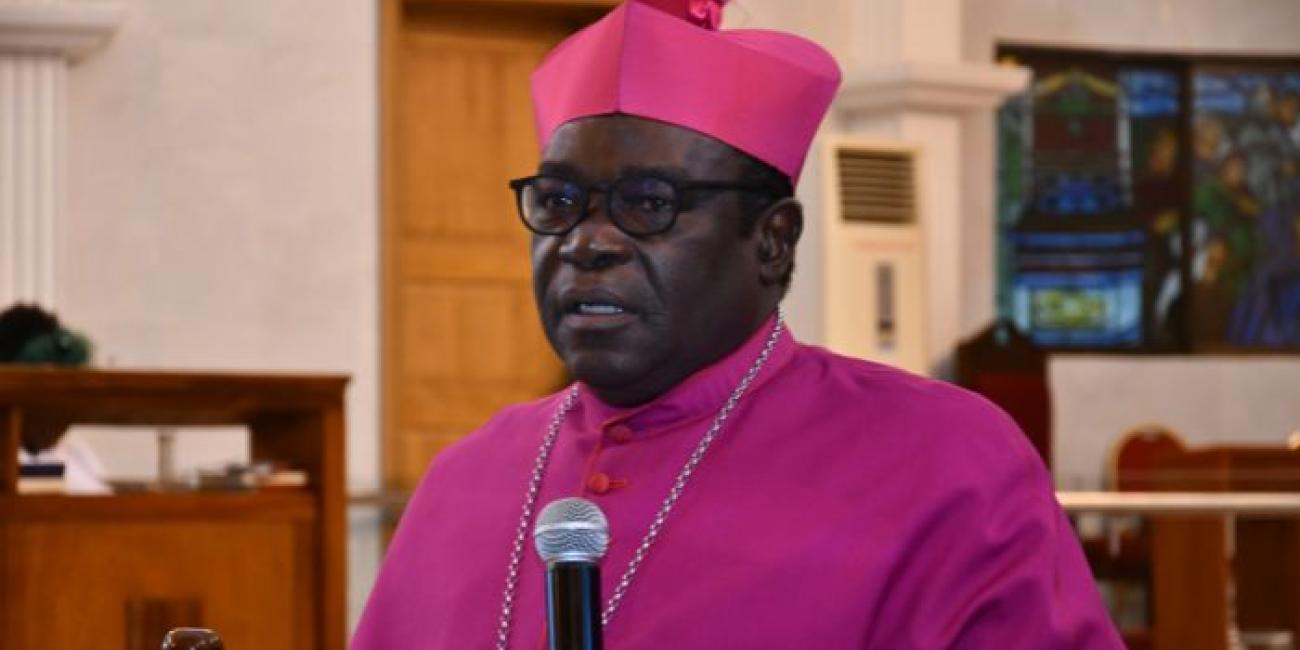
In a passionate and stirring Easter message, the Catholic Bishop of Sokoto Diocese, Most Rev. Matthew Hassan Kukah, issued a heartfelt plea to President Bola Ahmed Tinubu, urging him to take decisive action to rescue Nigerians from the crippling burden of insecurity, hunger, and suffering.
Drawing a powerful parallel between the agony of Christ on the cross and the excruciating realities faced by Nigerians today, Bishop Kukah declared: “Mr. President, bring us down from this cross of evil.”
> “We all admit that you neither erected this cross nor effected our collective crucifixion. Nonetheless, Nigerians have been dangling and bleeding on this cross of pain and mindless suffering for far too long,” he lamented. “A culture of cynicism and self-doubt over our capacity to secure peace for ourselves pervades our land.”
Bishop Kukah’s impassioned sermon echoed the desperation in the hearts of millions who feel abandoned by a system that no longer protects or provides. He called on Tinubu not just to sympathize with the people’s plight but to act with urgency and courage to reverse the nation’s downward spiral.
> “Indeed, a majority of our citizens feel there is no hope in sight. However, for us as Christians, hope is the anchor on which we hang all our expectations. Now is the time to rekindle and renew that hope,” he said.
Kukah did not mince words as he highlighted the magnitude of Nigeria’s security challenges. He described the country as being under siege by “marauders, murderers, savages, and ravenous predators” who have embedded themselves deep into the fabric of national life, destabilizing communities and eroding trust in governance.
> “These forces of darkness have metastasized into a cancer that threatens our very humanity. Kidnapping has become a dog whistle for undermining our nation’s foundation,” he warned. “Mr. President, please, bring us down from this cross of insecurity.”
The Bishop also raised a red flag on the worsening food crisis, stressing that the removal of fuel subsidies, though necessary, must translate into tangible improvements for the masses.
“We still believe removing the subsidies was the right decision. We note that the country now has a huge volume of resources in its domestic reserves. But what good are reserves when hunger stalks the land?” Kukah asked. “For over ten years now, farming has become one of the most hazardous pre-occupations in our country. Mere palliative distribution diminishes the dignity of citizens. Mr. President, make food security a fundamental human right. Bring us down from this painful cross of hunger.”
The cleric also touched on the chilling confessions of past public officials who admitted to importing violent non-state actors into the country for political advantage. He condemned this act as a betrayal of national trust, warning that the monsters created have turned against their creators, threatening every inch of the country.
In one of the most damning portions of his address, Kukah questioned the true motives behind the government’s seeming helplessness in the face of persistent violence:
> “Is the persistence of insecurity a reflection of the lack of capacity of our men and women in uniform, or are those at the top reaping the fruits of funding their own war machine? Are Nigerians lambs being sacrificed to an unknown god?”
Amidst the gloom, Bishop Kukah offered a flicker of hope. He aligned his Easter message with Pope Francis’s declaration of 2025 as the “Year of Hope”, urging Nigerians to rise as “Pilgrims of Hope” determined to reclaim their future despite adversity.
> “Frustration has penetrated every spectrum of our society, especially as the government and its security agencies seem to have largely become spectators in the dance of death that has overtaken our country,” he said. “But we still believe that all is not lost.”
He concluded his message with a blend of prayer, encouragement, and a direct call for leadership:
> “Mr. President, step up. Get to the finishing line and bring us down from this cross of shame.”
As millions of Christians across Nigeria celebrated the resurrection of Christ, Bishop Kukah’s message served as both a rebuke and a rallying cry—urging President Tinubu and all leaders to act now, to restore the dignity, hope, and humanity of a nation battered but not broken.
 PIONEER NEWS