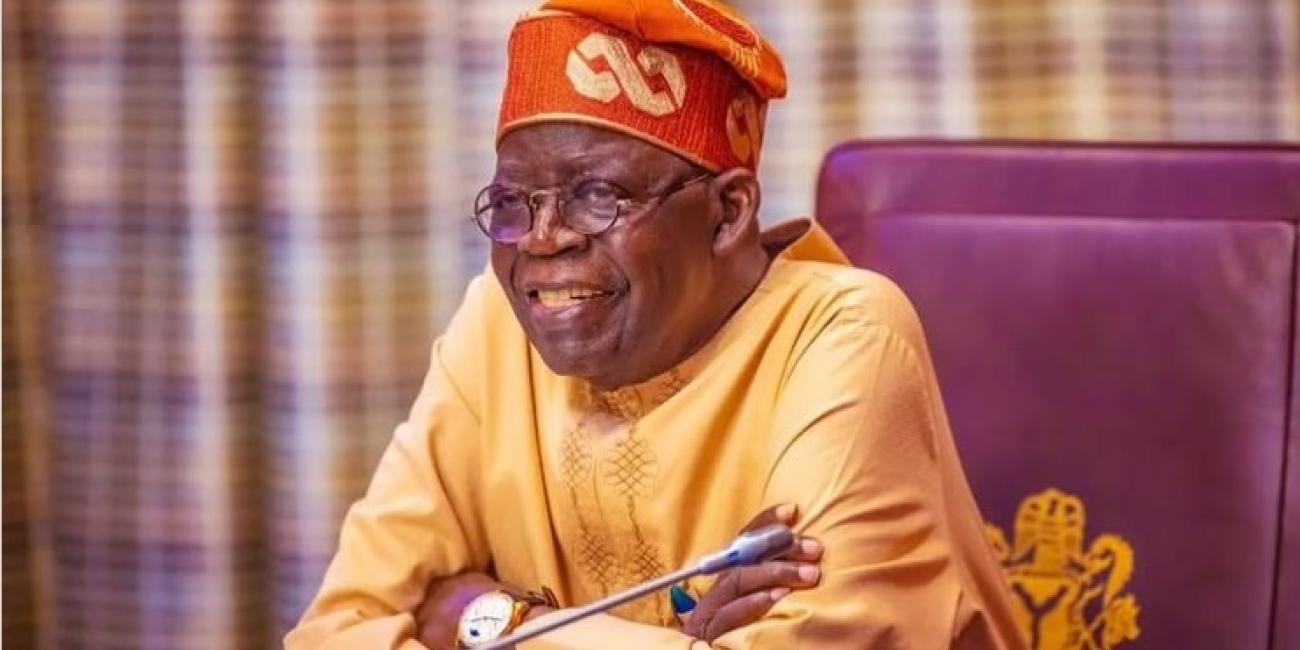
President Bola Ahmed Tinubu on Friday asserted that food prices in Nigeria are now declining, offering relief to fasting Muslims during Ramadan. His statement comes amid widespread economic distress fueled by his administration’s controversial policies, including the removal of fuel subsidies and naira devaluation, which have deepened poverty nationwide.
Despite the harsh realities on the ground, Tinubu insisted that his “bold and transformative policies” were beginning to yield positive results. He cited improvements in Nigeria’s Gross Domestic Product (GDP) and claimed that essential food items were becoming more affordable.
> “The once-soaring prices of essential food items are now trending downward, providing much-needed relief to our fasting population and all Nigerians,” Tinubu declared.
His remarks, however, stand in stark contrast to reports from markets across the country, where inflation continues to drive the cost of staple foods beyond the reach of ordinary citizens. Since his administration took office, the prices of essential commodities such as rice, garri, and beans have skyrocketed, and the naira’s steep depreciation against the dollar has only exacerbated the crisis.
In his address to the Muslim community, Tinubu urged Nigerians to embrace self-discipline, generosity, and faith during the holy month of Ramadan. He reassured the public that his government was committed to enhancing food production and ensuring long-term food security.
> “As the wet season approaches, we remain steadfast in boosting agricultural productivity. We are determined to enhance food production and ensure food security for all Nigerians,” he said.
However, for many struggling Nigerians, these assurances ring hollow. The economic downturn has forced countless families to ration meals, with malnutrition and hunger becoming more prevalent. Small businesses continue to suffer, while protests over the rising cost of living have erupted in different parts of the country.
While Tinubu maintains an optimistic outlook, critics argue that his administration has yet to provide tangible relief for the masses. The disconnect between the government’s claims and the experiences of everyday Nigerians has fueled growing frustration.
As Ramadan progresses, many citizens are left wondering: Is Tinubu’s message a genuine reflection of economic recovery, or just another political narrative designed to pacify an increasingly disillusioned populace?
Regardless, the President concluded his message with a call for unity, prayer, and collective action for Nigeria’s progress.
> “I extend my heartfelt wishes to all Muslims observing Ramadan. May the blessings of this holy month illuminate our hearts and homes,” he said.
For millions of Nigerians struggling to afford basic necessities, those blessings may be needed now more than ever.
 PIONEER NEWS