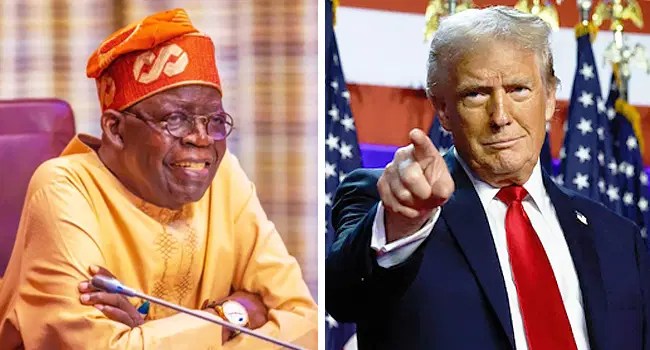
As Nigeria pushes forward with its ambitious N54.9 trillion budget for 2025, concerns are mounting over the potential impact of former U.S. President Donald Trump’s energy policy on the country’s revenue projections. Economic analysts warn that Trump’s pro-oil agenda, which aims to ramp up fossil fuel production, could drive down global crude prices—jeopardizing Nigeria’s $75 per barrel benchmark and threatening government earnings, inflation rates, and even Diaspora remittances.
With his signature “Drill Baby Drill” policy, Trump has pledged to increase U.S. oil and gas output, ensuring energy independence and reducing domestic fuel prices. This aggressive stance, experts say, could flood the global market with oil, pushing prices down and directly impacting oil-dependent economies like Nigeria.
According to Dr. Muda Yusuf, Director/CEO of the Centre for the Promotion of Private Enterprise (CPPE), Trump’s return to power could spell trouble for Nigeria’s 2025 budget projections.
> “The U.S. has been the world’s largest oil producer for six years, accounting for 22% of global production. If Trump boosts output further, it could lead to an oversupply, putting downward pressure on prices,” Yusuf explained.
The implications extend beyond crude oil sales. Nigeria’s foreign exchange reserves and Diaspora remittances—a critical source of external revenue—are also at stake. Lower oil prices mean fewer dollars flowing into Nigeria, weakening the naira and driving up inflation.
Additionally, Trump’s withdrawal from the Paris Climate Accord signals less global commitment to clean energy, encouraging more fossil fuel investments and further disrupting oil market dynamics.
Another key factor influencing oil prices is global conflict. Trump has vowed to de-escalate geopolitical tensions, including the Russia-Ukraine and Israel-Hamas wars. If successful, an end to these conflicts could increase global oil supply, further depressing prices.
> “If Russia, which supplies about 10 million barrels daily, regains full access to the global market, the supply glut will worsen, making Nigeria’s revenue target even more unrealistic,” Yusuf added.
While the risks are substantial, there is one potential benefit: lower fuel prices. Nigeria, having recently deregulated its petroleum sector, could see cheaper costs for diesel, petrol, jet fuel, and gas. This would be a welcome relief for businesses and consumers grappling with high energy expenses.
Beyond oil, Trump’s protectionist trade policies—which emphasize economic nationalism and deglobalization—could affect Nigeria’s exports. The African Growth and Opportunity Act (AGOA), which provides duty-free access to U.S. markets, may come under review, posing risks for Nigerian businesses.
However, Nigeria could also capitalize on new trade gaps created by Trump’s tariff wars. Local manufacturers may find opportunities to fill supply voids in the U.S. market, provided they can scale production and meet international standards.
With Nigeria’s 2025 budget heavily reliant on a $75 per barrel oil benchmark, the country must reassess its revenue strategy in light of Trump’s possible return. While his policies could disrupt Nigeria’s economic outlook, government diversification efforts, improved non-oil exports, and strategic diplomacy may help mitigate risks.
As global oil markets brace for potential shocks, Nigeria must prepare for all scenarios—because, under Trump, the rules of the game could change overnight.
 PIONEER NEWS