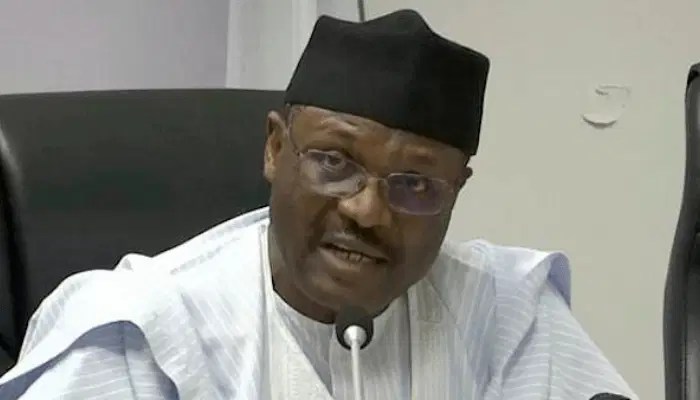
The Independent National Electoral Commission (INEC) has urged the National Assembly (NASS) to enact laws prohibiting politicians from carrying large sums of money to polling units, citing vote-buying as a major threat to Nigeria’s democratic process.
This call was made by INEC’s Director of Litigation and Prosecution, Tanimu Muhammed (SAN), during a consultative meeting in Abuja on Friday. The meeting, organized by the Joint Senate and House of Representatives Committees on Electoral Matters in collaboration with the Policy and Legal Advocacy Centre (PLAC), was supported by the UK Foreign, Commonwealth, and Development Office (FCDO).
Muhammed emphasized that politicians frequently exploit loopholes in election laws by claiming that the large amounts of cash they carry on election day are for party agent payments and logistics. However, he warned that this practice fuels electoral fraud and undermines the credibility of the electoral process.
“To curb this menace, we propose that individuals should not be allowed to carry more than ₦50,000 within polling areas. Vote-buying remains one of the biggest threats to credible elections in Nigeria. We need legislation that not only criminalizes this practice but also puts preventive measures in place,” Muhammed stated.
Beyond vote-buying, INEC officials reiterated their long-standing demand for the establishment of an Electoral Offenses Commission, arguing that the electoral body lacks the capacity to effectively prosecute offenders.
“INEC is doing its best to handle prosecutions, but we need a dedicated institution with the legal authority and resources to investigate and prosecute electoral crimes comprehensively. The creation of an Electoral Offenses Commission would ensure that vote-buying, ballot snatching, and other crimes are met with swift legal action,” Muhammed added.
The Commissioner of Police in charge of election planning and evaluation, Abayomi Shogunle, representing the Inspector General of Police, highlighted the logistical challenges law enforcement faces during elections.
“We face major challenges, from deploying officers to remote areas to ensuring real-time communication during elections. These are issues that need to be addressed if we are to effectively enforce electoral laws,” Shogunle said.
Addressing these concerns, the Chairman of the House Committee on Electoral Matters, Hon. Adebayo Balogun, announced plans for a 2025 Electoral Act to replace the current 2022 version, which he acknowledged had exposed critical gaps during the 2023 elections.
“The 2022 Electoral Act was a significant step forward, but its implementation in the last general elections revealed areas that need improvement. We are committed to strengthening our electoral laws to reflect the realities of our democracy,” Balogun stated.
He also emphasized the importance of increased awareness among political parties, INEC officials, and civil society organizations on the dangers of vote-buying and other electoral malpractices.
With electoral reforms on the horizon, stakeholders are pushing for decisive action to secure Nigeria’s democracy from financial manipulation and electoral fraud. The coming months will determine whether these recommendations translate into concrete legislative changes ahead of the next electoral cycle.
 PIONEER NEWS