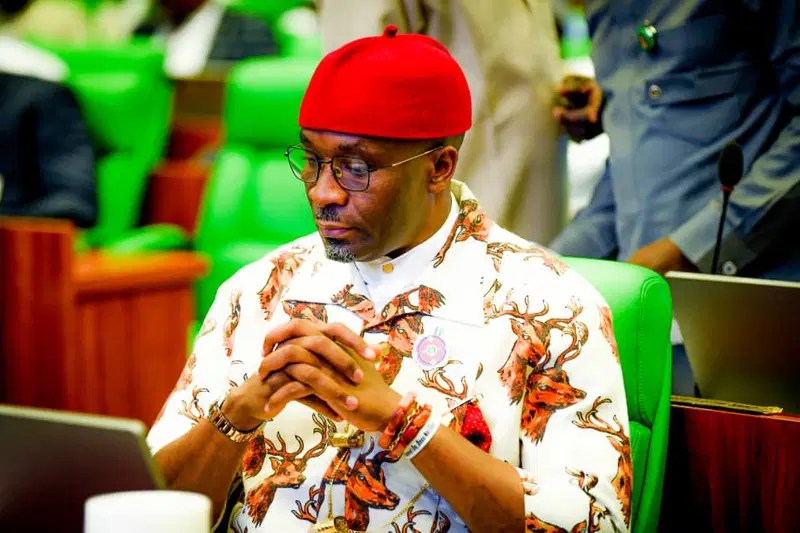
Deputy Speaker of the House of Representatives, Hon. Benjamin Okezie Kalu, has made a compelling case for Nigeria to be granted a permanent seat on the United Nations Security Council. Speaking at the Heads of Parliaments meeting at the United Nations Headquarters in New York, Kalu underscored the need to redefine multilateralism to address the growing concerns of developing nations, particularly those in Africa.
The meeting, a precursor to the 6th World Conference of Speakers of Parliament in Geneva under the auspices of the Inter-Parliamentary Union (IPU), provided a platform for global parliamentary leaders to deliberate on challenges faced by nations and the role of parliaments in shaping a more equitable world order.
Kalu took a firm stance against the current structure of multilateralism, which he argued is heavily influenced by the Global North, leaving the Global South—especially Africa—marginalized in crucial decision-making processes. He stressed that the existing framework fails to reflect the realities and developmental struggles of African nations, which remain burdened by economic stagnation, debt, and industrialization setbacks.
Making a case for Africa’s rightful place at the global table, Kalu emphasized that Nigeria, as Africa’s largest economy and most populous nation, deserves a permanent seat on the UN Security Council.
“My people in Nigeria have a saying that you cannot shave a man’s head in his absence,” Kalu said. “If we are serious about multilateralism, we must expand the voices in the room. It is time to amend Article 108 of the UN Charter to reflect a more inclusive world order. Africa cannot remain a spectator in global governance.”
Kalu used the Sustainable Development Goals (SDGs) as an example of how global priorities often fail to align with the realities of developing nations. While SDGs focus on broad global aspirations, he pointed out that many African countries are still grappling with industrialization and economic growth, making it difficult to meet ambitious global targets.
“We have just five years left to achieve the SDGs, but let’s be honest—many developing nations are still struggling to overcome economic hurdles. Expecting them to meet the same targets as industrialized nations is unrealistic. If we truly want inclusive multilateralism, we must acknowledge these disparities and tailor policies to reflect them.”
Kalu warned that without inclusivity and cooperation, multilateralism risks becoming a theoretical concept rather than a practical tool for global development. He argued that Africa’s exclusion from the Security Council is a glaring flaw in the global governance structure, making a strong case for structural reforms.
“When you critically analyze the practice of multilateralism, you realize that equality is missing. Africa is still treated as a secondary player in global policy-making, despite its significant contributions and challenges. If we must talk about true multilateralism, then Africa must have a seat at the table.”
He further highlighted Africa’s economic struggles, particularly the weight of mounting debt, as a major barrier to development. Kalu noted that expecting African nations to perform at the same level as wealthier regions without addressing these financial burdens is an unfair expectation.
Kalu extended his gratitude to the President of the Inter-Parliamentary Union (IPU), Rt. Hon. Tulia Ackson, the Secretary-General, Martin Chungong, and parliamentary leaders from across the globe for engaging in the dialogue. He vowed to continue advocating for Africa’s rightful place in global decision-making structures, stressing that meaningful multilateralism cannot exist without representation from all regions.
As the world moves toward the 6th World Conference of Speakers of Parliament in Geneva, Kalu’s bold call for reform sets the stage for a renewed push toward a more balanced and inclusive global governance system—one where Africa’s voice is no longer ignored but respected.
 PIONEER NEWS