
The University College Hospital (UCH) in Ibadan, Nigeria’s premier teaching hospital, is in a dire state as a four-month-long power outage continues to cripple medical services, leaving patients and their families in distress. The persistent blackout follows the hospital’s disconnection from the national grid by the Ibadan Electricity Distribution Company (IBEDC) over an outstanding debt of ₦495 million, plunging critical care units into darkness and forcing families to provide their own alternative power sources.

When Sahara Reporters visited the Intensive Care Unit (ICU), distraught relatives were seen fanning their loved ones with handheld fans, while others who could afford rechargeable or solar-powered fans clung to them desperately. The heat and lack of ventilation have turned hospital wards into unbearable spaces, with critically ill patients suffering the most.
Kozeem, a relative of a patient in the ICU, decried the worsening situation, stating that since Thursday, the generator supplying the ICU broke down, leaving the entire unit without power. “Patients have been battling two wars—one against their illness and another against the hospital’s electricity crisis,” he lamented.

Reports indicate that two years ago, UCH began asking patients to contribute funds to fuel its generators, a situation that has since escalated. An Ibadan businessman, the owner of Ace Supermarket, had generously donated a large power plant generator, personally funding its fuel supply. However, this has not been enough to sustain round-the-clock operations.
Only emergency surgeries and critical cases receive generator power, while other wards remain in darkness. The hospital has resorted to referring patients to other facilities, further burdening the already struggling healthcare system.
Sahara Reporters’ visit revealed that some sections of UCH, including the Emergency Unit, Children’s Outpatient Clinic, and Medical Outpatient Clinic, are powered by solar energy. However, key areas such as the surgery clinic are in total darkness.
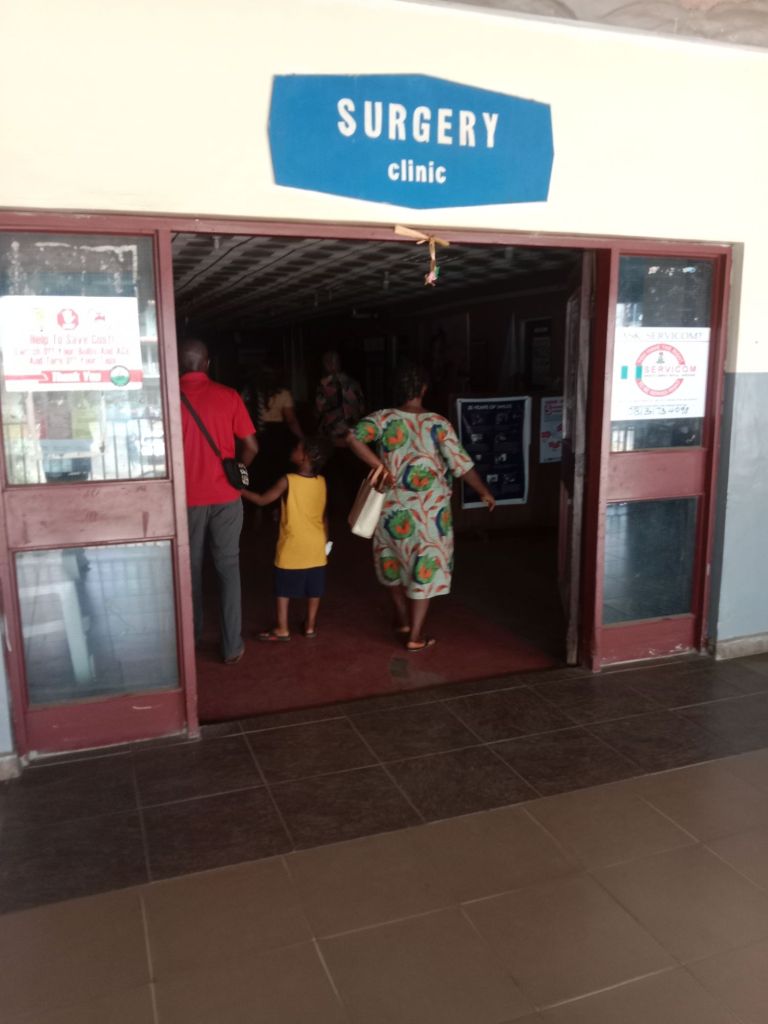
A patient’s relative, speaking anonymously, painted a bleak picture:
“UCH was once the pride of Nigeria’s healthcare system. Now, even simple blood tests require referrals to private labs. The blood bank has solar power, but we are still sent outside for results. The federal government has abandoned us.”
Another patient’s son, who had just returned from charging his rechargeable fan outside, expressed frustration over the hospital’s deteriorating conditions. “My family had to write a formal request to bring an inverter to my father’s ICU ward, and even then, the hospital wanted to keep it after his discharge,” he said.
He also accused the government of prioritizing foreign medical trips for politicians over fixing Nigeria’s healthcare system. “If the Federal Government cared, would we be in this situation? They fly their families abroad while we struggle with darkness, heat, and non-functional equipment.”
Public Relations Officer Denies Reports—But Confirms Power Struggles
UCH’s Public Relations Officer, Obafunmilayo Adetuyibi, denied allegations that patients were bringing in their own generators. She admitted, however, that UCH has been struggling with electricity supply since October 26, 2024.
She explained that the hospital management had written letters to the Minister of Power and the Minister of Health, requesting a reclassification from Band A to Band B to lower electricity tariffs.
She further highlighted that solar inverters have been installed in some parts of the hospital, including the ICU, blood bank, and specific wings. However, these solar solutions remain insufficient for round-the-clock hospital operations.
The ongoing crisis at UCH is a stark reminder of Nigeria’s failing healthcare infrastructure. A hospital once ranked among the best in West Africa now struggles with basic necessities like electricity, forcing patients to bear the cost of survival.
A relative of a patient summed up the dire situation:
“Look around—small, noisy generators are scattered everywhere. How can patients recover in such an environment? The cost of tests at private labs is skyrocketing because the hospital lacks electricity. Where are the leaders who promised us better healthcare?”
As UCH’s management pleads for patience, the suffering of patients continues, raising the question: How much longer can Nigeria’s premier teaching hospital survive in the dark?
 PIONEER NEWS