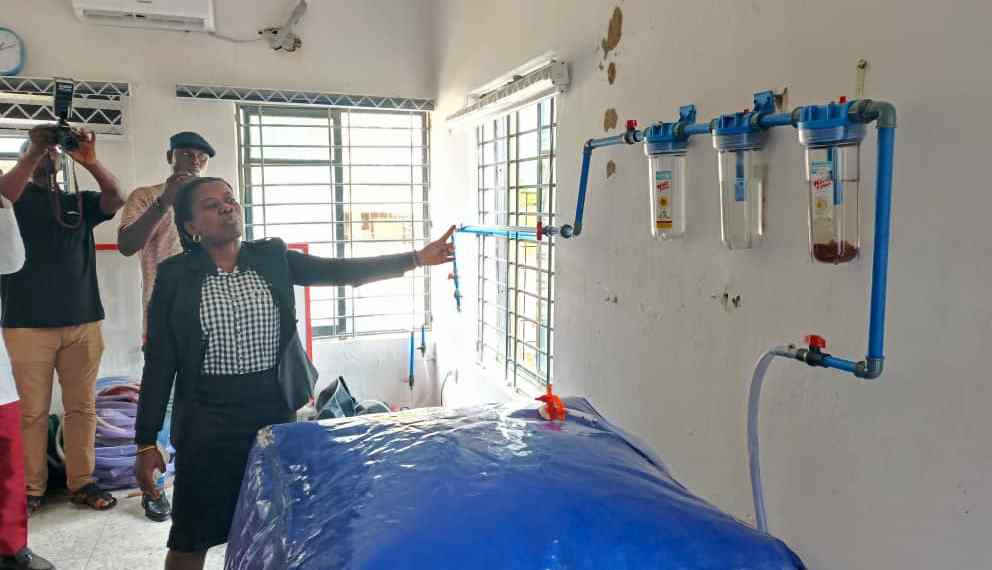
In a groundbreaking achievement, Faith Ogbole, a researcher at the University of Africa Toru-Orua (UAT), has successfully developed a biogas plant that converts waste into methane gas, providing an affordable alternative to liquefied petroleum gas (LPG). The innovation, announced by Premium Times via its official X handle, marks a significant milestone in renewable energy, waste management, and economic development in Bayelsa State.
The News Agency of Nigeria (NAN) reports that Ms. Ogbole’s year-long research was made possible through funding from the Bayelsa State Government via the Bayelsa State Education Development Trust Fund. The initiative aims to tackle multiple socio-economic challenges, including high cooking gas prices, environmental pollution, and job creation.
During a demonstration at UAT’s Toru-Orua campus in Sagbama Local Government Area, Ms. Ogbole showcased how the locally fabricated biogas plant processes various organic wastes—including septic tank residues, plantain peels, animal dung, and grasses—into methane gas. The system grinds the waste before channeling it into a specialized airtight tank, where decomposition occurs, generating biogas. The gas then undergoes purification before becoming a viable energy source for cooking and other uses.
Ms. Ogbole emphasized the importance of indigenous innovation in addressing the economic realities of Nigeria. “The rising cost of LPG and the urgent need for environmental sustainability and job creation inspired this research. With this technology, households and institutions can access a cheaper, eco-friendly alternative to conventional cooking gas,” she stated.
Vice-Chancellor of UAT and acting Chairperson of the Bayelsa State Education Development Trust Fund, Professor Francis Sikoki, led a delegation to inspect the project. He hailed the biogas initiative as a remarkable breakthrough in applied research and reiterated the trust fund’s commitment to supporting projects that address real-world challenges.
“The goal of the trust fund is to empower researchers in Bayelsa’s tertiary institutions to deliver commercially viable and problem-solving innovations. This biogas project exemplifies the kind of research that can drive sustainable development,” Professor Sikoki noted.
Echoing his sentiments, the Chairperson of the Scientific Research and Technology Development Committee, Evelyn Adombazi, lauded the decision to fund the research. She urged Ms. Ogbole to expand the project’s scope to ensure accessibility to more households across the state.
The delegation also reviewed other state-funded research projects, including the Bayelsa Larvae Project and an initiative focused on separating cyanide from environmental waste. These ongoing efforts reflect the government’s broader strategy of fostering scientific research to address pressing societal issues.
With Ms. Ogbole’s biogas innovation gaining recognition, Bayelsa State edges closer to a future where waste is not just discarded but repurposed into valuable resources—fueling homes, creating jobs, and preserving the environment.
 PIONEER NEWS