A storm is brewing within the Nigeria Police Force (NPF) as over 200 senior officers, accused of falsifying their birth records, are refusing to retire—setting the stage for what insiders fear could be an unprecedented mutiny.
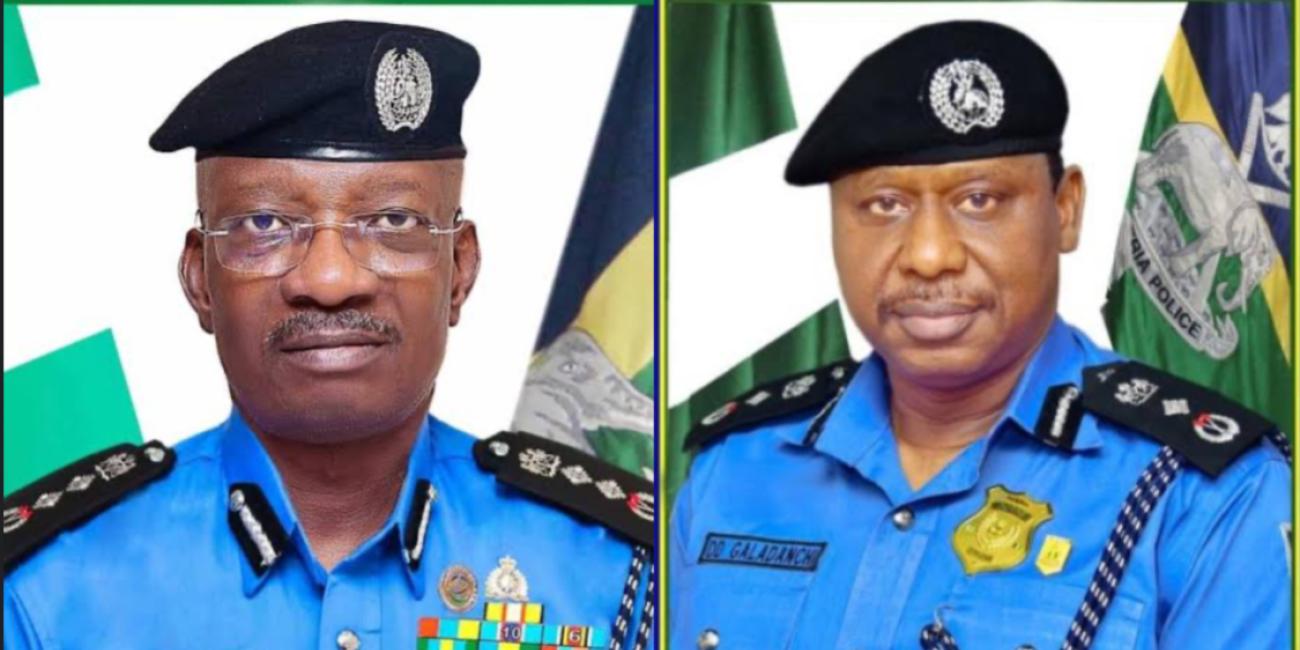
Investigations by Sahara Reporters reveal that some of these officers have served for as long as 44 years, far exceeding the statutory retirement limits. The crisis has ignited a fierce battle between the Inspector General of Police (IGP), Kayode Egbetokun, and the Deputy Inspector General (DIG) of the Federal Investigation Department, Dasuki Galandanchi, with the latter demanding a controversial two-year extension to his tenure.
Galandanchi, whose tenure has already been extended once, argues that if IGP Egbetokun was granted an extension last year, he too should be allowed to continue in office. However, sources claim that Egbetokun is unwilling to support Galandanchi’s request, citing concerns over his “reckless lifestyle and larger-than-life demeanour.”
One insider described the escalating feud, stating, “Galandanchi insists that if he must retire, Egbetokun must also step down. He has declared war on the IGP over this issue.”
The power tussle intensified following the July 23, 2024, passage of the Police Act (Amendment) Bill by the Nigerian Senate, allowing for an extension of the IGP’s tenure beyond September. President Bola Tinubu had personally submitted the amendment bill to the House of Representatives, but its passage sparked outrage among key stakeholders, including the Police Service Commission (PSC), Ministry of Police Affairs, and the National Salaries and Wages Commission.
During a heated public hearing on June 26, 2024, stakeholders warned that altering police retirement rules would:
Encourage corruption within the force.
Hinder career progression for younger officers.
Set a dangerous precedent for the military and paramilitary agencies.
Despite these objections, political maneuvering continued behind the scenes. Senior officers resisting retirement allegedly reached out to political godfathers, urging them to pressure Tinubu to either retire Egbetokun along with them or allow them to leave on their own terms.
The crisis took a regional turn when affected officers claimed that most of them were from the South, and their forced exit would reduce southern representation in the upper echelons of the police force. Sources say Egbetokun himself exploited this narrative to justify his extended tenure.
Sahara Reporters uncovered long-standing irregularities within the force. Several officers, including Simon Lough (Head of the NPF Legal Section) and Benneth Igweh (former FCT Police Commissioner), allegedly manipulated their records to extend their service years.
Egbetokun had initially ordered their immediate retirement in a letter dated February 1, 2025, signed on his behalf by CP Bode Akinbamilowo, Deputy Force Secretary. The directive, based on a PSC resolution, mandated that all officers above 60 years or with over 35 years of service must retire immediately.
However, just four days later, on February 5, 2025, Egbetokun made a stunning reversal, issuing a new directive halting all retirements, reportedly under pressure from the Tinubu presidency.
Who Are the Officers Defying Retirement?
Some of the high-profile officers at the center of the scandal include:
Benneth Chinedu Igweh (should have retired on January 5, 2023)
Akinbayo Olasukami Olasoji
Louis Chike Nwabuwa
Mukar Sule
Adamu Danjuma
Ajao Olusegun
Iriemi Solomon
With over 200 senior officers openly challenging directives, internal discipline within the police force is at its weakest in years. If not swiftly addressed, the crisis could lead to a dangerous breakdown in the chain of command, undermining national security.
As the battle for control of the NPF rages on, all eyes are on President Tinubu, the Senate, and the Police Service Commission to see whether they will take decisive action—or allow anarchy to fester within Nigeria’s primary law enforcement agency.
 PIONEER NEWS